
In Chad, President Mahamat Idriss Déby recently issued a presidential pardon for Succès Masra, a prominent political opponent and former Prime Minister. This act of clemency, granted via decree, nullifies the 20-year prison sentence Masra had been serving for over a year. The measure also extends to eight other key opposition leaders.
While the ruling administration presents this gesture as a move towards appeasement, analysts and political observers generally maintain a cautious perspective. Many view it as a strategic maneuver to de-escalate tensions while simultaneously ensuring that the core opposition leadership remains excluded from future electoral contests.
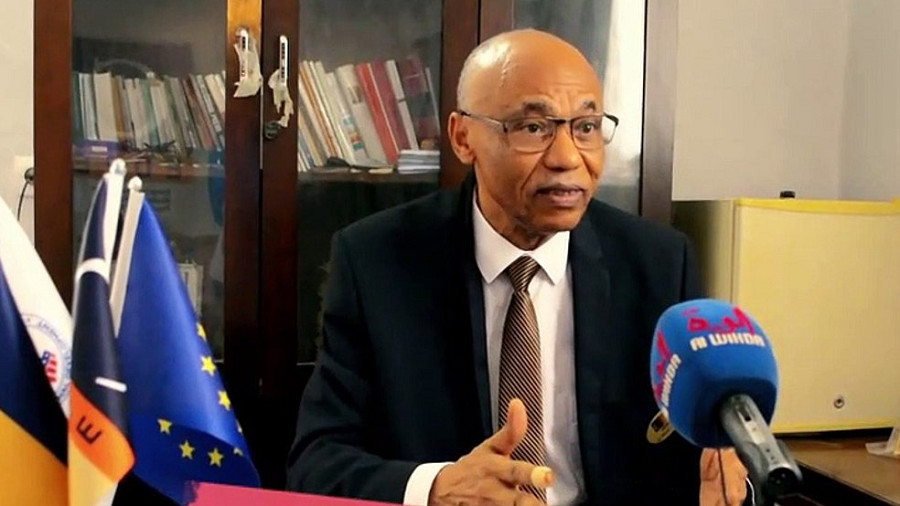
Ahmat Yacoub Dabio, a distinguished conflict management specialist and president of the Centre for Studies on Development and Extremism Prevention (CEDPE), welcomed the presidential pardon, describing it as a potentially “very important political gesture.” He elaborated, “This pardon can temporarily reduce tension and create an opening for a more tranquil political atmosphere.” However, Dabio also underscored the inherent limitations of such a decision, noting that a pardon should not be conflated with genuine political reconciliation. “The fundamental question remains the conditions necessary for a truly sustainable easing of political tensions in Chad,” he emphasized.
To further illustrate his point, Dabio highlighted the ongoing ineligibility of several Chadian opposition figures. “The stakes are particularly high because numerous significant opposition leaders are still barred from participating in elections,” the CEDPE president explained. He added, “This creates a paradoxical situation: some leaders are freed or granted clemency, yet they remain excluded from the electoral process. Their political influence might persist within society, but they cannot directly translate it into votes at the ballot box.”
The expert predicted that the inability of established opposition leaders to run for office would inevitably reshuffle the opposition’s dynamics. “This scenario will profoundly alter the Chadian political landscape and could initially weaken traditional opposition parties, compelling them to reorganize, perhaps around new personalities,” he anticipated. Dabio also warned of a potential risk: if the ineligibility of key leaders is perceived as a permanent exclusion from political participation, it could “fuel frustration and lead a segment of the opposition to conclude that institutional channels are insufficient.”
“In such a context, particularly for a nation in need of stability, it is crucial that political competition unfolds within a credible, inclusive, and transparent framework,” he advised. Dabio reiterated that while the presidential pardon might initiate a calming effect, it alone cannot resolve the critical issue of trust between the government and the opposition.
According to the former advisor to Chad’s Mediator of the Republic, the clemency granted to Succès Masra represents merely a symbolic initial step. The future political trajectory of Chad hinges on subsequent concrete actions by the authorities to fully reintegrate the opposition and guarantee equitable elections. “The real question now is whether this opening will be followed by additional measures that progressively restore confidence and provide all political actors with sufficient assurances to participate in public life,” he pondered.
Ahmat Yacoub Dabio asserted that Chad’s future depends on robust democratic discourse, requiring a truly influential opposition confronting a government prepared to accept dissent. “Ultimately, I believe Chad needs less an opposition merely permitted to exist, and more an opposition capable of fully performing its institutional role, alongside a government secure enough in its legitimacy to embrace genuine political contradiction,” he concluded. “Only under these conditions can the presidential pardon transcend a simple political gesture and become a central element, an opening to a broader process of national reconciliation.”