
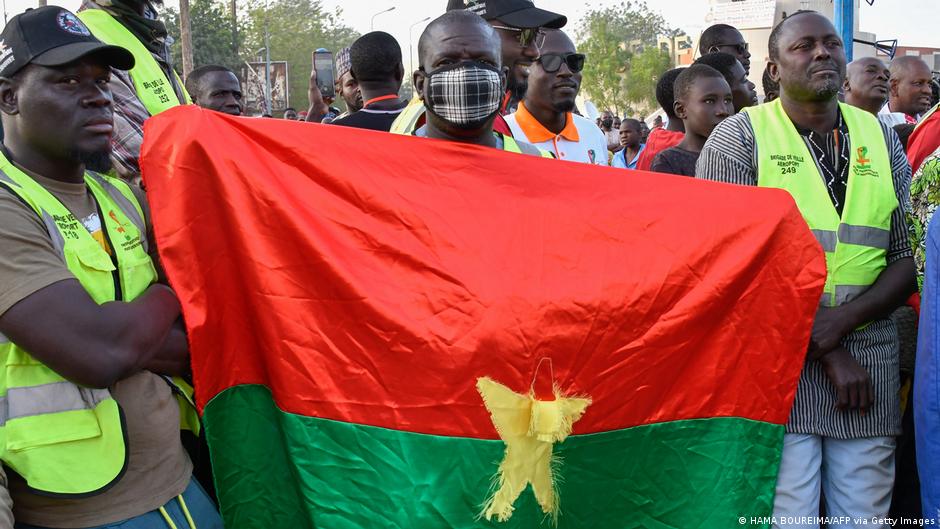
The arrest of prominent imam Mohamed Ishaq Kindo and the abrupt suspension of Burkina Faso’s largest student union have sent shockwaves through the country, signaling a sharp escalation in repression under military leadership. These developments mark a particularly tense week for civic freedoms in Burkina Faso, raising urgent questions about the future of public dissent and legal protections.
Disappearance of Imam Kindo: a wave of concern
Just days before Eid al-Adha, witnesses reported masked security forces—police and military—detaining Imam Mohamed Ishaq Kindo at his home. The imam was no ordinary religious figure; he was a respected voice in Burkina Faso’s Muslim community and, notably, an early supporter of Captain Ibrahim Traoré, though he maintained a critical stance on public policy.
His vocal opposition to a proposed law regulating religious practices—particularly public prayers—appears to have been the catalyst for his arrest. In an interview from exile, Burkinabè journalist Newton Ahmed Barry reflected on Kindo’s role:
“Imam Kindo was one of the few Muslim leaders who dared to challenge Ibrahim Traoré’s government, even from the beginning. Despite his initial alignment with the junta, he never shied away from speaking out against decisions that undermined public freedoms.”
His detention triggered immediate public backlash. Protests erupted in several neighborhoods, resulting in clashes, multiple injuries, and numerous arrests. The Federation of Islamic Associations of Burkina Faso (FAIB) repeatedly called for calm, while rumors swirled online—including a fabricated statement claiming Kindo had died, later denied by prosecutors. Some videos circulating on social media, allegedly showing abuses, have been flagged for inconsistencies and potential AI manipulation.
Reports indicate that several arrested followers were transferred to a military camp in Kaya, in the Centre-Nord region.
Kindo vs. Dicko: a different kind of religious leadership
Some observers have drawn parallels between Imam Kindo and Mali’s outspoken cleric Mahmoud Dicko. Barry dismisses the comparison, emphasizing Kindo’s focus on citizen oversight rather than political mobilization:
“Imam Kindo’s role was rooted in religious stewardship, not activism. As a member of the FAIB, he was tasked with safeguarding Islamic doctrine—not leading protests or political campaigns. His criticism was rooted in faith, not partisan politics.”
UGEB suspension: the student movement in the crosshairs
Days after Kindo’s arrest, Burkina Faso’s oldest student union, the General Union of Students of Burkina Faso (UGEB), was suspended for three months—renewable. Its president, Bazo Wilfried, and several members were detained on charges of “terrorist propaganda” and “demoralizing security forces.”
The union had publicly criticized the deteriorating security situation, describing it as a “civil war” and condemning the government’s “clear inability” to restore stability. Mahamadou Idder Alghabid, deputy secretary-general of the Alliance of Sahel Democrats (ADS), condemned the accusations as part of a regional pattern:
“It’s absurd to call unarmed students terrorists. But this is the new normal in the Sahel. Any dissent—whether labor strikes, student protests, or political criticism—is immediately labeled as terrorism or collaboration with armed groups. This tactic is now standard across Burkina Faso, Mali, and Niger.”
Regional crackdown: the erosion of civic space in the Sahel
Burkina Faso is not alone. Across the Alliance of Sahel States (AES)—comprising Burkina Faso, Mali, and Niger—human rights advocates report a systematic narrowing of civic freedoms. Independent media outlets have been shut down, civil society organizations dissolved, and judicial pressure intensified against critics of military rule.
According to the ADS, the line between legitimate dissent and criminal offense is increasingly blurred. Political commentary, labor organizing, and social activism are routinely criminalized under vague anti-terrorism laws.
A resilient but fragile opposition
Despite the crackdown, resistance persists—often from abroad. Alghabid, speaking from exile, remains defiant:
“The struggle is immense, but we are gaining ground every day. The juntas promised sovereignty and anti-imperialism, but those were empty words. People are waking up. They see the lies, the broken promises, and they’re turning away from the putschists. The tide is turning.”
Newton Ahmed Barry shares a cautious optimism: “Authoritarian regimes always collapse under their own excesses. Ibrahim Traoré’s government is no exception. The people of Burkina Faso will not remain silent forever.”
Call for global solidarity
Human rights organizations are urging international partners to abandon diplomatic ambiguity. Ilaria Allegrozzi, Sahel researcher at Human Rights Watch, stressed the need to defend civic spaces:
“Silence only legitimizes authoritarianism. The international community must stop hiding behind the excuse that criticizing juntas is counterproductive. The real danger lies in complicity.”
Her organization insists on naming and condemning human rights violations openly, emphasizing that military coups and flagrant abuses cannot be normalized.
Time for accountability
At its core, the crisis in Burkina Faso—and across the Sahel—is one of legitimacy. Military juntas have seized power under the banner of restoring order, yet their tactics—mass arrests, censorship, and suppression of dissent—only deepen instability. Breaking the silence is not just a moral duty; it is a strategic necessity for regional peace and democratic resilience.