
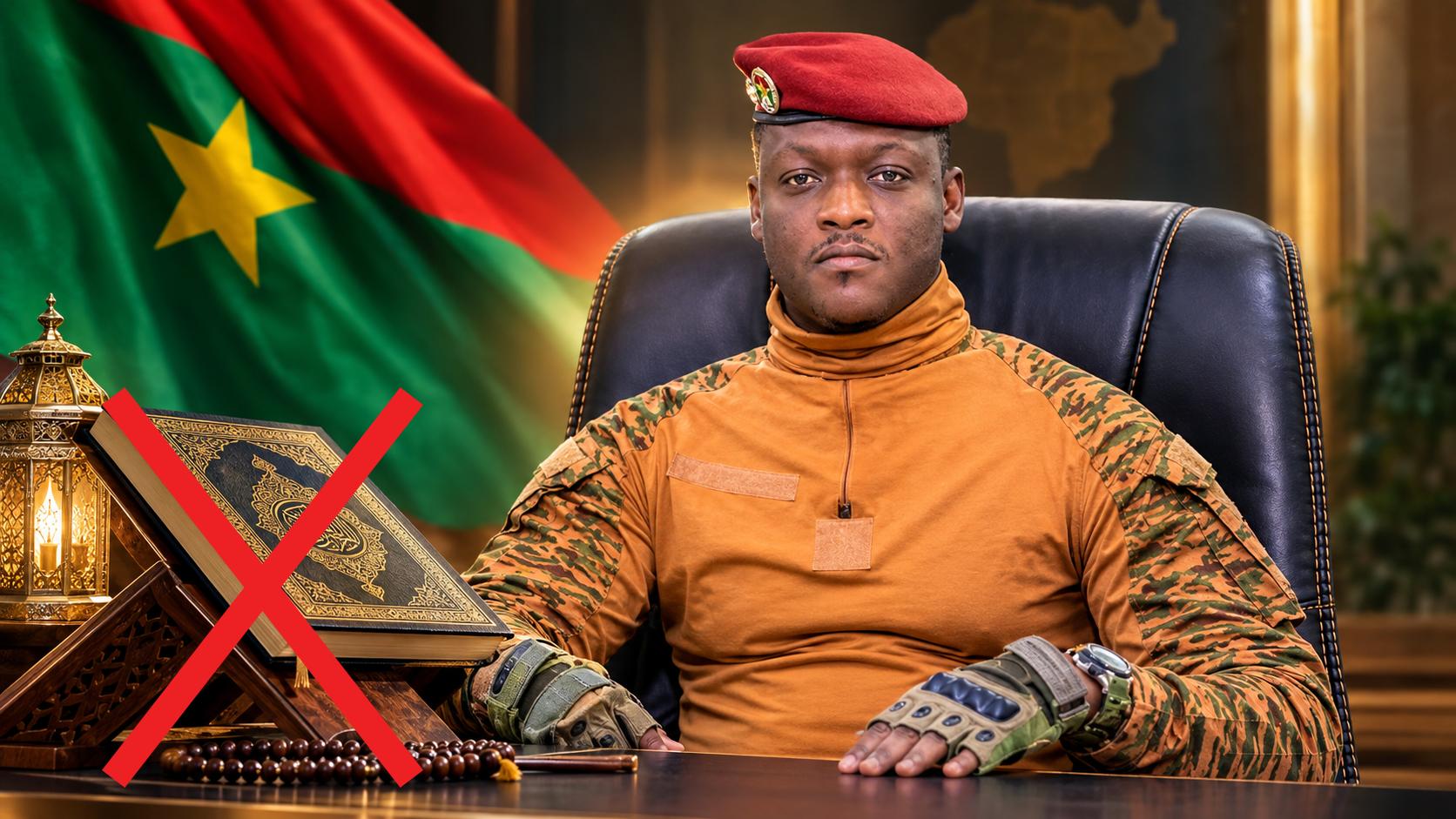
The line between Burkina Faso’s fight against armed extremism and the repression of religious freedoms has never been more blurred. Under the guise of eradicating terrorism that plagues the nation, the interim government led by Captain Ibrahim Traoré is unleashing an unprecedented crackdown on the Muslim community—despite Islam being the country’s majority faith. Behind the official rhetoric of « national security » lies a deliberate strategy to bring Muslim figures and institutions under strict control from Ouagadougou.
The widening net: imams, schools, and mosques in the crosshairs
The past few months have seen a surge in arbitrary arrests and detentions targeting independent religious voices. Moderate imams, influential preachers, and Muslim association leaders face forced recruitment into the Volontaires pour la défense de la patrie (VDP), secret detentions, or imprisonment on vague charges. Their alleged crime? Questioning security policies, criticizing junta methods, or advocating for civil rights.
Simultaneously, mosques and Quranic schools in high-risk areas endure relentless inspections, closures, or accusations of collusion with armed groups. By labeling any dissenting religious discourse as « subversive » or « terrorist-friendly, » authorities are fostering an atmosphere of fear in a community historically known for fostering social cohesion.
From security to suppression: the junta’s risky gamble
This heavy-handed approach serves a clear purpose: silencing any organized opposition. By targeting local Islamic networks and leaders, the military regime seeks to enforce ideological conformity and suppress dissent in the public sphere.
Yet this strategy risks backfiring spectacularly. Instead of weakening jihadist groups, the brutal suppression of religious practice fuels resentment. Stigmatizing the Muslim majority, dismantling traditional spiritual networks, and removing moderate leaders only deepen feelings of alienation. By framing Islam as an « internal enemy » under the banner of security, Ibrahim Traoré risks tearing apart a nation already stretched to its limits.
What comes next for Burkina Faso’s fragile social fabric?
With mosques shuttered, imams jailed, and communities divided, the junta’s campaign is accelerating a crisis of confidence. For a country grappling with insurgency, economic paralysis, and political instability, this turn toward repression over dialogue may prove to be a historic miscalculation. The question now is whether Burkina Faso’s leaders will reverse course—or double down on a path that risks pushing moderates into the arms of extremists.