
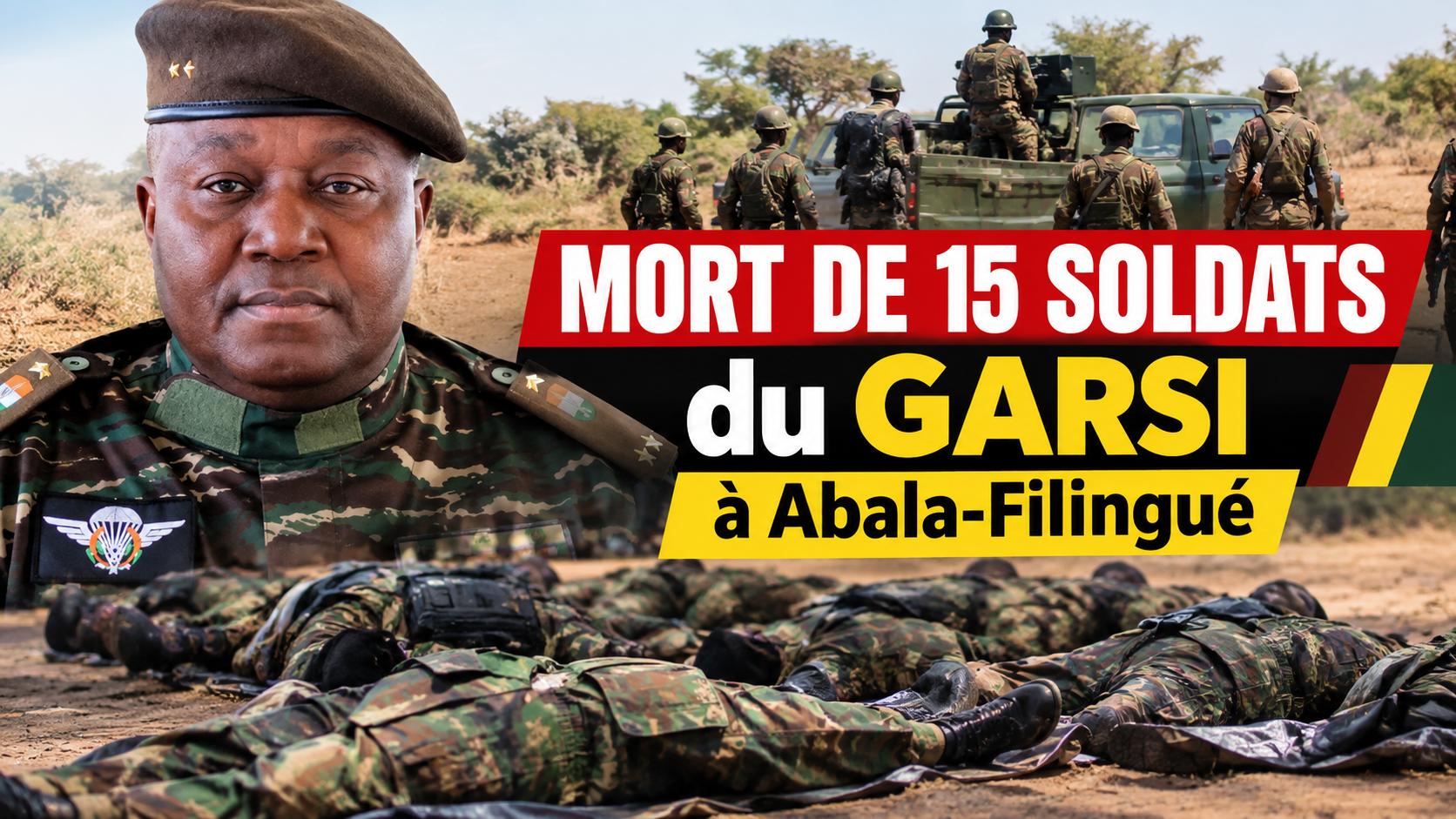
Another heavy blow: elite troops decimated in Abala-Filingué ambush
The dawn raid on a GARSI patrol in the Abala-Filingué region has delivered a crushing blow to Niger’s embattled military leadership. At least fifteen elite soldiers, including Captain Hassoumie and Warrant Officer Djindagarey, were killed in an ambush that exposed the widening gap between Niamey’s security claims and the brutal reality on the ground. This tragic loss marks a decisive turning point—one that underscores the accelerating collapse of state control under General Abdourahamane Tiani’s regime.
A broken promise of restored order
When the National Council for the Safeguard of the Homeland (CNSP) seized power in July 2023, restoring security was its central pledge. The junta vowed to crush terrorist threats and justify its takeover with a narrative of spiraling violence under the previous government. Yet the massacre of GARSI’s finest—soldiers trained for high-risk operations—reveals a regime drowning in incompetence rather than delivering decisive action.
The CNSP dismantled critical military partnerships, severing defense cooperation with former allies and stripping the armed forces of vital resources: precision airstrikes, long-range surveillance, and rapid medical evacuation. This self-imposed isolation has left frontline units like GARSI vulnerable, forced to operate without air cover or tactical intelligence.
From propaganda to bloodshed: the numbers tell a grim story
The junta’s triumphalist rhetoric contrasts sharply with independent conflict data, which paints a picture of deepening chaos:
- Over 1,500 violent incidents recorded since the July 2023 coup.
- More than 5,800 deaths (civilians and soldiers) in just months under military rule.
- 40% surge in civilian casualties in direct attacks compared to pre-coup levels.
- Record military losses, including ambushes in Koutougou (17 dead), Tabatol (29 dead), and repeated strikes in Tillabéri and Tahoua.
The illusion of regional alliances and empty promises
In a desperate bid to compensate for lost Western support, Niamey pivoted toward the Alliance of Sahel States (AES) with Mali and Burkina Faso, courting new allies like Russia. Yet the Abala-Filingué ambush—and the broader crisis in Tillabéri—reveals the hollow nature of these realignments. Reconnaissance drones, touted as a replacement for withdrawn Western systems, cannot replace tactical foresight. Ground troops remain exposed to well-armed, mobile militants who operate with near impunity.
The junta’s priorities, however, lie elsewhere. While soldiers die in embattled regions, the regime clings to power by suppressing dissent, stifling press freedom, and manufacturing public support—leaving security to decay.
The civilian cost: lives abandoned in the shadow of terror
The GARSI tragedy is not just a military failure; it is a humanitarian catastrophe. In Tillabéri, armed groups enforce brutal rule: extorting zakat, burning schools, looting markets, and executing dissidents. The human toll is staggering:
- 450,000 displaced civilians driven from their homes by jihadist advances.
- 3.3 million facing acute food shortages due to collapsed trade routes and abandoned farmlands.
- Thousands of children barred from education as schools shutter across conflict zones.
Time for reckoning: beyond slogans and scapegoats
The Abala-Filingué ambush is no isolated incident—it is a damning indictment of a regime that has failed its most basic duty: protecting its people. By sacrificing Captain Hassoumie, Warrant Officer Djindagarey, and fourteen other soldiers, the CNSP has exposed its own incompetence. The illusion of sovereignty, built on anti-Western rhetoric, cannot disguise the reality: Niger’s military leadership has lost its way.
The question now is whether the junta will finally confront the truth. Legitimacy is not measured by control of Niamey’s streets, but by the ability to defend soldiers on the battlefield and citizens in their villages. Without radical change, the country risks plunging deeper into the abyss.