
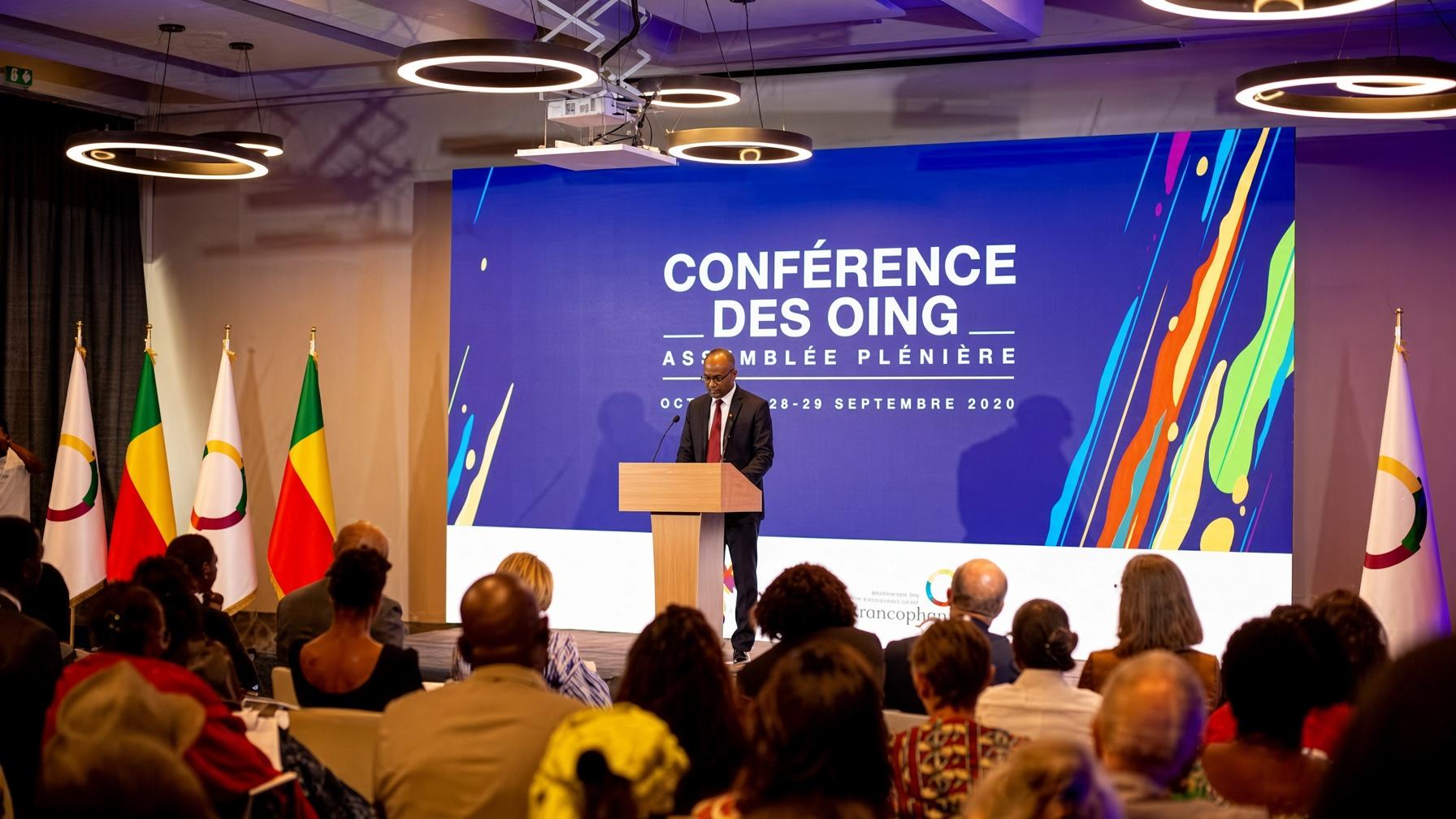
Something shifted in Cotonou on 28 September 2026. The 16th ordinary plenary assembly of the Conference of International Non-Governmental Organisations (COING) of La Francophonie opened not as another ceremonial gathering, but as a decisive moment when francophone civil society moved from consultation to commitment. Over two days, delegates are not merely debating peace — they are forging a 2026-2028 roadmap designed to force the issue onto the agenda of the 20th Francophonie Summit, scheduled for 15-16 November in Cambodia.
Redefining peace as more than the absence of war
The theme of the assembly — “Reinvesting in peace, mobilising francophone civil society for shared prosperity, resilient territories and lasting stability” — carries an unmistakable message. Peace, participants insist, cannot be reduced to the silence of weapons. It requires social justice, guaranteed access to basic services, credible mediation, robust human rights protection and the capacity to withstand economic and security shocks. This broadened definition is the foundation on which the Cotonou meeting is building its case.
A louder citizen voice in decision-making
Delegates are pressing for a tighter alliance between states, parliamentarians and NGOs. Civil society organisations, operating closest to the ground, want a genuine seat at the table of the International Organisation of La Francophonie (OIF). Their demand is straightforward: convert local recommendations into concrete public policies rather than leaving them as workshop conclusions. The momentum in Cotonou suggests this call is no longer easy to ignore.
The 2026-2028 roadmap: a practical shift
The assembly’s central ambition is to turn COING into a more operational force. Three priorities structure the plan:
- Consolidating networks — building structured synergies among francophone NGOs so that shared goals translate into coordinated campaigns.
- Mobilising resources — developing strategic financial and technical partnerships that give civil society the means to act, not just to speak.
- Tracking impact — measuring the real consequences of actions within communities, so that accountability becomes routine rather than an afterthought.
Benin’s role and the road to Cambodia
By hosting this session, Benin reinforces its position as a key player in francophone dialogue. With the Cambodia summit only weeks away, the civil society gathered in Cotonou is sending a clear signal: the future of La Francophonie cannot be built without the active involvement of citizens and their representatives. The breakthrough lies not in new declarations, but in the insistence that this time, the commitments must hold.