
Algeria’s growing trade push into Niger: a make-or-break moment for local producers
On a chilly morning in early November 2026, a 25-truck caravan rolled out of Adrar in southern Algeria, carrying 1,050 tonnes of goods destined for Niger. The shipment—packed with dates, detergents, packaging materials, and salt—marks yet another escalation in Algeria’s campaign to expand its commercial footprint across the Sahel. But as Algerian products flood deeper into Niger’s markets, a critical question looms: how will local industries respond to this intensified competition?
The timing is deliberate. The convoy is the latest in a series of Algerian export drives timed to coincide with national export celebrations, signaling the government’s commitment to diversifying its economy beyond hydrocarbons. For Algeria, the strategy makes sense: leverage geographical proximity to secure new consumer bases and create economic opportunities for domestic businesses. For landlocked Niger, a nation heavily reliant on cross-border trade, the influx offers short-term relief in product availability but raises long-term concerns about the survival of its own industries.
At the heart of the issue is whether Niger’s producers can adapt—or if they will be overwhelmed by cheaper, more readily available imports.
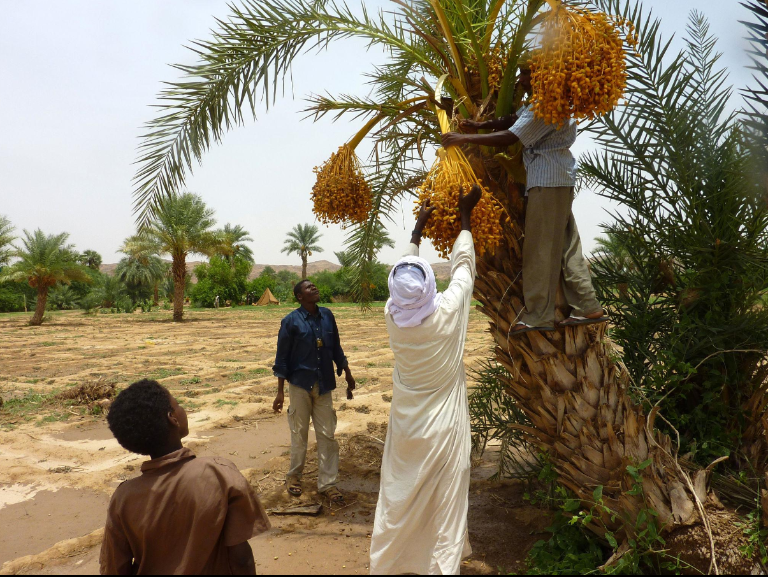
Dates from Kawar: A heritage under threat from imported competition
The case of dates from the Kawar region—around Bilma, Fachi, Dirkou, and Djado—exposes the vulnerabilities of Niger’s agricultural producers. This Saharan oasis has long been home to a rich variety of date palms and generations of expertise in cultivation and harvesting. Yet despite its cultural and economic significance, the local date sector faces persistent challenges: low yields, limited water access, high transport costs, and inadequate storage and packaging infrastructure.
These structural weaknesses have already made the region’s producers vulnerable to cheaper imports from neighboring countries, including Libya and Algeria. Earlier reports highlighted how traders often favored foreign dates due to their competitive pricing, consistent supply, and modern packaging—factors that local growers struggle to match. Now, with an additional 1,050 tonnes of Algerian dates en route, the pressure on the Kawar producers is intensifying.
It’s not just about price anymore. The question is whether local producers can secure fair access to distribution networks, compete in quality presentation, and carve out a sustainable market space. Without support, the risk is clear: local dates may become a niche product, confined to elite markets or ceremonial use, while imported varieties dominate everyday retail.
Detergents, packaging, and the slow erosion of local manufacturing
The industrial sector is feeling the squeeze as well. Small and medium-sized manufacturers producing detergents and packaging materials are already grappling with high input costs, unreliable supply chains, and a challenging business environment. Reports from late 2024 indicated that several local factories had been forced to shut down due to unsustainable competition from imported goods sold at lower prices.
The arrival of additional Algerian shipments threatens to deepen this crisis. Unlike agricultural produce, manufactured goods often face less public scrutiny, and price is the dominant factor in consumer choices. If imported detergents and packaging continue to undercut local products, the consequences could ripple through the economy: reduced investment in industrial zones, job losses, and stalled growth in value-added sectors.
Yet it’s premature to sound the alarm across the board. The actual impact will depend on several variables: the final prices of imported goods, the volumes reaching local markets, and the speed at which Niger’s manufacturers can innovate and improve efficiency. While this single caravan won’t dictate the future of an industry, it does highlight a growing trend—and a potential turning point.
Can Niger balance trade openness with local protection?
Niger’s government has responded with a policy aimed at safeguarding consumers and fair competition. In July 2026, the Minister of Commerce and Industry announced a sweeping program to inspect imported goods for compliance with quality and safety standards. The initiative is designed to block dangerous or substandard products and prevent unfair competition from undermining compliant local producers.
But compliance checks alone are not enough. To truly level the playing field, producers need more: access to finance, modern equipment, improved infrastructure, and market access support. Without these measures, even the best-intentioned regulations will fail to protect local industries from being outpriced or outmaneuvered.
The government’s challenge is clear: craft a trade policy that allows foreign goods to meet demand without suffocating domestic production. It’s a delicate balance—one that requires more than inspections; it demands investment in competitiveness.
From market outlet to economic partner: rethinking the trade relationship
The surge in Algerian exports raises a deeper question: what kind of economic relationship does Niger want with its neighbors? On one hand, increased imports can ease supply shortages and diversify access to essential goods—particularly for a landlocked nation heavily dependent on transit routes.
On the other, there’s a real risk of Niger becoming a one-way market: a consumer of finished goods, with limited capacity to produce and export its own value-added products. That would leave the country dependent on foreign supply chains and vulnerable to price volatility and political shifts in supplier nations.
To avoid this scenario, trade must evolve beyond simple export-import flows. It should foster joint ventures, technology transfer, local processing initiatives, and balanced investment. Otherwise, the 25 trucks departing from Adrar will be remembered not as a sign of expanding opportunity, but as the beginning of a silent industrial decline.
Conclusion: The choice between resilience and surrender
The 1,050 tonnes heading to Niamey are more than cargo—they represent a strategic gamble. For Algeria, it’s about expanding influence and finding new markets. For Niger, it’s about whether its industries can rise to the challenge or be overwhelmed by the tide.
The outcome is not predetermined. It will be shaped by policy choices, private sector resilience, and the ability of producers to innovate and compete. One thing is sure: if Niger’s industries are to thrive, the response must go beyond protectionism. It requires a commitment to transformation—turning imported competition into a catalyst for growth, not a death sentence for local enterprise.