
Why the 2026 Paris Peace Forum could hinge on Africa’s next move
The 2026 Paris Peace Forum, held on November 10–11, isn’t just another diplomatic gathering—it’s a potential turning point. As world leaders, policy experts, and civil society figures descend on Paris, one question looms large: Can African nations, particularly Senegal and Benin, turn this moment into a catalyst for meaningful change?
The stakes couldn’t be higher. With global conflicts raging, technological upheavals reshaping power structures, and African voices still underrepresented in key decision-making bodies, the forum could either reinforce the status quo or become the stage where Africa asserts its rightful place on the world stage.
Senegal, led by President Bassirou Diomaye Faye, and Benin, represented by Digital Transformation Minister Mahuna Akplogan, are stepping into the spotlight. Their presence isn’t merely symbolic—it’s a strategic declaration that Africa is ready to engage, not just observe.
Senegal’s diplomatic chessboard: balancing tradition and transformation
For Senegal, the Paris forum isn’t just another stop on the diplomatic circuit. It’s an opportunity to reposition itself as a thought leader in a world where Africa’s role is increasingly scrutinized but still underappreciated.
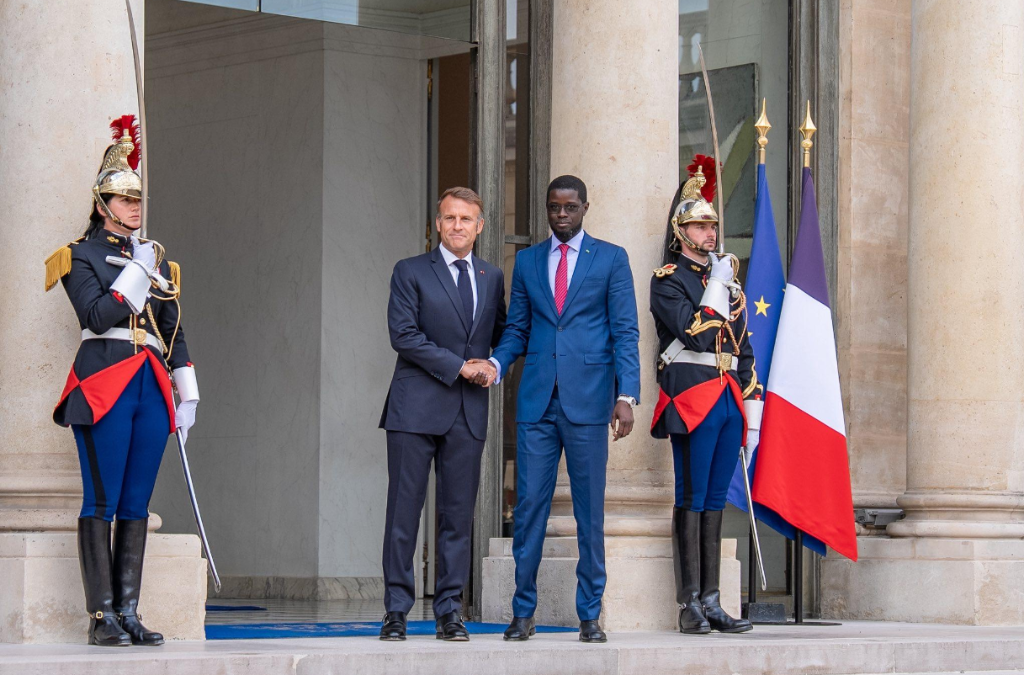
President Bassirou Diomaye Faye’s arrival in Paris, following a bilateral meeting with French President Emmanuel Macron at the Élysée Palace, signals more than just goodwill. It’s a deliberate move to align Dakar’s priorities with global agendas—without losing sight of Africa’s sovereignty.
The Senegalese delegation is pushing for three core objectives:
- Security and stability in the Sahel: Addressing the root causes of terrorism and fostering regional cooperation.
- Economic sovereignty: Advocating for fair trade, debt relief, and investment models that prioritize African development.
- Institutional reform: Demanding a greater African voice in global governance structures like the UN, IMF, and World Bank.
But Dakar’s approach isn’t just about lobbying—it’s about reshaping the narrative. By framing Africa’s challenges as opportunities for collaboration rather than problems to be managed by others, Senegal is positioning itself as a partner, not a petitioner.
Benin’s digital gamble: can technology be Africa’s great equalizer?
While much of the forum’s attention focuses on geopolitical tensions and military interventions, Benin is steering the conversation toward a different battleground: the digital sphere. Represented by Mahuna Akplogan, Benin’s Minister of Digital Transformation and Innovation, the country is making a bold case for technological sovereignty as a cornerstone of national and continental resilience.
The stakes? Everything from data privacy to artificial intelligence governance. Benin isn’t just talking about digital inclusion—it’s advocating for African-led solutions in a domain where the rules are still being written. The country’s National AI Strategy exemplifies this ambition, aiming to harness emerging technologies for development while mitigating risks like digital colonialism.
For Benin, the message is clear: The future of governance, economics, and even peace itself will be shaped by who controls the digital infrastructure. By embedding this principle into the forum’s discussions, the country is forcing a reckoning—one where Africa refuses to be a passive consumer of foreign tech and instead becomes an architect of its own digital destiny.
Beyond Paris: why this forum matters for Africa’s global ambitions
The Paris Peace Forum isn’t just about declarations and handshakes. It’s a litmus test for Africa’s ability to transition from participant to decision-maker in a world order that has long marginalized its perspectives.
Senegal and Benin symbolize two complementary pathways to this goal:
- Senegal’s path: Diplomatic advocacy and alliance-building to amplify African priorities.
- Benin’s path: Technological innovation as a lever for economic and political independence.
Yet the real test lies in what comes next. Will the forum’s resolutions translate into tangible actions? Will African delegations secure commitments on debt restructuring, climate financing, or digital rights? And most critically, will the world’s most powerful nations listen—or will the dialogue remain one-sided?
For Africa, the Paris Peace Forum isn’t just another diplomatic event—it’s a strategic inflection point. Either the continent’s leaders will use this platform to carve out a new role for themselves, or they’ll leave empty-handed, watching as others dictate the terms of global peace and prosperity.
What’s next for Africa’s peace and tech diplomacy?
The Paris forum is only the beginning. The real work will unfold in the months and years ahead, as Senegal, Benin, and their African peers translate words into actions. Key areas to watch include:
- Follow-up mechanisms: Will there be structured dialogues to ensure accountability?
- Resource mobilization: Can African-led initiatives attract the investment needed to scale?
- Youth and tech integration: How will Africa’s young, digitally native populations shape the continent’s agenda?
One thing is certain: Africa’s presence at the Paris Peace Forum isn’t a courtesy—it’s a declaration of intent. The question is whether the rest of the world is ready to meet Africa halfway.
Because in 2026, the world’s most pressing challenges won’t be solved without Africa at the table.