
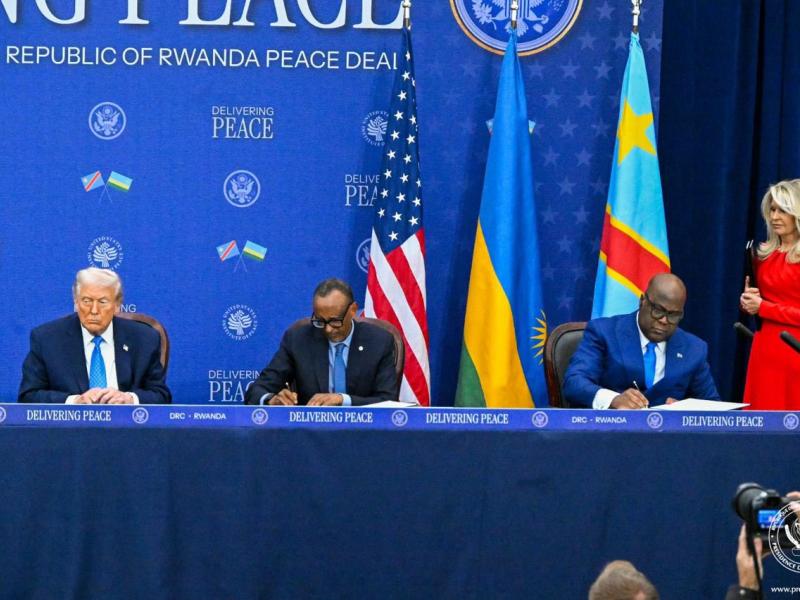
The diplomatic efforts initiated in Washington, Doha, and Montreux were once seen as beacons of hope for the Democratic Republic of Congo. However, the current situation reveals that these initiatives have achieved very little in terms of actual progress.
Instead of a full retreat, the Rwandan Defense Forces and the AFC/M23 coalition have merely engaged in minor tactical movements, shifting positions by only 15 to 20 kilometers. Far from leaving the region, Rwandan military assets, including sophisticated anti-aircraft technology, were still being deployed as late as April 2026. No significant withdrawal has been observed in the subsequent weeks, even as the AFC/M23 reportedly considers a restructuring and a potential change of name.
The government of the RDC also shares responsibility for this diplomatic stalemate. Kinshasa has not fulfilled its commitment to neutralize the FDLR, a group that continues to operate alongside the national army, the FARDC.
Furthermore, deep internal divisions are fracturing the AFC/M23. While political figures like Corneille Nangaa and Joseph Kabila—who is rumored to be positioned for a major leadership role—appear focused on the ambition of seizing control of the capital, Kinshasa, the movement’s military leadership is hesitant. Most commanders are unwilling to extend their operations beyond the boundaries of North Kivu and South Kivu, creating a significant rift between the leadership’s political goals and the strategic priorities of the troops.