
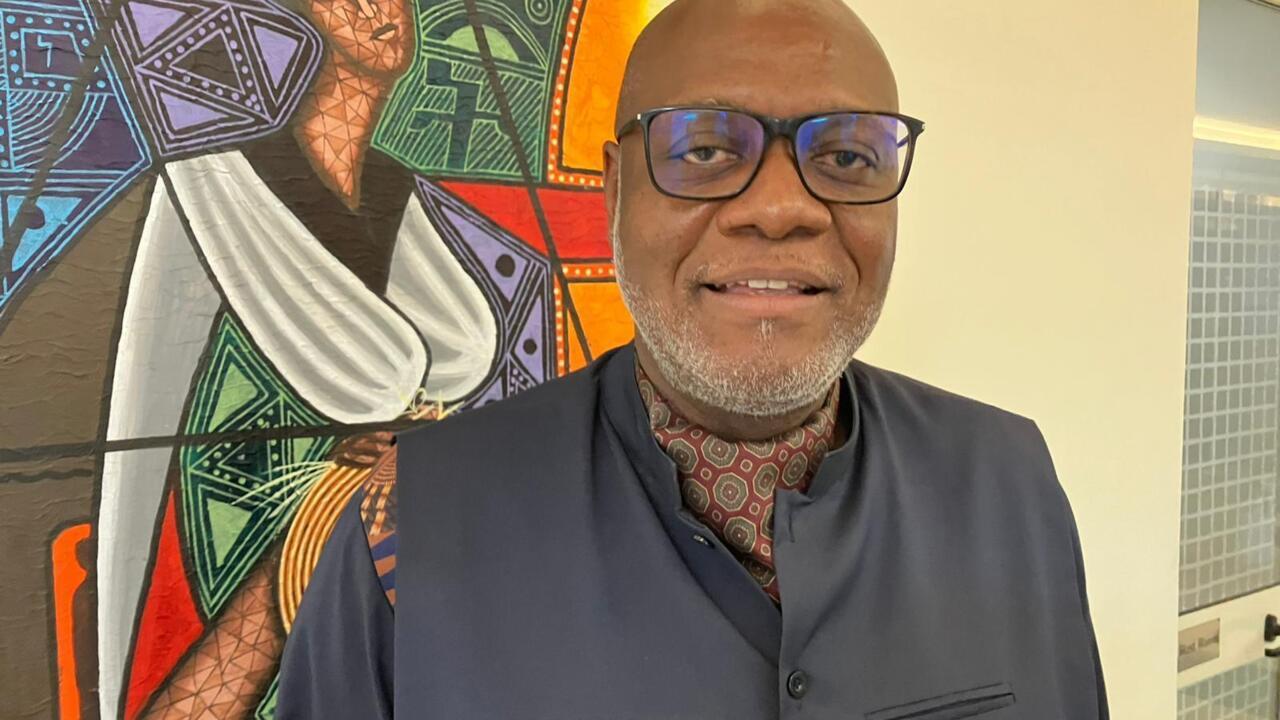
The 39th African Union summit concluded with a bold declaration: silencing the guns and vowing to end unconstitutional power transitions. But can this promise hold weight? Paul-Simon Handy, a Cameroonian researcher and Regional Director for the Institute for Security Studies (ISS) in East Africa, shared his insights from Addis Ababa during a special interview on Africa Midday.
africa union summit: can the ‘silence the guns’ pledge be enforced?
The African Union’s latest gathering in Addis Ababa sent a clear message: unconstitutional power grabs would no longer be tolerated. Yet, the question remains—how credible is this stance when leaders behind coups are allowed to contest elections?
Paul-Simon Handy, Regional Director for the Institute for Security Studies (ISS) in East Africa, weighed in on this paradox during a live discussion. He argued that legitimizing coup plotters through elections undermines the very principles the AU claims to uphold.
the contradiction in democratic processes
Handy highlighted a glaring inconsistency: while the AU condemns unconstitutional regime changes, it has not taken a firm stance against leaders who seize power through force and later seek democratic validation. He stressed, it is unacceptable for those responsible for coups to be elected through democratic means.
This double standard, he noted, weakens the AU’s credibility and emboldens future coup plotters. The researcher pointed out that elections should serve as a tool for accountability, not a loophole for legitimizing authoritarian rule.
regional stability at stake
The ISS director emphasized that stability across the continent hinges on consistent enforcement of democratic norms. He called for stricter measures, including sanctions and diplomatic isolation, for leaders who take power unconstitutionally, regardless of how they later attempt to legitimize their rule.
Handy’s remarks reflect growing concerns among analysts and policymakers about the AU’s ability to enforce its own declarations. The summit’s bold statements risk falling flat if they are not backed by decisive action.
the role of international partners
Handy also underscored the importance of international support in holding coup leaders accountable. He urged global partners to align their policies with the AU’s principles, ensuring that no leader can benefit from both military takeovers and democratic elections.
The debate over how to balance sovereignty and accountability remains unresolved, but Handy’s intervention adds a critical voice to the conversation. The AU’s next steps will determine whether its declarations are more than just words.