
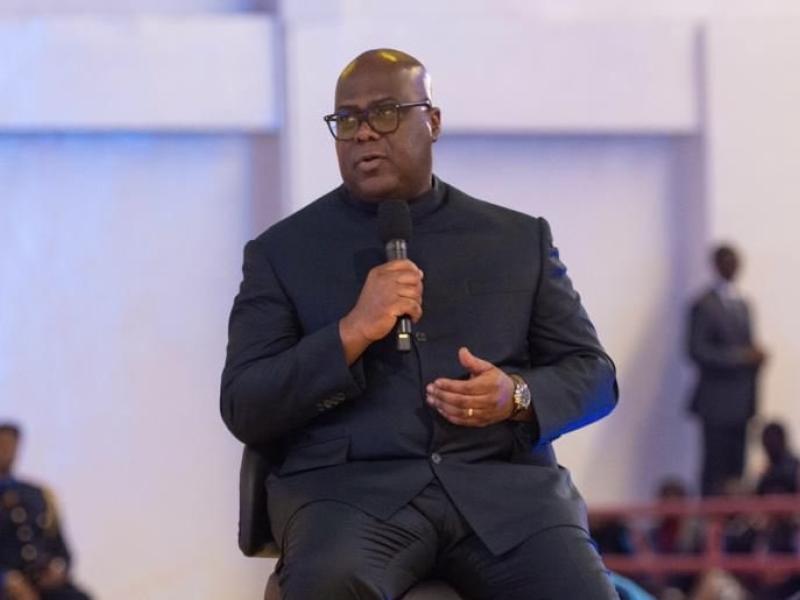
During the commemorations for the 66th anniversary of the independence of the République démocratique du Congo, President Félix Tshisekedi issued a strong call for national unity, urging citizens to respect established institutions and reject any form of violence as a means of political expression.
In a nationwide address delivered on the eve of the national holiday, the head of state expressed his openness to political discussion while setting strict boundaries. He emphasized that while he welcomes engagement, such dialogue must never be used to subvert the republican framework or bypass the will of the people.
« The Republic does not close its doors to any of its children who choose the path of peace, dialogue, and loyalty to the Nation. However, the purpose of dialogue must not be distorted. It cannot become a tool for applying pressure, sidestepping our institutions, or challenging the popular will as expressed through the Constitution and the laws of the land, » stated Félix Tshisekedi.
The President further asserted that sovereignty resides solely with the Congolese people, warning that no individual or group has the right to speak against the interests of the Nation.
« The Congolese people are the only true sovereigns. No one can claim to defend democracy while simultaneously rejecting its core principles: free debate, respect for institutions, the separation of powers, and accountability to the citizens, » he added.
Addressing the ongoing security challenges and internal tensions—particularly regarding debates over constitutional changes—Félix Tshisekedi condemned the use of force. He made it clear that taking up arms does not grant any special status or right to negotiate, nor does it place those who threaten the state above law-abiding citizens.
« I must be very firm on this point: resorting to violence, weaponry, hatred, or disinformation is not a valid form of political expression. Such actions will never create a special right to negotiation, nor will they elevate those who endanger the Republic above those who follow its laws, » the President declared.
In the face of existential threats to the country, he called for an absolute commitment to national solidarity.
« We may have disagreements and engage in robust debate within a republican framework. However, we have no right to weaken our Nation at a time when it faces significant threats. National unity is not merely an option; it is a historical requirement and an absolute necessity, » he stressed.
The head of state extended his appeal to all sectors of society, including political leaders from both the majority and opposition, religious figures, economic actors, and civil society, urging them to act with restraint and a high sense of responsibility.
Currently, the political landscape in the République démocratique du Congo remains divided over the nature of a potential national dialogue. The administration favors a process conducted within the existing institutional framework to avoid undermining the constitutional order. Conversely, sections of the opposition argue that a credible dialogue must be mediated by the CENCO and the ECC, following their proposed roadmap for inclusive talks.
While religious leaders advocate for an inclusive dialogue that addresses transitional justice and security in occupied territories, they maintain that such inclusivity should not lead to impunity. Despite various diplomatic initiatives in Washington and Doha, and ongoing efforts by Angola, the security situation in North Kivu and South Kivu remains precarious, and no formal national dialogue has yet been convened.