
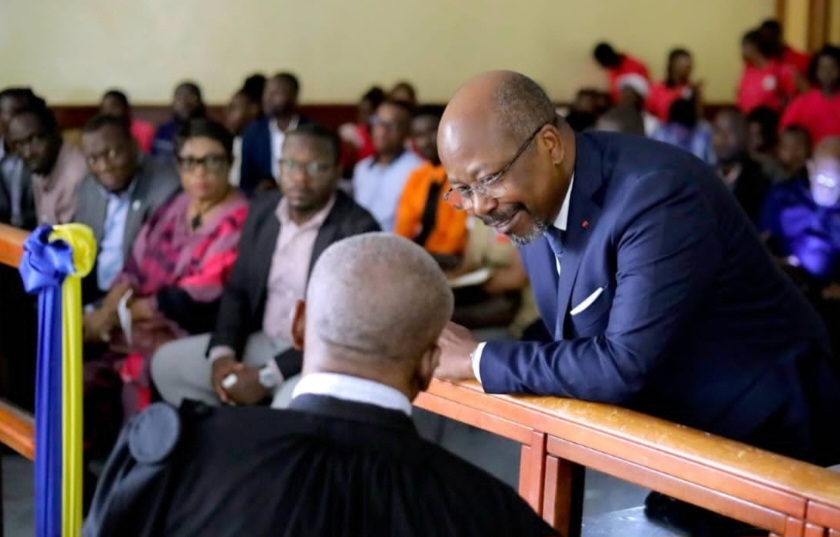
Gabon: detained opposition leader Bilie By Nze faces renewed legal battle
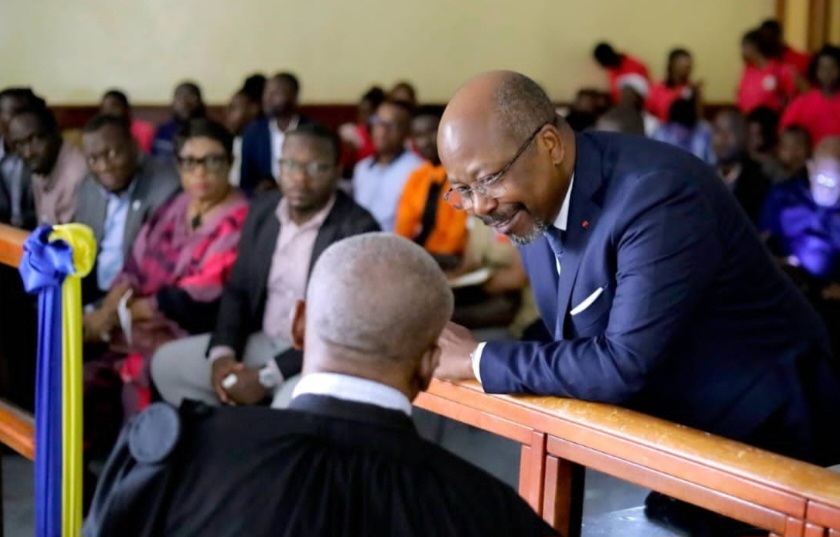
Libreville, June 3, 2026 — The continued detention of Alain-Claude Bilie By Nze, Gabon’s former Prime Minister and prominent opposition leader, has intensified debates over judicial independence and the fairness of legal proceedings in the country.
The Court of Appeal in Libreville has once again rejected the defense’s motion to nullify the case, upholding his incarceration at the central prison since April 16, 2026. While the case appears to be a matter of common law, it has evolved into a critical test of the delicate balance between justice, politics, and fundamental trial guarantees.
Contested proceedings and allegations of legal expiration
Bilie By Nze faces charges of alleged embezzlement and fraud dating back to 2008. His legal team argues that these offenses should be considered time-barred since 2018, rendering the prosecution legally unfounded. The defense has further highlighted procedural irregularities, including alleged procedural flaws and the contested legal classification of the charges.
Me Arthur Vercken, one of Bilie By Nze’s attorneys, has emphasized that his client’s prolonged detention constitutes a serious violation of fair trial rights and Gabon’s international obligations. The lawyers also point to a 24-hour period between his arrest and access to legal counsel as evidence of procedural shortcomings.
A politically charged judicial case
Beyond legal technicalities, this case unfolds against a politically charged backdrop. Bilie By Nze, a former Prime Minister under former President Ali Bongo Ondimba, is now a leading figure in the opposition against the current administration of President Brice Clotaire Oligui Nguema, who took office in 2025.
The opposition and segments of public opinion view the case as emblematic of arbitrary detention and judicial irregularities. What began as a criminal case has transformed into a litmus test for perceptions of the rule of law in Gabon’s post-election landscape.
During a recent interview, President Oligui Nguema distanced himself from the case, asserting that it falls entirely under the purview of the judiciary. He underscored the principle of separation of powers, stating that he has no involvement in the matter and that it remains strictly a judicial issue.
A pivotal moment for judicial independence and institutional stability
The Court of Appeal’s refusal to grant provisional release or nullify the proceedings places Gabon’s judiciary under intense scrutiny, both domestically and internationally. The defense’s arguments, centered on legal expiration and alleged irregularities, have fueled broader discussions about transparency and rigor in high-profile cases.
This case transcends the question of guilt or innocence; it challenges the integrity of institutions tasked with upholding the law. The perception of an independent judiciary, free from political interference, is now central to the country’s credibility.
As Gabon navigates a period of institutional rebuilding, every judicial decision involving a major political figure is scrutinized as a barometer of democratic maturity. The outcome of this case will weigh heavily on the trust between Gabon’s institutions and its citizens, serving as a defining moment for the nation’s commitment to justice and fairness.