
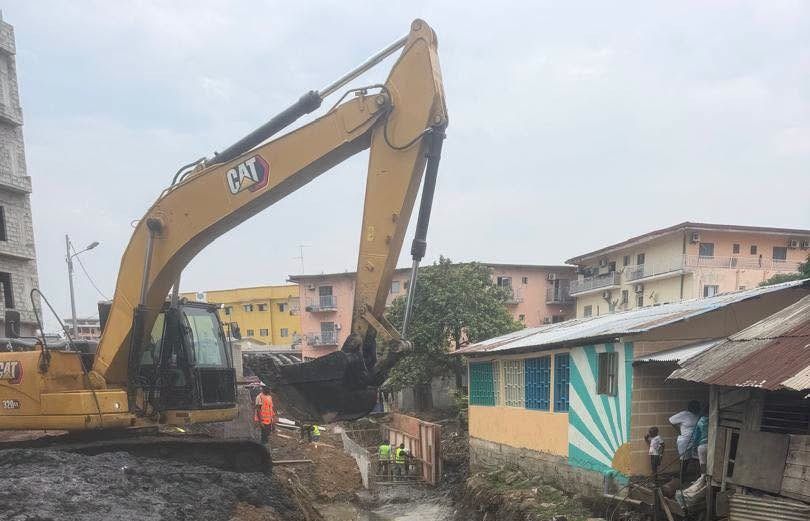
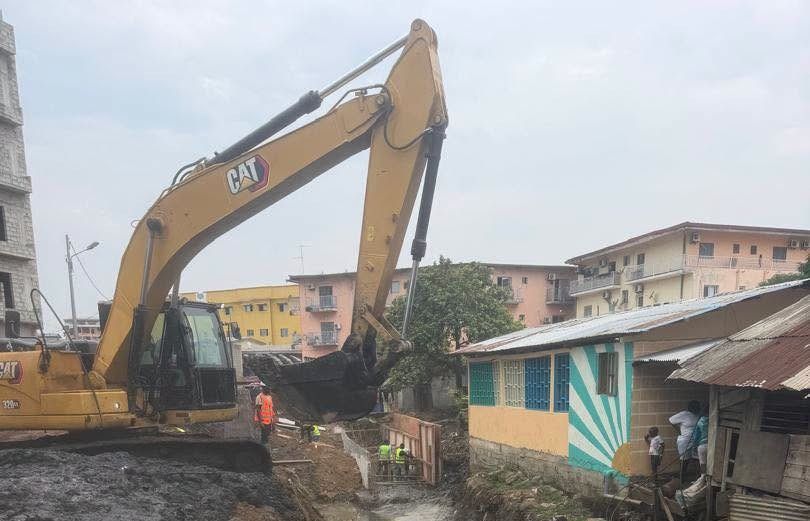
The urban landscape of Libreville is poised for a significant evolution. Beginning June 26, 2026, the first phase of demolition will commence in the Baie des Cochons district, located in the capital’s third arrondissement, marking the start of a deep structural renovation.
Beyond the arrival of heavy machinery, this site represents a flagship initiative of the modernization policy led by President Brice Clotaire Oligui Nguema. The primary objectives are to radically improve traffic circulation, enhance waste management systems, and ensure better territorial cohesion across several key sectors of the city.
Targeting the corridor from Sipagel and the Léon Mba intersection to the Société d’énergie et d’eau du Gabon facilities and the Petit-Paris roundabout, this operation highlights the government’s focus on structural infrastructure. However, it also brings to the forefront a challenge shared by many African metropolises: balancing necessary growth with the welfare of long-standing local communities.
Opening up a changing capital
The Baie des Cochons is a vital artery in the spatial organization of Libreville. Positioned at the center of intense economic activity, the area has long suffered from heavy congestion, acting as a bottleneck between the Mont-Bouët market, the city center, Boulevard Bessieux, and surrounding districts.
The authorities plan to establish a new primary road network supported by several secondary routes. These improvements are designed to facilitate easier movement and strengthen the links between the Centre Hospitalier Universitaire de Libreville, Petit-Paris, and the Léon Mba crossroads.
During a field inspection on June 23, Mays Mouissi, the Minister of Housing, Habitat, Urbanism, and the Cadastre, met with residents to outline the project’s goals. Officials emphasized that clearing public easements is a mandatory prerequisite before construction crews can begin the physical works.
In addition to mobility, the project tackles the recurring nightmare of seasonal flooding. The plan includes the thorough cleaning of existing gutters, the restoration of damaged hydraulic structures, and the installation of modern rainwater drainage systems to protect thousands of residents.
The human dimension of urban change
Large-scale transformations inevitably bring immediate disruptions for those in the path of progress. Many families have lived in these targeted areas for generations, while others run small businesses that provide their primary income. Consequently, the start of demolitions has sparked a mix of anxiety and expectation regarding the future.
The success of such ambitious urban projects is rarely judged by the quality of the asphalt alone. It depends heavily on how the transition is managed socially. Issues such as fair compensation, relocation options, and the preservation of local economic life are just as critical as the engineering itself.
The Ministry has indicated that dialogue with local stakeholders was a priority leading up to the start of operations. The coming weeks will serve as a test of whether the government can effectively balance the general public interest with the protection of affected citizens.
A defining moment for modernization
The Baie des Cochons has become a symbol of a city that can no longer rely on outdated infrastructure. Faced with rapid population growth and environmental pressures, Libreville must adapt to a new reality where chronic traffic jams and poor sanitation are no longer acceptable barriers to economic development.
This project is a major political and technical test for Gabon. It will demonstrate the state’s ability to implement bold reforms while maintaining social stability. A modern city is built on more than just concrete and drainage; it requires the trust and participation of its inhabitants. While the first excavators mark the beginning of the work, the ultimate success of this transformation will be measured by its long-term impact on the daily lives of those who call the capital home.