
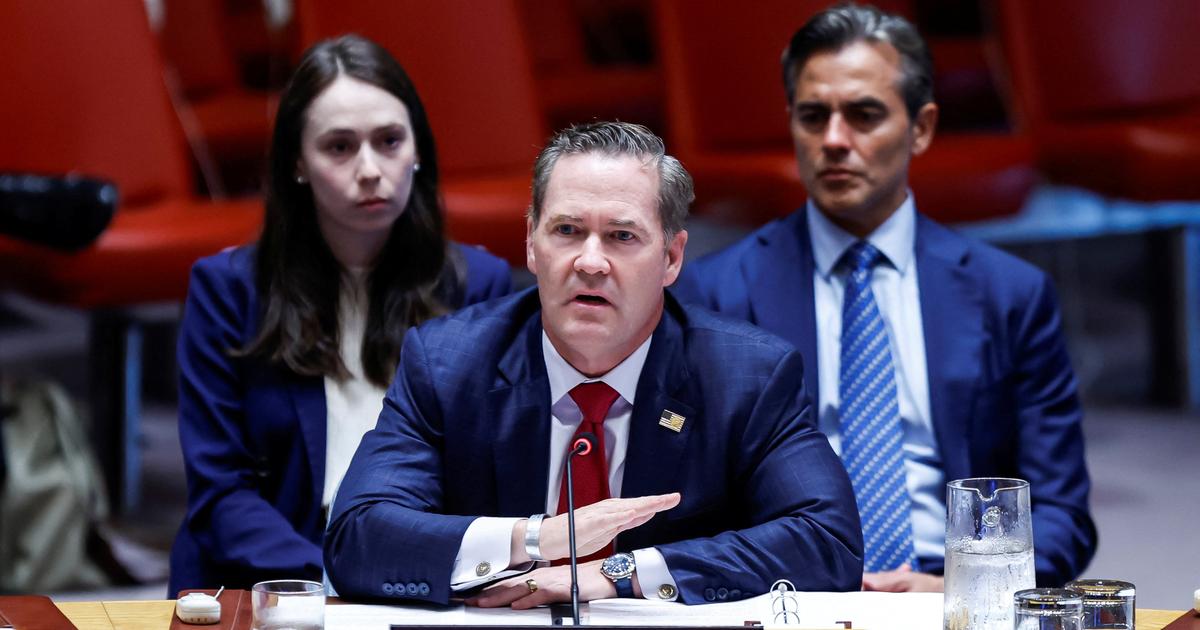
United Nations: American delegation exits Security Council over French remarks. On Monday, the United States delegation walked out of a United Nations Security Council session as the French ambassador began speaking. The American representatives expressed their disapproval of what they termed France’s “hypocritical” comments. France had previously drawn parallels between Washington and nations like North Korea and Russia following a vote concerning human rights. The disagreement stemmed from a Friday vote at the General Assembly, where the United States was one of ten countries to oppose the four-year renewal of Volker Türk’s mandate as the UN High Commissioner for Human Rights. Earlier, the French mission to the United Nations in Geneva had stated on X that the United States, once a beacon for human rights, was no longer, finding itself “isolated” alongside North Korea, Nicaragua, Mali, and Russia, with the world no longer heeding its voice. Such an exit from a Security Council meeting is a rare occurrence, and the American delegation reportedly expressed surprise at France’s direct and public criticism.
Romania expels Russian embassy official amid drone incursions. Bucharest has declared a Russian embassy staff member “persona non grata,” with the decision communicated to Russia’s Ambassador to Romania, Vladimir Lipaev, on Monday. The individual must depart the country within five days. This action follows a series of drone incidents, including the presentation of fragments from a Russian-made Shahed drone – typically employed by Moscow in Ukraine and recently downed by a Romanian F-16 fighter jet – to the ambassador. Romanian authorities intercepted three drones over the past weekend, with another incursion reported on Monday. The Russian Ministry of Foreign Affairs vehemently denied the allegations, dismissing them as a “new propaganda stunt” and asserting that the “unfounded expulsion of a Russian diplomat will not go unanswered.”
Saudi Arabia reports drone attack originating from Iraq. With a three-day pause in direct hostilities between the United States and Iran, the Saudi Ministry of Defense announced that “Iran-backed terrorist militias” had targeted Saudi territory with drones. No specific group has yet claimed responsibility for this alleged assault. Concurrently, Yemen’s pro-Iranian Houthi rebels stated on Monday they had targeted Saudi oil infrastructure, a claim that Riyadh has not confirmed. Saudi Arabia, which backs the Yemeni government, and the Houthis resumed conflict on July 13, ending a four-year truce. On July 20, the Yemeni rebels declared their intention to blockade Red Sea and Gulf of Aden shipping routes for vessels traveling to or from Saudi Arabia, the world’s leading crude oil exporter. Analysts suggest the Houthi actions are aimed at supporting their primary ally, Iran, while also pressuring Saudi Arabia and the international community to make political concessions regarding Yemen. There is growing concern that the conflict in Yemen could intensify significantly.
Chad announces withdrawal from International Criminal Court. N’Djamena formally justified its decision on Monday to withdraw from the International Criminal Court (ICC), citing the court’s disproportionate focus on African nations. The Chadian government criticized that out of the 13 investigations initiated by the ICC since its inception, nine “concern African states, compared to only four opened in other regions of the world.” This move by Chad appears to have been influenced by the United States. During a telephone conversation last Thursday, Frank Garcia, the U.S. Under Secretary of State for African Affairs, reportedly encouraged Chad to reconsider its membership in the ICC when speaking with Chad’s foreign minister. The United States launched a significant diplomatic campaign against the ICC in mid-July, labeling it a “threat” to Americans, promising new sanctions, and urging its allies to follow suit and withdraw.