
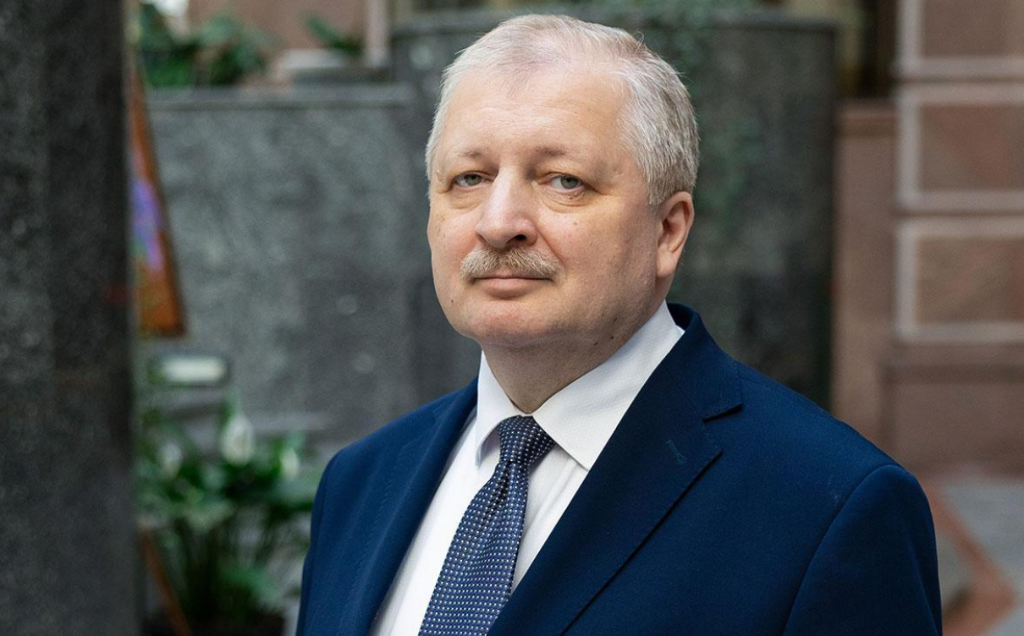
Russia’s diplomatic corps is reeling from the sudden loss of its top envoy in Washington. Alexandre Dartchiev, Russia’s ambassador to the United States, passed away at the age of 66 on November 11, 2025, according to an official statement from the Russian Foreign Ministry. The announcement triggered immediate speculation, particularly given the lack of details surrounding the circumstances of his death.
Why this death matters more than just personnel
Dartchiev was not just any diplomat. His nearly four-decade career was almost entirely focused on North America, making him one of Moscow’s most seasoned experts on U.S. politics and diplomacy. Appointed to Washington in March 2025, he arrived at a pivotal moment—just as relations between Russia and the U.S. were undergoing a fragile reset under renewed diplomatic channels.
From Canada to Capitol Hill: A career built on U.S.-Russia channels
Before taking the helm in Washington, Dartchiev served as Russia’s ambassador to Canada from 2014 to 2021. Prior to that, he held key positions within the Russian Foreign Ministry, specializing in U.S. and North American affairs. His deep understanding of American political intricacies made him a critical asset for the Kremlin as it sought to navigate a deeply strained relationship with Washington.
Diplomatic stakes: What’s at risk without a permanent ambassador?
The timing of Dartchiev’s death could not be more consequential. With the U.S.-Russia relationship still fractured by the war in Ukraine, economic sanctions, arms control disputes, and competing security frameworks, the role of ambassador in Washington is more vital than ever.
Moscow’s ambassador to the U.S. serves as the primary channel for direct communication between the Kremlin and the White House. Even amid severe diplomatic tension, such channels remain essential for crisis management and backchannel negotiations. His absence now raises a pressing question for the Russian leadership: Who will step in to fill this gap, and what message will that appointment send?
A leadership vacuum in a high-stakes environment
In the short term, the Russian Foreign Ministry will likely maintain the embassy’s operations using temporary staff. However, the appointment of a permanent successor will be closely scrutinized. It could signal whether Moscow intends to prioritize dialogue or harden its stance in response to ongoing challenges like Western sanctions and geopolitical rivalry.
Silence on the cause: What do we really know?
The initial announcement from the Russian Foreign Ministry referred only to a ‘sudden death,’ offering no specifics about the location or cause. This lack of transparency fueled speculation and media conjecture. Later statements from Foreign Ministry spokesperson Maria Zakharova clarified that Dartchiev had died in Moscow due to a chronic illness, though no further medical details were provided.
Without additional public information, it is impossible to assess whether his death was linked to personal health issues or external factors. Official sources have dismissed any suspicious circumstances, emphasizing the purely medical nature of the incident.
A strategic loss for Moscow’s global positioning
Dartchiev’s death is more than the loss of an individual—it’s a strategic setback. At 66, he was in the prime of his diplomatic career, uniquely positioned to interpret U.S. policy shifts and advocate for Moscow’s interests in Washington. His absence leaves a void that will be difficult to fill, especially as Russia seeks to reassert its influence on the global stage.
The ambassador’s role extends beyond bilateral relations. It serves as a barometer of Russia’s diplomatic health and its ability to project power even under pressure. In an era where every communication channel counts, Dartchiev’s passing forces a moment of reckoning: Can Moscow maintain its presence in Washington without its most trusted voice?
What comes next for Russia’s U.S. strategy?
The Russian government faces immediate decisions. Will it appoint a successor quickly to avoid prolonged instability, or use the vacancy to signal a shift in strategy? Dartchiev’s legacy reminds us that even in fractured relationships, diplomacy requires constant engagement—and every ambassador plays a pivotal role in shaping the narrative.