
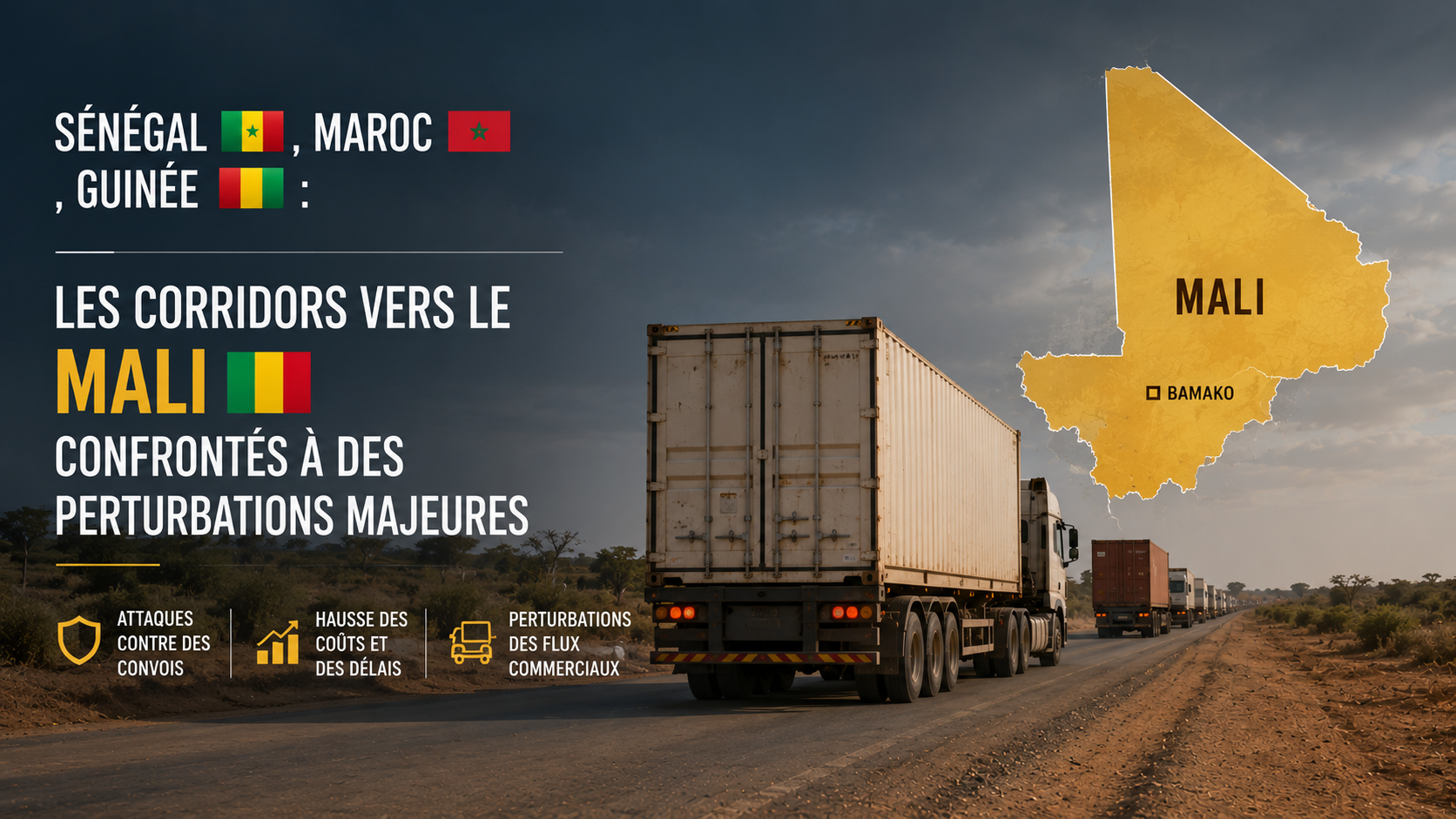
heightened insecurity disrupts vital transport corridors to Mali
Key trade routes connecting Mali with its regional partners, including Senegal, Morocco, and Guinea, have been grappling with significant disruptions for several weeks. From Senegalese transporters urging a halt to journeys to Bamako, to Moroccan operators adopting increased caution, and reported disturbances along the Guinea-Mali corridor, the arteries crucial for Malian supply are facing severe challenges.
- Transport

The escalating difficulties encountered across various corridors serving Mali are fundamentally altering the operational landscape for regional transporters. Beyond the calls for journey suspensions and the anxieties voiced by professional organizations, these commercial axis disruptions are now directly impacting freight costs, delivery schedules, and the intricate logistical networks linking Bamako to its primary trading partners.
As a landlocked nation, Mali’s economic lifeline heavily relies on regional road transportation. The Dakar-Bamako corridor remains an indispensable gateway for Malian imports. In 2024, approximately 2.6 million tons of goods destined for Mali passed through the port of Dakar, underscoring the immense economic significance of this route for the nation’s provisioning. Heightened security concerns are now translating into tangible decisions by transport operators. In Senegal, the Union des routiers has confirmed that at least eleven Senegalese trucks engaged in Malian deliveries have been set ablaze in recent weeks. Consequently, professional bodies have advised drivers to reduce or suspend certain routes, arguing that the inherent risks have become economically unsustainable.
An incident on May 6th further intensified these apprehensions. Several commercial convoys came under attack along the route connecting the Mauritanian border to Bamako. According to Moroccan trade union officials, more than fifteen trucks of Moroccan, Senegalese, and Mauritanian registration were targeted by armed groups, with at least six Moroccan heavy-duty vehicles being incinerated.
This particular event has had significant repercussions in Morocco, prompting numerous road transport operators to exercise greater prudence concerning Malian routes. For these transport companies, the financial calculations are rapidly shifting: increased insurance premiums, vehicle downtime, rising security expenditures, and the necessity of frequent detours are eroding profit margins on journeys already characterized by their length and expense.
The Guinea-Mali corridor is no longer immune to these escalating disruptions. Since the reported attacks in late April along this crucial commercial artery, the movement of both goods and passengers has been severely impeded. This route, however, plays a vital role in Mali’s logistical diversification, particularly through the port of Conakry. The challenges observed on this specific road severely limit available alternatives when other corridors are simultaneously experiencing tensions.
The ramifications now extend far beyond the transport companies themselves. On numerous routes, drivers are enduring prolonged waiting periods before departure, some convoys are forced to travel in groups, and families are left without news of loved ones who have embarked on these journeys for days. For economic operators, each interruption drives up storage costs, delays deliveries, and slows down commercial exchanges. When multiple corridors face simultaneous disturbances, it is the supply to the Malian market, regional logistical timelines, and cross-border economic activity that directly bear the brunt of these profound difficulties.
Three years after the security reorientation undertaken by Mali, Burkina Faso, and Niger – marked by a distancing from several Western partners and an increased rapprochement with Russia – security challenges continue to cast a heavy shadow over the Sahel. These security issues are now increasingly impacting regional trade and circulation along major commercial axes. The repercussions are felt far beyond the borders of the Alliance des États du Sahel: transport organizations in Senegal, Moroccan operators, and Mauritanian convoyers are all expressing profound concerns regarding the risks encountered on certain Malian roads.