
Why Niamey’s bold education initiative faces its toughest test yet
With thousands of classrooms shut down and classrooms overflowing with untrained educators, the education systems of Niger, Mali, and Burkina Faso are at a breaking point. As Niamey convenes the first ministerial education summit of the Alliance of Sahel States (AES), one critical question looms over the proceedings: Can sovereign schools be built when qualified teachers are scarce and school doors remain closed?
The stakes could not be higher. Behind closed doors across these three nations, a generation of children is being denied the basic right to learn—driven not only by a chronic lack of educators but by relentless insecurity and mass displacement. The outcome of this summit will determine whether the Sahel can rise from the crisis or remain trapped in a cycle of educational collapse.
Teacher shortages: The silent crisis eroding quality and access
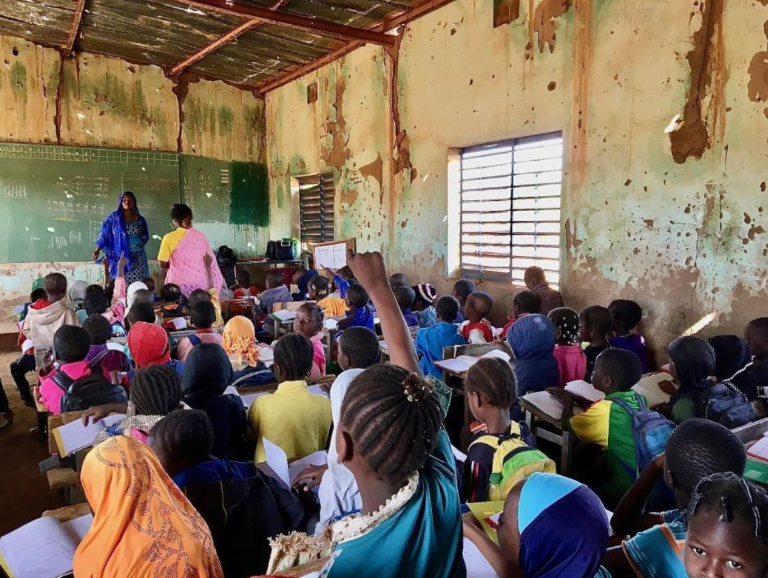
The heart of the problem isn’t just empty classrooms—it’s the absence of qualified educators. In Niger alone, over three million children are taught by fewer than 70,000 teachers, averaging 43 pupils per instructor in primary schools. The shortage is even more acute at higher levels: nearly 80% of public school teachers in 2017 were contract workers, some with no formal pedagogical training.
The figures tell a stark story. As of the 2023–2024 academic year, Niger had just 105,869 teachers across all levels for nearly four million students. The situation in Mali and Burkina Faso is similarly dire. In many rural and conflict-affected zones, teachers refuse postings or flee entirely, leaving remote communities without education infrastructure.
The result? Declining educational quality, crumbling infrastructure, and a growing reliance on underprepared staff—compounding the learning crisis and undermining national development.
From temporary hires to systemic failure: The teacher crisis deepens
Even when teachers are available, their qualifications often fall short. The UNESCO-backed study in Niger revealed that over three-quarters of educators were recruited on short-term contracts with minimal training. This ad-hoc approach has eroded professional standards and left schools—and students—vulnerable to chronic instability.
This isn’t just a numbers issue; it’s a structural one. Without robust teacher training colleges, continuous professional development, and competitive salaries, the Sahel’s education systems risk becoming permanent training grounds for unqualified staff, ill-prepared to guide the next generation toward stability and prosperity.
School closures: When terror decides who gets to learn
Violence has become a silent architect of educational ruin in the Sahel. Across the three AES member states, armed groups target schools, displace communities, and force entire districts into darkness.
In Burkina Faso, over 5,300 schools were shuttered in early 2024, displacing more than 820,000 children and 24,000 teachers. In Mali, nearly one in five schools sits idle, leaving 733,200 students without instruction. Niger has fared no better: by late 2025, 1,097 schools were closed, affecting 93,676 children—48% of them girls—especially in Tillabéri, where conflict has raged unchecked.
The human cost is devastating. Children lose years of learning. Teachers abandon their profession or flee to safer regions. Communities lose hope for a better future. And across the Sahel, a generation grows up in the shadows of war—without books, without teachers, without a future.
The domino effect of insecurity: Displacement and lost generations
Violence doesn’t just close schools—it uproots families. As people flee their homes, they leave behind not only livelihoods but also educational continuity. In 2026, more than two million people were internally displaced in Burkina Faso, over 400,000 in Mali, and nearly 550,000 in Niger.
These displaced families arrive in already overburdened towns, where schools struggle to absorb new students with limited infrastructure and stretched teaching staff. Many children never return to class. Others face interrupted or shortened educations—trapped in a cycle of poverty, early marriage, or recruitment by armed groups.
Beyond declarations: Can Niamey turn policy into classroom reality?
The AES education summit in Niamey is not just another policy forum. It’s a turning point. If its outcomes are to matter, the summit must move beyond rhetoric and forge concrete, coordinated action.
Key priorities include harmonizing curricula across borders, mutualizing teacher training programs, and standardizing diploma recognition. But the real test lies in emergency measures: reopening shuttered schools, securing classrooms, recruiting and retaining teachers in high-risk zones, and creating alternative learning pathways for displaced children.
There’s no time to waste. In Niger alone, nearly five million children remain out of school—a figure that underscores the scale of the crisis. The summit’s success will be measured not by speeches, but by how many desks are filled, how many teachers are trained, and how many children—especially girls—are finally given the chance to learn.
The path to sovereign education: What the Sahel must deliver
The dream of a sovereign, resilient school system in the Sahel hinges on more than political will. It demands investment in human capital, innovation in delivery, and protection of educational spaces in the face of relentless adversity.
As the AES ministers deliberate in Niamey, the world will be watching—especially the children whose futures hang in the balance. The summit must deliver more than promises. It must plant the seeds of a school system strong enough to survive the storm, sovereign enough to shape its own destiny, and equitable enough to leave no child behind.
The alternative is unthinkable: a Sahel where education becomes a privilege of the few, and a generation loses its voice forever.