
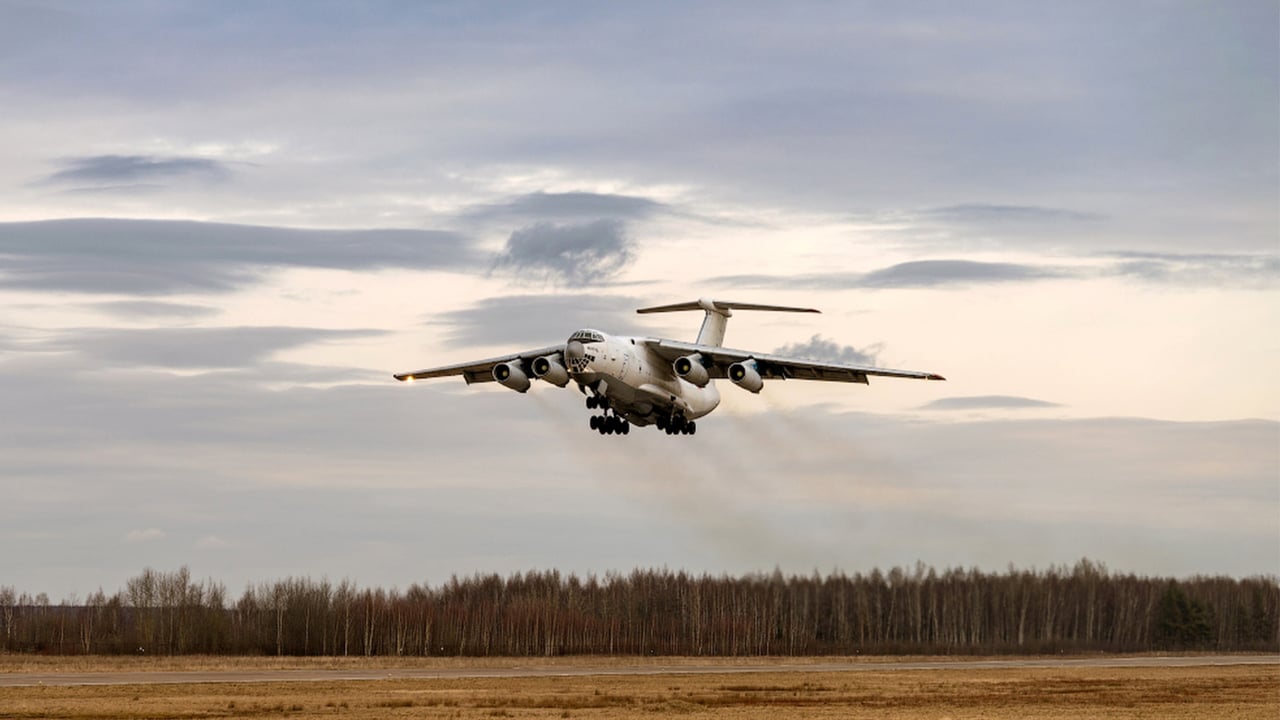
Military logistics in the Sahel have entered a new phase. Reports confirm that Moscow is deploying a dedicated air transport fleet to ferry troops, equipment, and supplies to allied governments in the region. This strategic air bridge, operated under the Africa Corps banner, relies on civilian-marked cargo aircraft to bypass international scrutiny while delivering critical support.

New logistics route established between Moscow and Sahel capitals
Since the launch of the Africa Corps, airlift operations have intensified. The fleet, composed of modified IL-76 and other heavy cargo planes, now conducts regular flights from Russian airfields to destinations in Mali, Burkina Faso, and Niger. These movements follow the signing of defense cooperation agreements with regional governments seeking alternatives to Western security partnerships.
The aircraft, often repainted with civilian liveries, avoid standard military markings. This camouflage tactic reflects Russia’s broader strategy to integrate military support under commercial guise, minimizing diplomatic friction while maintaining operational secrecy.
Wagner’s successor adapts to changing Sahel dynamics
The transition from Wagner Group to the state-backed Africa Corps has not disrupted air support to the Sahel. In fact, the new structure has streamlined logistics, replacing fragmented private networks with a centralized command. This shift underscores President Vladimir Putin’s commitment to sustaining influence in the region amid rising geopolitical competition.
Key destinations include airfields near Bamako, Ouagadougou, and Niamey, where cargo is offloaded under tight security. Local authorities have granted landing rights to these flights despite international sanctions, signaling alignment with Moscow’s strategic objectives.
Humanitarian aid or military reinforcement?
While the Kremlin frames these flights as humanitarian assistance, defense analysts highlight the dual-use nature of the cargo. Deliveries often include armored vehicles, communication equipment, and medical supplies—items that serve both civilian and military purposes. The ambiguity complicates oversight by international observers.
Some observers question whether the aid is genuinely humanitarian or a pretext for deeper military engagement. The Africa Corps’ expanding footprint suggests the latter, with airlifts coinciding with troop rotations and training missions on the ground.
Economic and political implications for West Africa
The presence of Russian air assets in the Sahel is reshaping regional security dynamics. Governments in Burkina Faso and Mali have cited the Africa Corps as a stabilizing force against jihadist insurgencies. However, critics argue that this support comes at the cost of sovereignty, as dependence on external powers grows.
Economically, the air bridge has created new trade corridors. Russian cargo planes occasionally carry commercial shipments alongside military equipment, benefiting local businesses in transit hubs. Still, the long-term impact on regional stability remains uncertain as geopolitical tensions escalate.
Future of Sahel air operations under scrutiny
As the Africa Corps expands its airlift capacity, questions arise about the sustainability of this model. Sanctions imposed on Russia have not deterred these operations, thanks to creative routing and the use of third-country intermediaries. Yet, the strategy risks further isolating regional partners from Western aid and investment.
For now, the skies over the Sahel remain a critical theater of influence. With Moscow doubling down on its Africa Corps initiative, the region’s governments face a stark choice: deepen ties with Russia or risk losing access to vital military and economic support.