
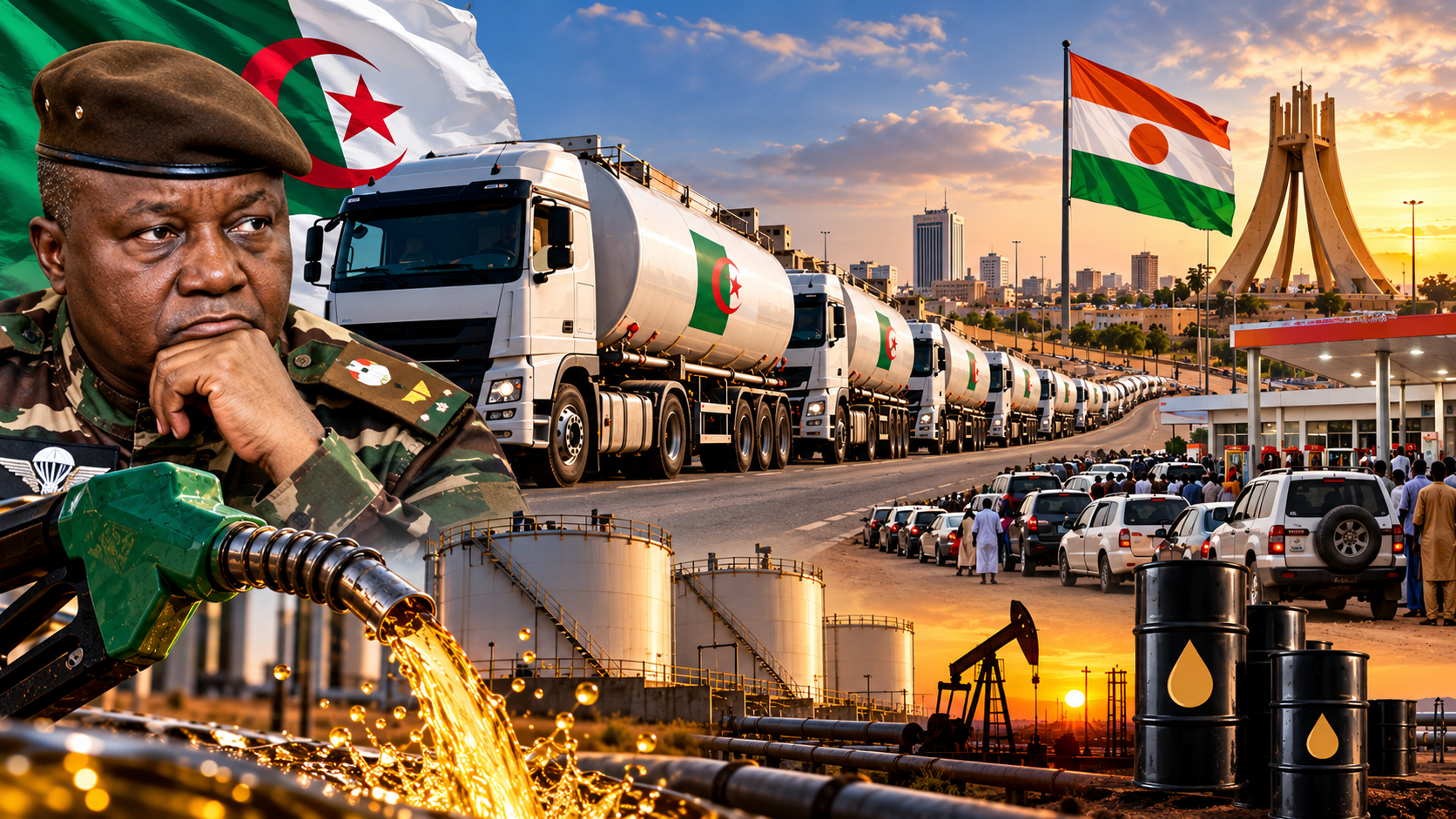
Niamey faces a critical dilemma: the sudden arrival of 3.75 million liters of Algerian fuel has reignited debates over emergency supply strategies and long-term energy security. While the shipment offers immediate relief to the capital’s strained fuel reserves, concerns mount over its financial implications and the government’s shifting priorities.
Why did Algeria’s fuel bound for Agadez end up in Niamey?
Originally, 150 tanker trucks carrying 25,000 liters each were destined for Agadez under an Algerian-Nigerien supply agreement. Yet reports now indicate these deliveries are being rerouted to Niamey, or at least partially so. Authorities have not clarified whether this adjustment stems from urgent operational needs, revised national priorities, or a deliberate attempt to replenish Niamey’s dwindling reserves.
The opacity surrounding the decision has fueled speculation. Is this a temporary fix for a crisis, or the beginning of a broader shift in Niger’s fuel procurement strategy? Without official disclosures, the rationale behind the rerouting remains unclear.
What does the 800 FCFA per liter price tag really mean for Niger’s economy?
The cost of the Algerian fuel 800 FCFA per liter delivered in Niamey has become a major point of contention. Unlike Nigeria’s former supply route, which cost 702 FCFA per liter including transport, the Algerian deal is 98 FCFA more expensive per unit. For 3.75 million liters, this translates to a potential additional cost of 367.5 million FCFA.
However, the price gap is not the only factor to consider. The Algerian supply includes a deferred payment mechanism: repayment in crude oil instead of cash. While this reduces immediate financial pressure, it raises questions about the true economic value of the transaction. How will the crude oil be valued? What quantity is required, and how does it compare to the fuel received? The lack of transparency on these details makes it difficult to assess the deal’s net impact on Niger’s public finances.
Moreover, the comparison to Nigeria’s former supply is incomplete. Transport reliability, delivery timelines, and fuel quality all influence the real cost of an emergency shipment. A higher price may be justified if it ensures uninterrupted supply, but only if the terms are clearly defined and beneficial in the long run.
Can emergency fuel deliveries address Niamey’s deeper energy vulnerabilities?
Niamey’s fuel crisis is more than a short-term shortage it reveals systemic weaknesses in the country’s energy infrastructure. The capital relies on just-in-time deliveries to meet daily demands for transportation, commerce, and essential services. Even a brief disruption can trigger price spikes, paralyze logistics, and stall economic activity.
In this context, the 3.75 million liters of Algerian fuel could serve a dual purpose: immediate consumption and strategic stockpiling. But critical questions remain unanswered. How much of the shipment will be used right away, and how much will be stored for future crises? What is Niamey’s current reserve capacity, and how long could 3.75 million liters sustain the city in the event of a prolonged supply freeze?
Without a clear stockpiling plan, the emergency shipment risks becoming a band-aid solution. Niger’s energy security depends not just on receiving fuel, but on building sustainable reserve systems adequate storage, controlled rotation of supplies, and robust monitoring to prevent waste or theft.
The urgent need to balance short-term fixes with long-term planning
The Algerian fuel shipment may provide temporary relief, but it underscores a deeper issue: Niger’s reliance on reactive supply strategies. Diversifying sources is sensible, but only if each option is evaluated for its real cost, dependability, and alignment with national priorities.
The rerouting of deliveries from Agadez to Niamey also raises logistical questions. If Agadez’s needs have been deprioritized, how will its fuel requirements be met? Will the capital’s surplus be used to stabilize reserves, or will it be consumed without building a safety net?
Transparent communication from the authorities could clarify these choices. Is this a pragmatic adjustment to immediate needs, or a shift toward a more diversified but potentially more expensive supply model? Until the government provides answers, public trust in emergency fuel policies will remain fragile.
Ultimately, Niger cannot afford to treat energy security as an afterthought. The arrival of Algerian fuel is a reminder that a capital city cannot function without reliable reserves. As the saying goes, a city without fuel reserves is like a boat without a river capable of moving forward only as long as the current flows uninterruptedly.
By Henri Nkeng — Journalist