
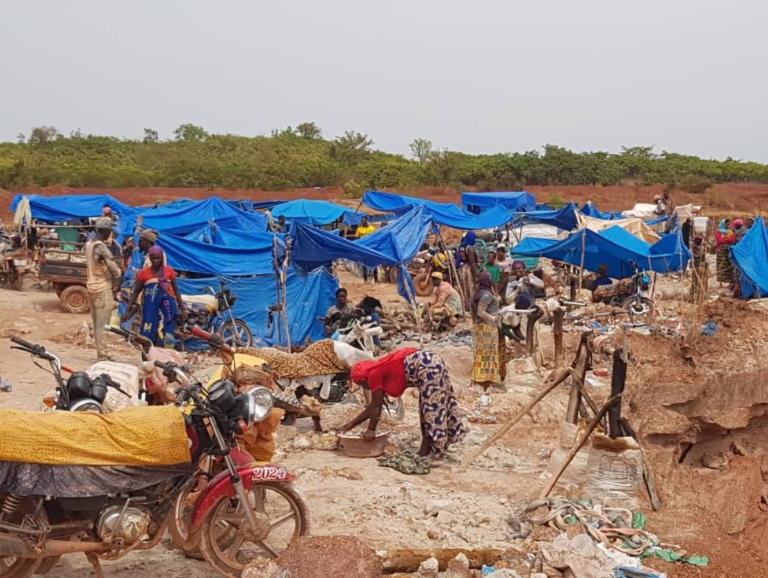
Guinea’s bold crackdown on illegal gold mining has exposed an unexpected exodus of Burkinabè workers risking everything for a livelihood in the country’s artisanal pits. With 1,412 arrests announced in recent operations, authorities in Conakry are not just enforcing mining laws—they are revealing a deeper crisis: one where economic desperation in Burkina Faso is pushing migrants across borders in search of survival.
The hidden costs behind Guinea’s mining raids
On November 10, 2026, Guinean officials revealed the scope of a sweeping anti-illegal mining operation, presenting 1,263 defendants for trial. Just days earlier, 149 more individuals were detained in Kérouané and Siguiri, bringing the total to 1,412 arrests. While the numbers dominate headlines, they mask a human story—one of thousands who see Guinea’s goldfields as their only escape from grinding poverty.
Most striking is the presence of Burkinabè migrants among those detained. Burkina Faso, despite boasting its own substantial gold reserves, has seen rising unemployment, recurrent insecurity, and shrinking economic opportunities. For many, crossing into Guinea’s mining zones is not a choice—but a necessity to feed families back home.
From Burkina Faso’s ambitions to reality’s harsh test
Since seizing power in 2022, Burkina Faso’s transitional leader, Captain Ibrahim Traoré, has championed economic sovereignty and tighter control over natural resources. The government has renegotiated mining contracts, increased state revenue from gold, and promoted national ownership. Yet, as Burkinabè miners languish in Guinean detention centers, the disconnect between policy and daily life becomes impossible to ignore.
Questions abound: Why are citizens of a gold-rich nation being driven to neighboring states just to scrape a living from riverbeds? How can sovereignty be claimed if citizens still flee in search of work? The answer lies not in rhetoric, but in tangible outcomes—jobs, income, and stability for rural populations.
The broader crisis behind the migration
Burkina Faso’s struggles are not rooted in one administration alone. Decades of underinvestment, climate shocks, violent extremism, and structural economic weaknesses have eroded livelihoods across the country. While Traoré’s administration has sought to reassert control over mining wealth, the benefits have not trickled down evenly. Many rural communities remain locked out of formal economic participation—leaving them vulnerable to the lure of informal, high-risk ventures across borders.
Guinea’s balancing act: justice, environment, and humanity
Guinea’s government faces a dual challenge. On one side, illegal mining ravages ecosystems—degrading soil, poisoning water supplies, and displacing farming communities. On the other, thousands of desperate migrants see no alternative. The recent arrests signal a firm stance, but repression alone cannot stem the tide. Without addressing the root causes in Burkina Faso—jobs, security, and economic opportunity—the phenomenon will persist, simply shifting form or location.
The Guinean operation highlights a regional paradox: two West African nations, both rich in gold, yet unable to translate mineral wealth into broad-based prosperity. While Conakry focuses on law enforcement, Ouagadougou must confront why its own citizens feel compelled to leave.
What sovereignty truly means
Economic sovereignty is more than nationalizing mines or signing new contracts. It is measured by whether citizens can live with dignity, secure work, and hope for the future—without being forced to migrate in search of survival. For Burkina Faso, the 1,412 arrests in Guinea are not just a statistic. They are a wake-up call: the policies touted as transformative have yet to deliver for those who need them most.
The gold in the ground is only as valuable as the lives it sustains. Until mining wealth translates into real economic resilience at home, the exodus to Guinea’s pits will continue—one desperate migrant at a time.