
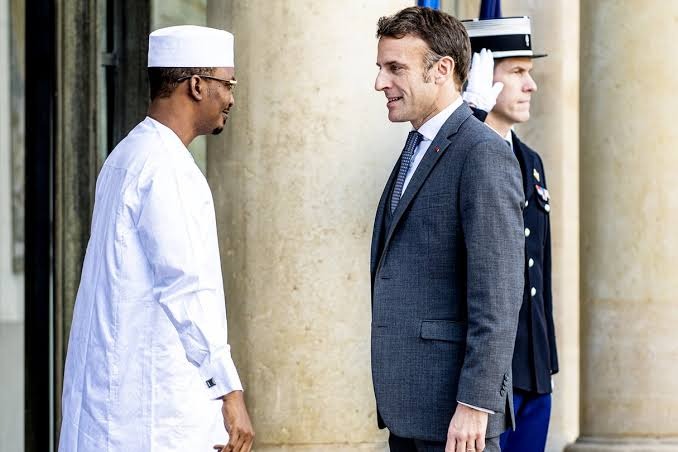
As regional tensions simmer in the Sahel, a critical question now dominates diplomatic circles: Can the revival of defense ties between France and Chad reshape security dynamics? On October 13, 2026, Paris and N’Djamena took a decisive step forward by signing a landmark intent declaration, signaling a strategic reset in their bilateral cooperation.
The renewal follows nearly two years of strained relations after Chad terminated its military cooperation agreement with France in late 2024. The subsequent withdrawal of French troops in early 2025 marked the end of a long-standing military presence that had positioned Chad as Paris’s key operational hub in Africa. The October 13 meeting between Emmanuel Macron and Mahamat Idriss Déby not only marked a formal reconciliation but also laid the groundwork for a new partnership focused on shared defense priorities.
Rebuilding defense cooperation: What changed between Paris and N’Djamena
The intent declaration signed at the Élysée Palace outlines a renewed framework centered on defense training, technical expertise, industrial collaboration, and technological innovation. Unlike past arrangements, this partnership is designed to enhance Chad’s operational capabilities while maintaining strict national sovereignty over strategic decisions.
Mahamat Idriss Déby’s visit to Paris, the first since the military drawdown, underscored Chad’s pivotal role in regional security. Bordering Sudan’s conflict zones, Libya, and the Lake Chad Basin, Chad has become a linchpin for combating armed groups, securing borders, and stabilizing neighboring areas. The agreement reflects both countries’ recognition that defense cooperation must align with Chad’s evolving priorities and geopolitical realities.
From military presence to strategic partnership
The October 13 declaration marks a fundamental shift in France’s approach to Sahel partnerships. Following the withdrawal of troops from Mali, Burkina Faso, and Niger, Paris has abandoned the model of long-term military bases. Instead, the focus is on flexible, needs-based cooperation that prioritizes Chad’s domestic capacity-building and regional security demands.
For Emmanuel Macron, this represents a recalibration of France’s African policy, moving beyond symbolic military deployments toward sustainable collaboration. French defense officials emphasize that the intent declaration is not a return to the status quo but a reinvention of the bilateral relationship, structured around mutual needs rather than unilateral impositions.
Niger’s accusations: How Chad’s alliance with France complicates regional trust
The timing of this rapprochement has added a layer of complexity to already volatile regional relations. In late August 2026, Niger faced a reported coup attempt near its Air Base 101, an incident that Niamey directly linked to foreign influence—including alleged involvement from Chad and France. Paris swiftly denied the allegations, but the accusations have fueled distrust and raised concerns about external interference in the Sahel.
Chad and Niger share deep security concerns, particularly regarding cross-border jihadist activity and regional instability. Yet their diplomatic trajectories diverge significantly. While N’Djamena has chosen a stance of cautious re-engagement with Paris, Niamey’s government has adopted a more skeptical and assertive posture toward Western partners. The Franco-Chadian intent declaration explicitly defines a bilateral framework, excluding third-party involvement and addressing Sahel security within sovereign parameters.
This dynamic presents a diplomatic test: Can Paris and N’Djamena forge a partnership that strengthens regional resilience without exacerbating existing tensions?
Beyond defense: A broader vision for economic and cultural cooperation
The October 13 meeting was not confined to military matters. Macron and Déby committed to revitalizing economic and cultural exchanges, signaling a departure from the historically militarized nature of their relationship. The new vision targets infrastructure, energy, healthcare, transportation, and education—sectors critical to Chad’s development and social stability.
For Chad, which faces pressing needs in employment, public services, and infrastructure, this pivot toward civilian-focused cooperation offers a pathway to long-term stability. The French president emphasized that defense cooperation must now coexist with tangible economic benefits for both nations, particularly in the face of ongoing conflicts in neighboring Sudan and Libya.
What’s at stake for the Sahel
This renewed partnership arrives at a pivotal moment for the Sahel. With France recalibrating its military footprint and local governments asserting greater strategic autonomy, the region is witnessing a reconfiguration of alliances. The intent declaration between Paris and N’Djamena is more than a bilateral agreement—it represents a test case for France’s ability to adapt to shifting power dynamics while maintaining influence through cooperation rather than coercion.
For Chad, the stakes are equally high. Strengthening defense capabilities on its own terms allows N’Djamena to address immediate security threats while positioning itself as a stabilizing force in a volatile neighborhood. Yet the partnership’s success hinges on its ability to navigate regional skepticism and prove that cooperation can yield tangible benefits for all parties.
As the Sahel continues to grapple with instability, the Franco-Chadian intent declaration offers a glimpse into the future of defense partnership: one built on mutual trust, shared responsibility, and a commitment to long-term stability.