
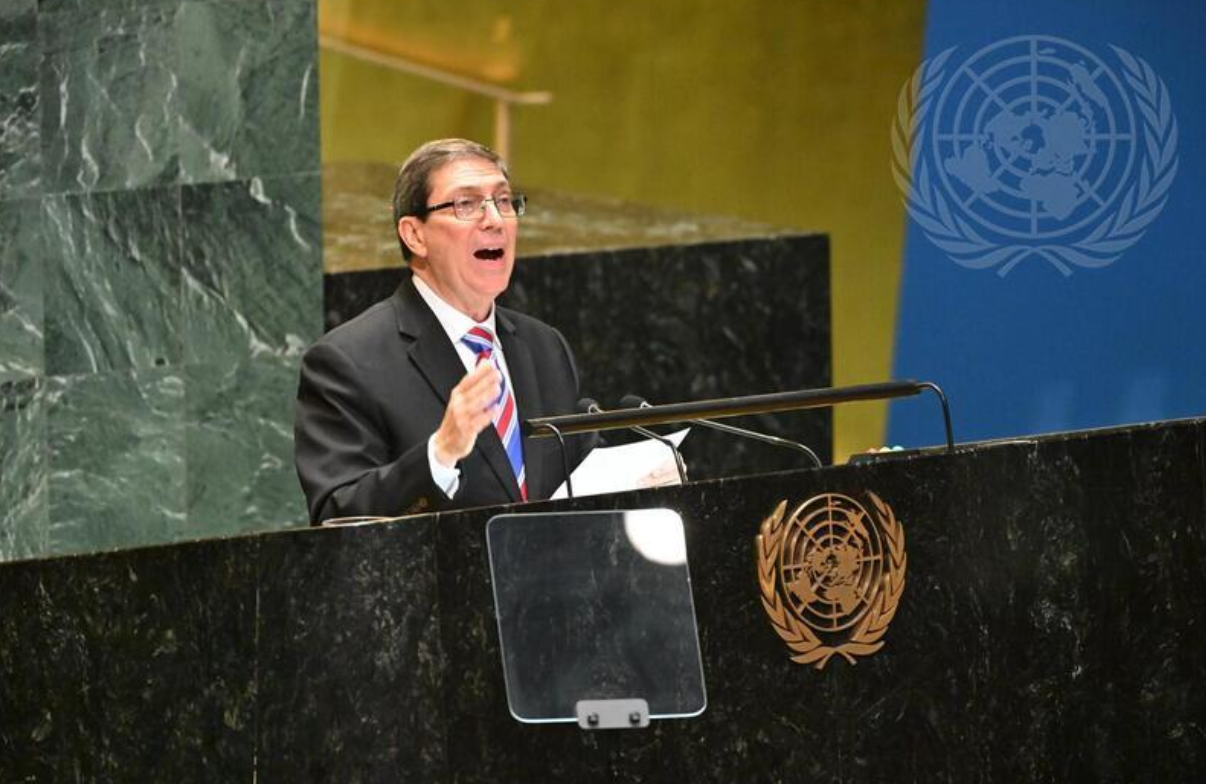
At the United Nations General Assembly on October 28, 2026, a pivotal vote took place—one that not only reflected the world’s stance on Cuba but also exposed a striking divergence within Africa. For the 34th consecutive year, the assembly adopted a resolution calling for the lifting of the decades-old U.S. embargo on Cuba. Yet, in a surprising twist, Morocco cast the only African vote against the measure, bucking the continental consensus.
The resolution passed with 130 votes in favor, 17 against, and 25 abstentions. While the outcome underscored broad international support for ending the embargo, the Moroccan vote stood out as an outlier. This was not merely a repeat of prior years—it marked a deliberate shift. Unlike in 2025, when Morocco abstained, the kingdom this time actively opposed the resolution, signaling a deliberate policy adjustment that has sent ripples across diplomatic circles.
Why did Morocco break ranks with Africa on Cuba?
The Moroccan government has not yet provided a detailed explanation for its vote, leaving analysts to speculate on the motivations behind this departure from continental solidarity. Historically, African nations have overwhelmingly supported resolutions against the U.S. embargo, viewing it as a unilateral measure infringing on Cuba’s sovereignty and economic freedom. The bloc’s unity on this issue has long reinforced Africa’s stance on economic sovereignty and non-interference in the internal affairs of states.
Morocco’s lone dissent raises questions: Was this vote driven by economic interests, geopolitical realignment, or a re-evaluation of Cuba’s role in regional politics? Without official clarity, the answer remains elusive. What is certain is that this decision diverges sharply from the long-standing African consensus, a position that has only grown more entrenched over the decades.
This departure from the norm is particularly noteworthy given the broader diplomatic shifts unfolding in the region. Over the past year, several countries have adjusted their stance on the embargo, with some moving from support to abstention—or even outright opposition. While the motivations vary, Morocco’s case stands apart due to its singularity within Africa.
The global chessboard: Who changed sides, and why?
The 2026 vote revealed a fragmented landscape. While the majority of nations continued to endorse the resolution, the number of supporters actually declined compared to 2025, when 165 states voted in favor. This year, 130 votes were cast in support, indicating a subtle but meaningful shift in global attitudes.
Among the countries that switched from yes to abstention or no were Germany and Italy—both long-standing supporters of ending the embargo. Their abstention suggests that diplomatic pressure from Washington may be influencing positions, even among traditional allies. However, Africa’s response has been notably different. With Morocco as the sole exception, the continent largely maintained its support for the resolution, reinforcing its commitment to economic sovereignty and multilateralism.
This divergence underscores a broader trend: while global opinion on Cuba remains broadly favorable to lifting the embargo, the political and economic considerations driving individual votes are increasingly nuanced. For Morocco, the decision to oppose the resolution may reflect a calculated move to align with U.S. priorities or secure leverage in trade negotiations. Yet, without official justification, such theories remain speculative.
Cuba’s humanitarian crisis and the embargo debate
The embargo, first imposed in the early 1960s and progressively tightened over the decades, has had profound humanitarian consequences for Cuba. The restrictions have crippled the island’s economy, contributing to chronic shortages, energy crises, and widespread power outages that disrupt daily life. Advocates of the resolution argue that lifting the embargo would alleviate these pressures, enabling Cuba to import essential goods, access international financing, and stabilize its economy.
Washington, however, frames the embargo as a necessary response to Cuba’s political system and human rights record. U.S. officials contend that the measures are justified to pressure the Cuban government toward democratic reforms and respect for fundamental freedoms. This clash of narratives has kept the embargo debate alive for over 60 years, with neither side showing signs of relenting.
Despite the resolution’s adoption, the outcome remains non-binding. The power to lift the embargo ultimately rests with the U.S. Congress, where political divisions persist. For Cuba, each UN vote serves as a moral and diplomatic victory, reinforcing international solidarity against what Havana describes as an illegal and inhumane policy. Yet, without enforceable action, these resolutions serve more as symbolic affirmations than as tangible levers for change.
What’s next for Morocco’s diplomatic strategy?
Morocco’s unexplained vote against the resolution has introduced a new dynamic into the diplomatic equation. While the kingdom’s exact motives remain unclear, the move has drawn attention from allies and critics alike. In Africa, where continental unity has long been a cornerstone of foreign policy, this departure risks isolating Morocco and complicating its regional relationships.
The absence of an official explanation makes it challenging to assess the long-term implications of this vote. Is this a one-off deviation or part of a broader recalibration of Morocco’s foreign policy priorities? The coming months will be critical in determining whether Rabat clarifies its stance or doubles down on its opposition. For now, the vote stands as a stark reminder that diplomatic solidarity is not guaranteed—and that even long-held alliances can fracture under pressure.By Henri Nkeng — Journalist