
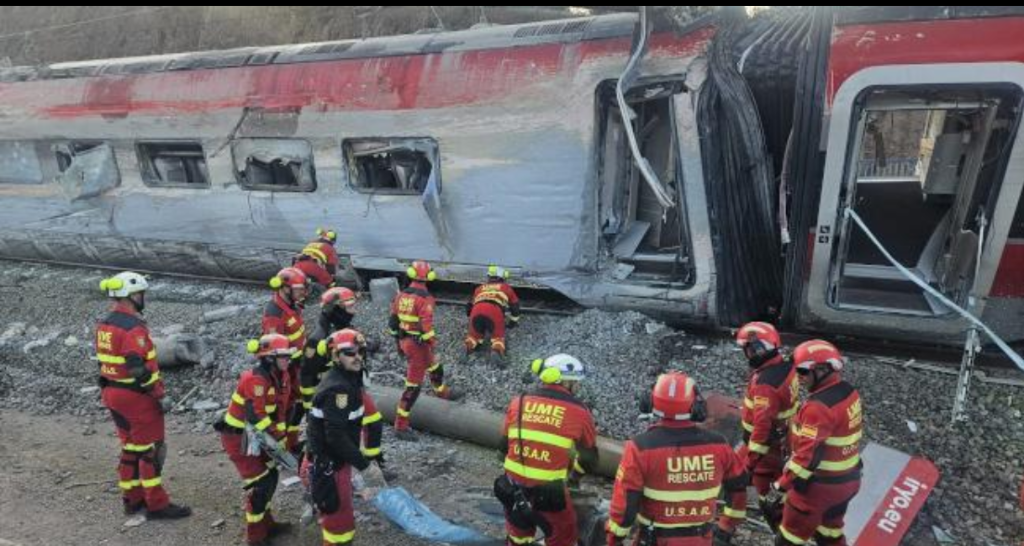
Spain is reeling from its most devastating high-speed rail disaster yet after a catastrophic collision between two trains near Urda, in the Toledo province. The accident, which claimed at least 46 lives and injured 179 others, has sent shockwaves through the nation and raised urgent questions about the safety of its high-speed rail network.
How did this preventable tragedy unfold?
The collision occurred on a critical stretch of track linking Madrid to Andalusia, where a high-speed Renfe train reportedly plowed into a stationary Iryo train. The force of the impact sent multiple carriages derailing and tumbling down an embankment, creating chaos at the scene and complicating rescue efforts.
Witness accounts and initial reports suggest the stationary train may have been waiting for a signal change when the collision occurred. With dozens of passengers trapped in severely damaged carriages, emergency responders faced a harrowing battle to extract survivors and provide urgent medical care.
The human toll remains provisional, with authorities warning that the final death toll and injury count may rise as search operations continue and medical assessments are completed.
Emergency response: a race against time
Rescue teams, including fire brigades, medical staff, and civil protection personnel, were deployed within minutes of the accident being reported. Their priority: evacuate passengers, stabilize the critically injured, and prevent further loss of life.
Hospitals across the region were placed on high alert, with emergency rooms and surgical teams mobilized to handle the influx of patients. Meanwhile, authorities worked to identify victims and notify families—a process that has left many relatives in agonizing limbo.
The accident has also caused major disruptions to rail services, stranding travelers and forcing authorities to suspend operations on the affected routes. For those who rely on Spain’s high-speed rail system, the incident has shattered confidence in its reliability.
What went wrong? The investigation begins
The immediate focus has shifted to uncovering the root cause of the collision. Early speculation points to potential issues with railway signaling, traffic control protocols, or miscommunication between drivers and control centers. However, investigators are cautioning against jumping to conclusions before a thorough technical assessment is completed.
The investigative team will examine:
- A detailed review of signaling systems and their functionality at the time of the accident
- Communication logs between train drivers and control centers
- The condition of tracks, signals, and other infrastructure components
- Operational procedures and whether they were followed correctly
Only a comprehensive reconstruction of the final moments before impact will reveal whether technical failures, human error, or a combination of factors led to the disaster. The findings will be critical in determining whether existing safety measures were adequate—or if systemic improvements are needed.
Will this tragedy force Spain to rethink rail safety?
This isn’t Spain’s first major rail accident, but its scale and location—on a high-speed line—have intensified public scrutiny. The disaster has already reignited long-standing concerns about the maintenance of rail infrastructure, the reliability of safety equipment, and the adequacy of traffic management systems.
While debates over systemic safety issues are inevitable, investigators must first establish the specific circumstances of this collision. Any conclusions drawn from this tragedy must be grounded in precise evidence—not assumptions or hasty judgments.
For authorities, the dual challenge is clear: deliver justice for the victims by uncovering the truth, and restore public trust in the rail network by implementing robust preventive measures.
Families in limbo, a nation in mourning
Beyond the numbers, this collision has left shattered lives, grieving families, and communities in shock. The emotional toll is immeasurable, and the road to healing will be long.
As the investigation unfolds, the nation watches with bated breath. The answers are coming—but until then, the focus remains on supporting survivors, comforting bereaved families, and ensuring that a disaster of this magnitude never happens again.