
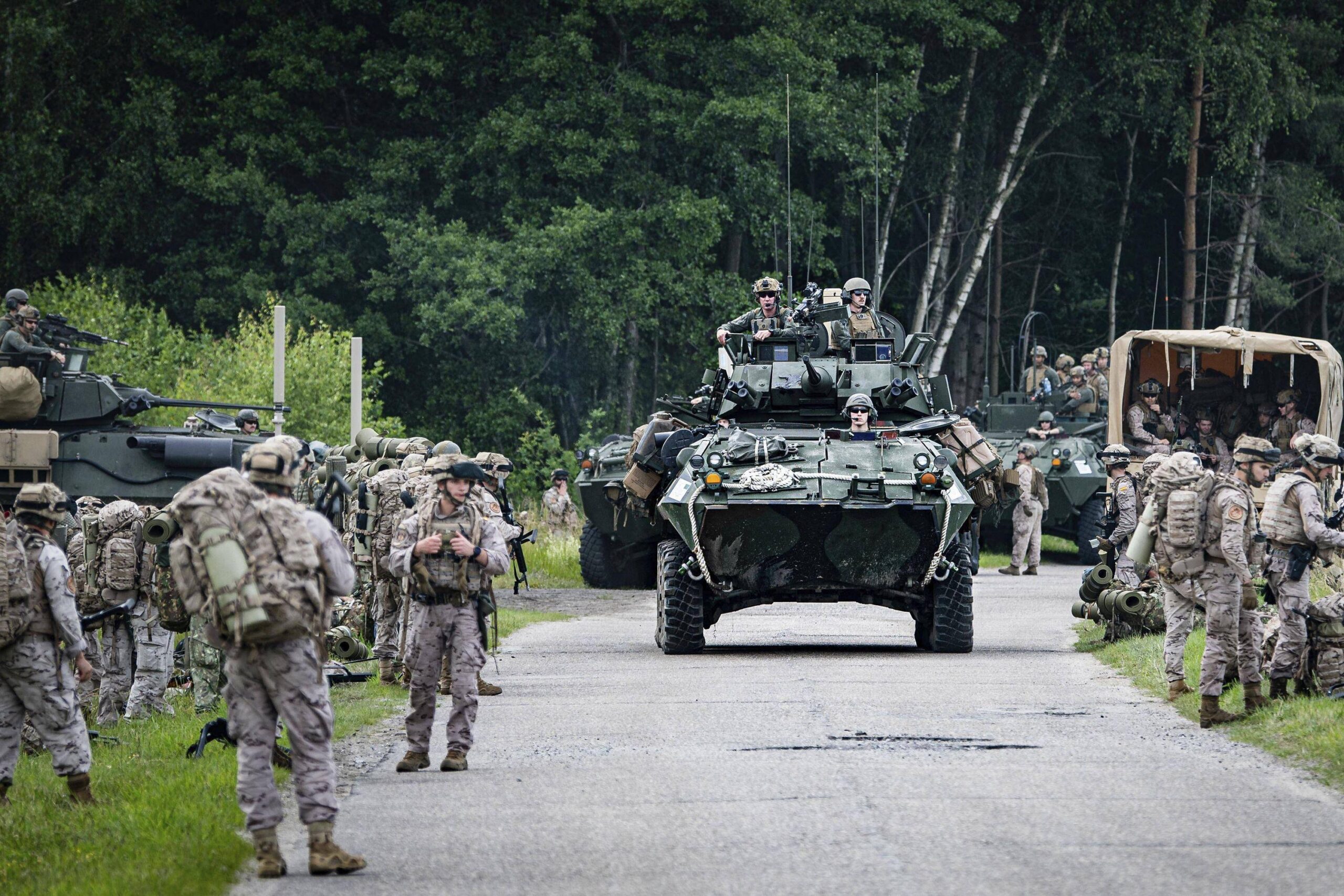
As tensions between NATO and Russia escalate to an unprecedented level, the Baltic Sea has become the latest battleground in a shadow conflict. Poland, recognizing the growing threat of Russian hybrid warfare, has launched an unprecedented security operation along its northeastern border, bordering the heavily militarized Kaliningrad enclave. This decisive move underscores Warsaw’s commitment to preventing any destabilization attempts that could jeopardize European security.
Why Poland’s northeastern border is now a flashpoint in Europe’s shadow war
For months, Polish intelligence and military sources have observed a disturbing pattern: repeated incursions by unidentified drones, suspicious airspace violations, and the presence of foreign operatives near critical infrastructures. These signs point to a deliberate campaign of intimidation orchestrated by Moscow. With Kaliningrad serving as a Russian military stronghold just kilometers from Poland’s border, the stakes could not be higher.
Poland’s response is not just a defensive measure—it’s a strategic deterrent. By deploying a multilayered security framework, Warsaw aims to eliminate every possible vulnerability along its most exposed frontier. The operation integrates military, police, and counterterrorism units into a seamless, high-alert system designed to detect and neutralize threats before they materialize.
From drones to sabotage: how Russia’s hybrid tactics are targeting Poland
Russia’s playbook in hybrid warfare is well-documented: weaponizing migration flows, conducting psychological operations, launching cyberattacks, and orchestrating targeted sabotages. The Baltic region, with its dense network of energy pipelines, transit corridors, and communication hubs, presents an ideal target for Moscow’s asymmetric strategy. Poland’s border with Kaliningrad is particularly exposed to these risks.
Recent incidents highlight the urgency of Warsaw’s measures:
- Unmanned aerial intrusions: Multiple unauthorized drone flights over Polish airspace, some equipped with surveillance equipment, have been intercepted near sensitive sites.
- Suspicious movements near critical infrastructure: Increased patrols have uncovered attempts by unidentified individuals to gather intelligence on power grids and railway networks.
- Disinformation campaigns: Pro-Kremlin narratives have surged online, aiming to erode public trust and destabilize Poland’s political cohesion.
A military and civilian alliance to counter asymmetric threats
The security operation launched by Poland is a first-of-its-kind fusion of military precision and civilian vigilance. At its core is a real-time intelligence-sharing platform connecting border guards, police, and NATO allies. This integrated approach ensures that any suspicious activity is immediately identified, assessed, and neutralized.
Key components of the strategy include:
- Enhanced border surveillance: Deploying advanced radar systems, thermal imaging, and unmanned aerial vehicles (UAVs) to monitor the frontier 24/7.
- Rapid-response task forces: Elite military and police units trained to intervene within minutes in case of infiltration or sabotage attempts.
- Critical infrastructure hardening: Physical and cyber defenses upgraded for power plants, gas pipelines, and communication networks in northern Poland.
Will Poland’s bold move deter Russia—or escalate tensions?
While Poland’s strategy sends a clear message of deterrence, the broader question remains: Can this approach prevent further aggression without provoking a full-blown conflict? Moscow has historically responded to perceived threats with escalatory measures, including military posturing and economic pressure. Yet, Warsaw seems determined to draw a line in the sand.
The decision reflects Poland’s evolving role as NATO’s eastern sentinel. By taking preemptive action, Poland is not only protecting its own borders but reinforcing the alliance’s collective defense posture. The message to the Kremlin is unambiguous: any attempt to destabilize Poland will be met with an immediate and decisive response.
Beyond the border: a new chapter in Europe’s security landscape
Poland’s security surge is part of a broader shift in Europe’s strategic thinking. As hybrid warfare becomes the new normal, nations are forced to rethink their defense paradigms. The Baltic states, Finland, and Sweden are closely watching Warsaw’s approach, considering similar measures to safeguard their own territories.
For Poland, the stakes are existential. With Kaliningrad serving as a constant reminder of Russia’s military ambitions, the country cannot afford to be caught unprepared. The operation along its northeastern border is more than a security measure—it’s a statement of resilience in the face of an unpredictable adversary.