
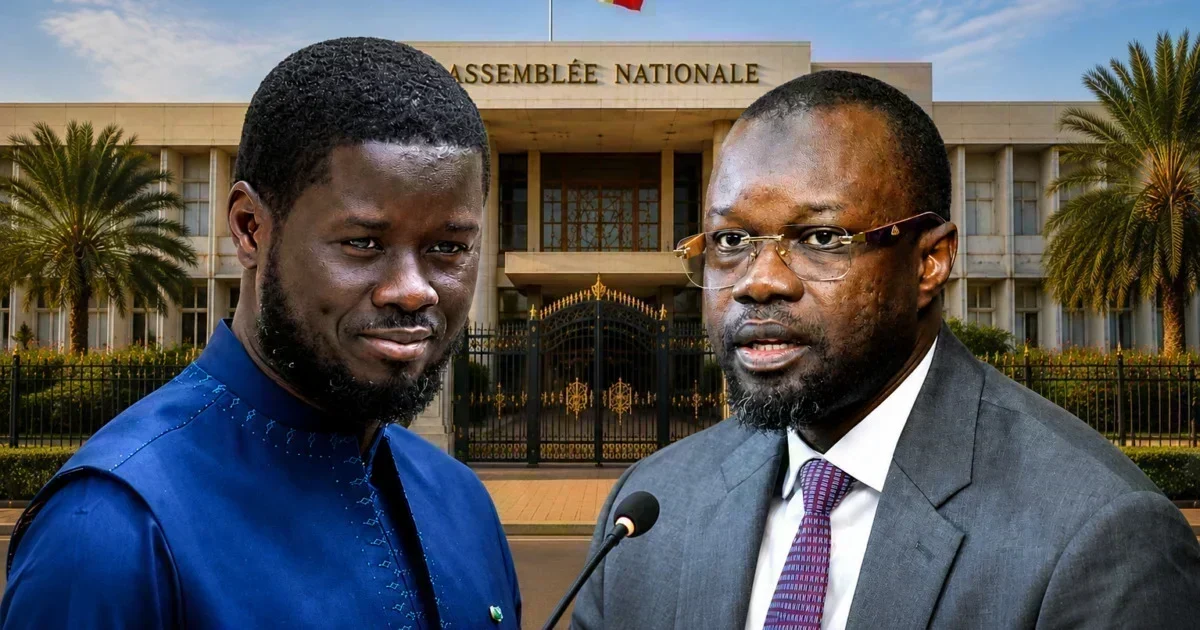
The parliamentary inquiry that could redefine Senegal’s political balance
The refusal of Demba Dieng, former director of the Land Registry and advisor to President Bassirou Diomaye Faye, to appear before the parliamentary commission investigating land management has reignited a critical debate: is the executive branch systematically shielding its closest allies from legislative scrutiny?
This question extends far beyond the personal case of Demba Dieng. It cuts to the heart of a growing tension between Senegal’s executive and legislative branches, with potential consequences for the country’s political stability and economic outlook.
What Demba Dieng’s no-show reveals about Senegal’s emerging power struggle
Demba Dieng’s decision to decline her parliamentary summons comes at a pivotal moment. Her role as both a former government official and a presidential advisor places her at the crossroads of executive authority and civil service accountability. The commission’s statement cited her non-compliance but provided no explanation for her refusal, leaving observers to speculate on the motives behind her absence.
Political insiders suggest that when presidential associates are summoned, final approval for their appearance ultimately rests with the president himself. Yet this interpretation remains unconfirmed by official sources. The presidency has issued no statements regarding the matter, fueling further uncertainty about the government’s stance on legislative oversight.
While Demba Dieng and two military officers cited their official status as justification for their no-shows, the lack of transparency raises concerns about a broader pattern of resistance. Is this a coordinated strategy, or are individual actors making independent decisions to avoid scrutiny?
The missing details that could shift the narrative
Several key questions remain unanswered:
- Was Demba Dieng acting on direct instruction? If so, the implications could extend to other high-ranking officials, including ministers, who may face similar dilemmas.
- How many others have declined summons? Former Higher Education Minister Daouda Ngom claimed that six ministers—current or former—had also refused to comply, though these claims lack official verification.
- What consequences will the commission impose? The parliamentary body has stated it will continue its investigations in line with its mandate, but the absence of clear penalties or enforcement mechanisms casts doubt on its leverage.
The commission emphasizes that each summoned individual is presumed innocent until proven otherwise. However, the refusal to testify does little to dispel public suspicion, particularly when the stakes involve national land management—a sector prone to corruption and mismanagement allegations.
Why this standoff could escalate into a full-blown crisis
The tension between Senegal’s executive and legislative branches is not new, but the current standoff over parliamentary summonses threatens to deepen existing divisions. If the government continues to obstruct legislative inquiries, it risks:
- Undermining public trust in institutions. Citizens may perceive the executive’s actions as an attempt to evade accountability, particularly in matters as sensitive as land ownership and resource allocation.
- Fueling political polarization. The opposition, led by figures like Ousmane Sonko, could leverage this crisis to challenge the legitimacy of the government’s policies and leadership.
- Triggering economic repercussions. Investors and international partners may grow wary of a government perceived as resistant to oversight, potentially affecting foreign direct investment and economic growth.
The coming days will be decisive. Will more presidential allies refuse to testify? How will the Assembly respond to this defiance? And, most critically, will President Faye intervene to clarify his government’s position—or will the standoff escalate into a full-blown institutional showdown?
The unspoken rules of Senegal’s political chessboard
Behind the scenes, this parliamentary inquiry is unfolding like a high-stakes game of power and influence. The refusal of key figures to cooperate suggests that Senegal’s political elite is operating under a set of unspoken rules, where loyalty to the president may outweigh institutional obligations.
Yet history shows that such strategies rarely succeed in the long term. Governments that suppress transparency often face backlash, whether through legal challenges, public protests, or electoral consequences. The question now is whether Senegal’s current leadership will recognize this reality—or double down on a path that could destabilize the nation.