
As diplomats in Benghazi, Paris, N’Djamena, and Algiers move pieces on the board, the Sahel is witnessing a high-stakes realignment. At the center of this geopolitical chess match sits Niger—a nation whose strategic pivot is reshaping the balance of power across the region.
Can Niamey outmaneuver the regional chess players?
The past week has seen a flurry of high-level meetings, military discussions, and alliance-building efforts that reveal a deeper truth: Niger is no longer just a player in the Sahel’s security crisis—it’s becoming the stage where the region’s future is being decided.
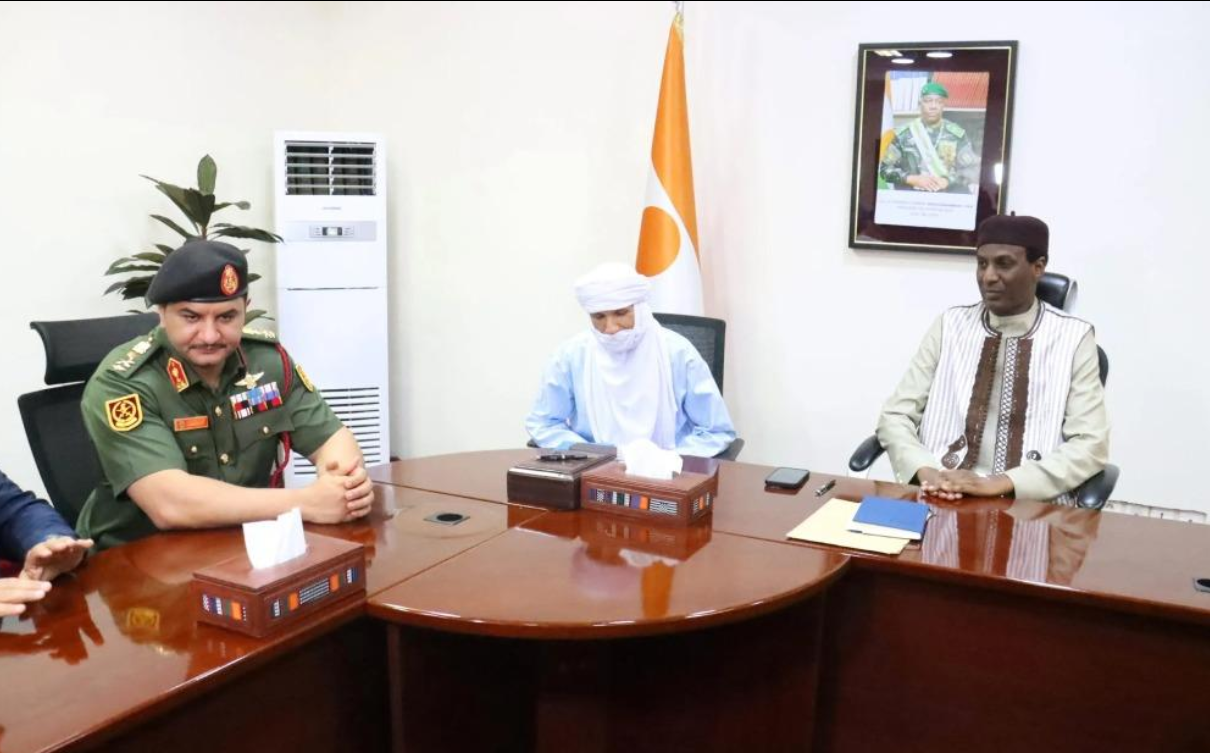
On November 1, 2026, Niger’s Prime Minister Ali Mahaman Lamine Zeine traveled to Benghazi for talks with Saddam Haftar, deputy commander of Libya’s eastern forces. The outcome? A newly signed strategic cooperation protocol aimed at deepening security and political ties between the two nations.
Just two days later, General Khaled Haftar—head of Libya’s eastern military command—arrived in Paris for discussions with General Fabien Mandon, France’s chief of defense staff. While details remain undisclosed, the timing suggests a coordinated effort to reshape regional security frameworks.
The question now is whether these moves point to a new strategic alignment—or simply the latest round of shifting sands in an already volatile region.
Algeria’s gambit: securing influence in a fragmented Sahel
As rival powers jostle for position, Algeria has emerged as a key player in this evolving landscape. On November 3, Algerian Foreign Minister Ahmed Attaf arrived in N’Djamena with a presidential mandate to strengthen ties with Chad.
The visit underscored Algeria’s determination to reassert its role in the Sahel, particularly as Niger’s relationships with its neighbors grow increasingly strained. Allegations of destabilization efforts—leveled by Niamey against both Chad and France—have further complicated the regional dynamic, prompting Algiers to step up its diplomatic outreach.
For Algeria, the stakes are clear: avoid being sidelined in a region where its historical influence is being challenged. By deepening military and security cooperation with Chad, Algiers aims to counterbalance shifting alliances and maintain its grip on the Sahel’s security architecture.
How Abu Dhabi’s shadow complicates Algeria’s strategy
The United Arab Emirates looms large in this equation. Abu Dhabi’s long-standing support for Khalifa Haftar’s forces in eastern Libya has raised eyebrows in Algiers, where officials view any foreign military presence near its borders as a direct threat.
The Haftar camp’s recent advances into southern Libya—toward the Fezzan and critical transit routes linking to Niger—only intensify Algeria’s concerns. These corridors are vital for trade, energy flows, and counterterrorism operations, making them a battleground for regional dominance.
For Algeria, the risk is twofold: a resurgent Haftar camp expanding its influence southward, and an emerging Morocco-Abu Dhabi axis that could further marginalize Algerian interests.
Morocco’s growing Sahel footprint: a silent challenge to Algiers
The rivalry between Algeria and Morocco has long shaped North African politics, but its spillover into the Sahel is a relatively new development. Since the 2021 diplomatic rupture, Rabat has aggressively courted Sahel nations, while Algiers scrambles to preserve its historical dominance.
The October 2026 visit of General Khaled Haftar to Morocco—where he met with General Mohammed Berrid, Morocco’s inspector general of the armed forces—did not go unnoticed in Algiers. The meeting highlighted a potential convergence of interests among Rabat, Abu Dhabi, and Libya’s eastern leadership, further complicating Algeria’s strategic calculations.
While no formal alliance has been declared, the mere possibility of such a bloc emerging has sent shockwaves through regional capitals.
Niger: the crossroads where geopolitical lines are redrawn
Amid this turbulence, Niger has positioned itself as a critical nexus. Its central location, energy resources, and proximity to Libya, Algeria, Chad, and Mali make it a linchpin in the Sahel’s future.
The Algerian parliament’s recent approval of a military deployment in Niger signals a major shift in Algiers’ approach. By deepening security ties with both Libya’s Haftar camp and Niger, Algeria is hedging its bets—ensuring it remains a key player in the region’s evolving power dynamics.
Yet the question remains: Can Niamey leverage these shifting alliances to its advantage, or will it become a pawn in a larger game?
France’s fading but still present shadow over the Sahel
Though France’s military presence in the Sahel has significantly waned, Paris continues to engage with regional actors. The meeting between General Haftar and General Mandon suggests France is still seeking to shape security outcomes, even if its influence is no longer absolute.
The absence of a clear, unified French strategy leaves a void—and open a door for other powers to fill it. Whether this benefits Niger or further destabilizes the region remains to be seen.
A Sahel at the crossroads: where resources, routes, and rivalries collide
The events of recent days paint a single, unmistakable picture: the Sahel is no longer just a battleground for insurgencies. It has become a theater where trade routes, energy supplies, and political alliances are being contested—and Niger sits at the heart of it all.
As regional powers scramble to secure their interests, one thing is certain: the Niger of today will shape the Sahel of tomorrow.
Key takeaways for stakeholders
- Niger’s strategic location makes it a linchpin for regional security and economic flows.
- Algeria is doubling down on military and diplomatic engagement to counterbalance shifting alliances.
- Abu Dhabi’s support for Haftar’s forces adds a layer of complexity to Algeria’s regional strategy.
- France’s reduced but still active role complicates the power dynamics, leaving room for new alliances.
- The Morocco-Abu Dhabi-Haftar axis could redefine the region’s political map if fully realized.