
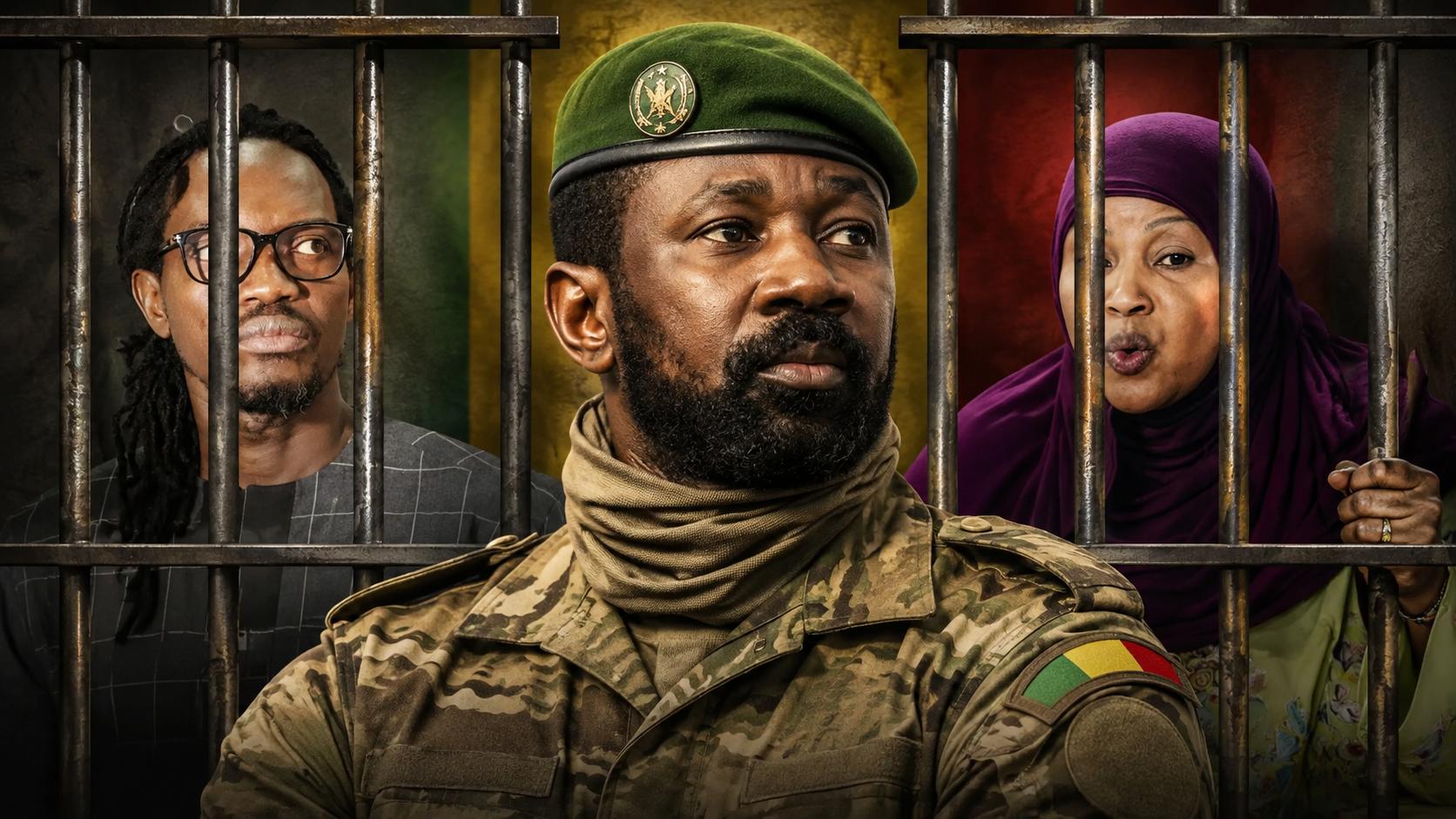
Mali’s military justice system has struck again, delivering a harsh sentence against two prominent critics of the transitional authorities. Radio commentator Mohamed Youssouf Bathily, widely known as Ras Bath, and social media influencer Rokia Doumbia, nicknamed Rose ‘la vie chère,’ were handed a seven-year prison term—with three years suspended—by a Bamako court.
The charges? ‘Criminal association’ and ‘undermining state credibility,’ penalties typically reserved for serious offenses. Their crime? Repeatedly challenging the leadership of Mali’s interim government, currently led by General Assimi Goïta.
Mali’s growing roster of silenced voices
This verdict is not an isolated incident but part of a broader crackdown on dissent in Mali. Critics from various backgrounds now face severe consequences for expressing dissenting views:
- Political figures under pressure: Étienne Fakaba Sissoko, an economist and former presidential advisor, is serving a prison sentence after publishing a book critical of Mali’s transition management. He joins a long list of former officials, including Malick Coulibaly, a former justice minister, and multiple opposition party leaders, who have faced legal harassment or arbitrary detention.
- Civil society and activists targeted: Clément Dembélé, a well-known anti-corruption advocate, was detained after questioning key strategic decisions by the ruling authorities. Social media activists have also been hit hard—many have seen their accounts suspended or faced legal action simply for discussing Mali’s security or economic challenges.
- Media under siege: Local journalists operate under constant fear of arrest or broadcast bans, while several international outlets remain blocked from operating in Mali.
When criticism becomes a state offense
Legal representatives for Ras Bath and Rose ‘la vie chère’ argue that the court’s decision exposes a deliberate misuse of the justice system to silence public debate. Though the defense has vowed to appeal the ruling at the Supreme Court, the message is clear: in Mali today, questioning the rising cost of living or the legitimacy of military rule can now be treated as an act against the state itself.