
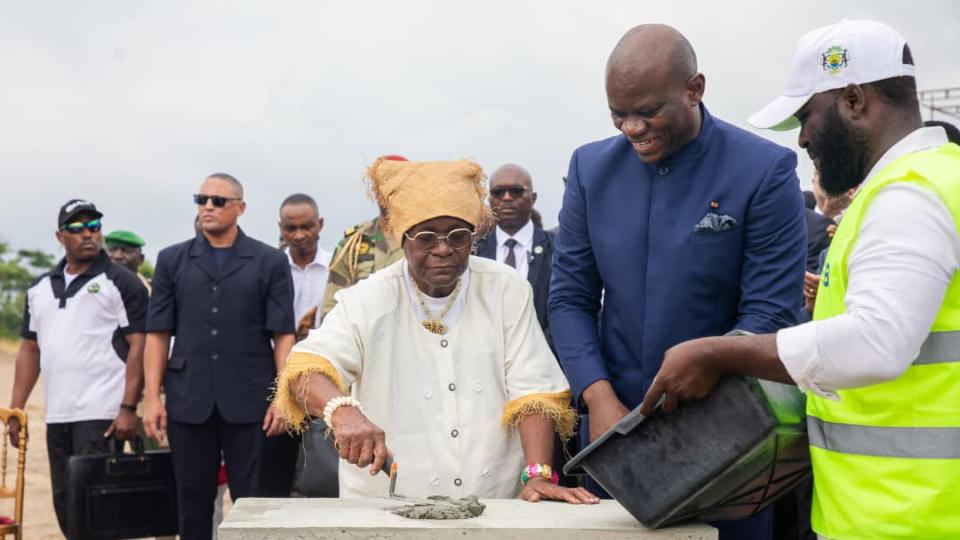
With the commencement of works on the future Kobé-Kobé deep-water port, Gabon is embarking on one of the most transformative structural projects in its modern history. Linked to the Belinga iron ore deposit, a fresh railway infrastructure, and the upcoming Booué hydroelectric dam, this industrial and logistical hub represents the government’s commitment to constructing an economy less reliant on petroleum and more focused on the domestic processing of natural resources.
For decades, Gabon has been dependent on oil revenues, but the nation is now actively seeking to diversify its growth engines. Within this framework, the Kobé-Kobé initiative stands out as a central pillar of the new economic model. This is far more than just a port; it is a comprehensive industrial ecosystem designed to link the country’s mineral wealth to global markets while ensuring local communities reap the maximum benefits.
Positioned along the Atlantic coast in the Estuary province, this deep-water facility will feature a draft of 14 to 16 meters, allowing it to host massive cargo vessels. This specific capability is set to drastically improve Gabon’s logistical edge in a region where competition between Central African ports is intensifying.
An integrated vision for economic transformation
Kobé-Kobé is part of a holistic value chain built around several key strategic assets. At the heart of this system lies the Belinga iron deposit, recognized as one of the largest untapped reserves on the planet.
To transport the ore to the coast, a new railway line will be constructed to connect the interior of the country to the port. Complementing this is the Booué hydroelectric dam project, which is tasked with providing the energy needed to power the entire mining and industrial complex. This integrated strategy aims to break away from the traditional model of exporting raw materials by encouraging their refinement and processing within national borders.
A major milestone was reached in April 2026 with the signing of a strategic convention between the state of Gabon and Africa Global Logistics (AGL). This partnership is intended to foster a world-class logistical platform that will underpin the country’s industrialization efforts.
Generating up to 160,000 new jobs
Beyond the physical infrastructure, the socio-economic influence of the project is a primary focus. Projections suggest that the complex could create as many as 160,000 direct and indirect jobs as it matures.
This outlook serves as a powerful promise for Gabonese youth looking for career opportunities. The demand for labor will span various sectors, including construction, logistics, manufacturing, rail transport, energy production, and technical maintenance.
The authorities intend for this project to act as a catalyst for the broader national economy, encouraging the growth of local businesses that can participate in the industrial supply chain.
Achieving economic sovereignty through infrastructure
Kobé-Kobé carries a significant symbolic weight that goes beyond its financial value. The project reflects the vision of President Brice Clotaire Oligui Nguema to establish an economy rooted in the optimization of national resources and the control of strategic infrastructure.
As economic sovereignty becomes a top priority for African nations, this future mining, energy, and port hub stands as a tangible example of that ambition. If the project remains on schedule, Kobé-Kobé is poised to become a landmark of Gabon’s economic evolution and its successful transition into the post-oil era by 2030.