

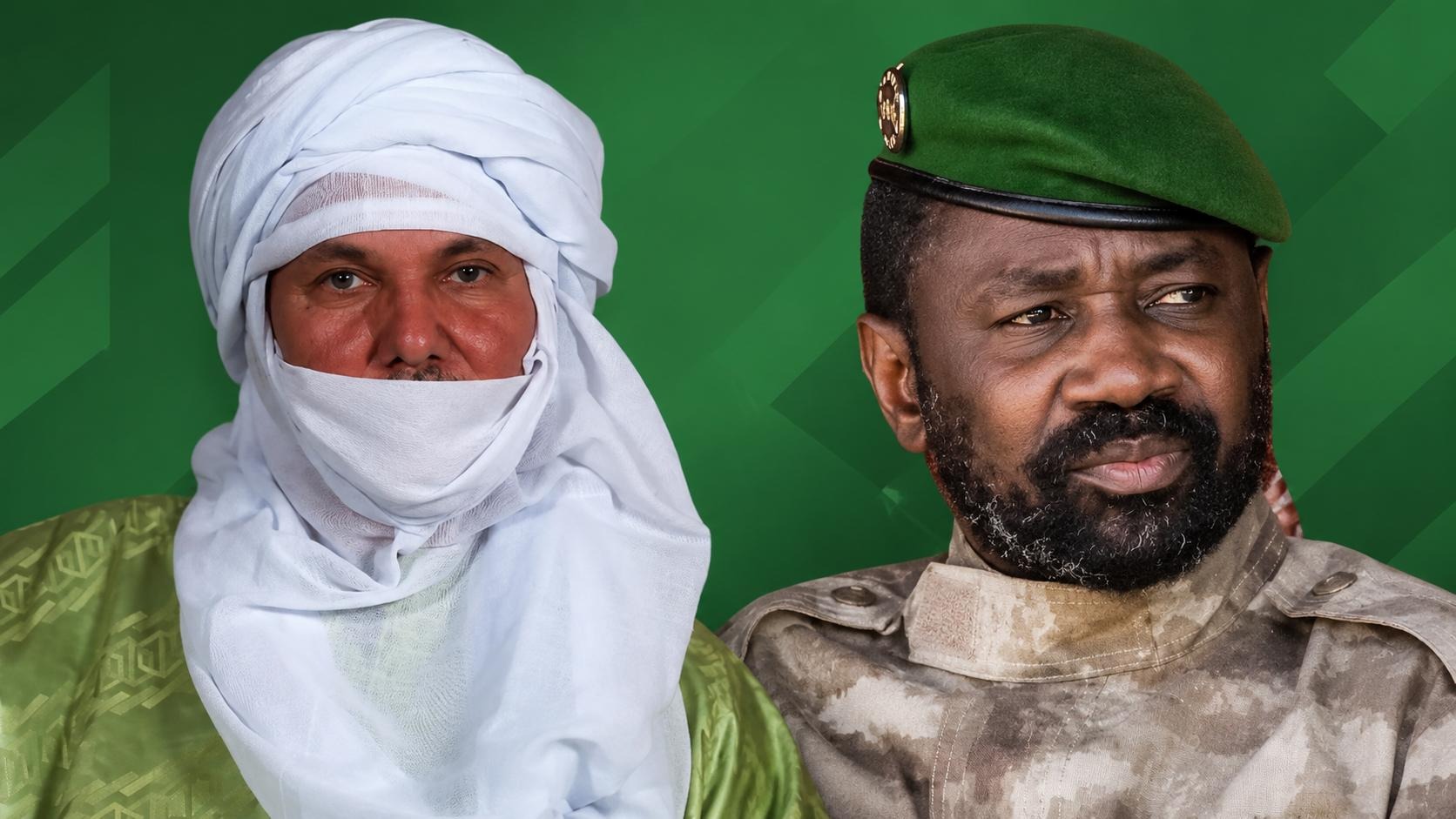
The once-unified narrative of Mali’s ruling junta is crumbling under the weight of battlefield defeats, political repression, and a mounting humanitarian crisis. Since seizing power in August 2020, the military leadership has struggled to deliver on its promises of restoring security and territorial integrity. Yet, six years later, the country finds itself in a deeper quagmire, with no clear path to peace in sight.
Issouf Ag MAHA, a prominent Nigerien writer and former mayor of Tchirozérine exiled in Europe, has delivered a scathing assessment of Bamako’s leadership in a recent analysis. In his view, the junta’s obsession with clinging to power has eclipsed any meaningful effort to address the nation’s deepening divides. By unilaterally scrapping the Alger Accords in early 2024, the transitional government closed the door on political negotiations with northern rebel factions, reigniting a conflict that had momentarily simmered.
Military setbacks expose fragility of Bamako’s control
The junta’s claim of strengthened authority is starkly contradicted by recent events in the northern regions. On July 4, 2026, heavy clashes erupted near Anefif, a strategic crossroads in the northeast. Government forces, backed by Russian Africa Corps mercenaries, faced a devastating ambush while attempting to reinforce troops near Gao. The attack left significant casualties and forced a humiliating retreat, further eroding confidence in Bamako’s military strategy.
This defeat followed a string of losses, including the fall of Tinzawatène and the recapture of Kidal by the Front de Libération de l’Azawad (FLA). The rebels’ coordinated offensive has shattered the illusion of Bamako’s control, revealing an army stretched thin and increasingly reliant on foreign fighters. Yet, in a surprising twist, the FLA has shown restraint by allowing some Malian and Russian troops to withdraw—a calculated move to contrast its disciplined approach with the junta’s brutal tactics.
Humanitarian crisis escalates under Africa Corps’ shadow
Mali’s pivot toward Moscow has come at a dire cost for civilians in the north. The deployment of Africa Corps (formerly Wagner Group) has done little to stabilize the region and much to escalate violence. Ag MAHA’s report highlights a pattern of systematic abuses against local populations, including:
- Arbitrary arrests and enforced disappearances of perceived opponents.
- Extrajudicial killings targeting civilians in areas under junta control.
- A deliberate strategy of terror to crush dissent and weaken rebel support.
Despite mounting evidence, Bamako continues to deny these atrocities, deepening the chasm between official rhetoric and ground reality. The junta’s repression extends beyond the battlefield, with independent media silenced and dissenters systematically silenced or jailed.
International silence fuels Mali’s descent into chaos
The Malian tragedy unfolds against a backdrop of waning global attention. Ag MAHA warns that the international community’s indifference risks pushing Mali past a point of no return. Without urgent diplomatic intervention, the country faces the grim prospect of total fragmentation, where military victory takes precedence over justice, unity, and the principles of democratic governance.
The junta’s gamble on a Russian-backed military solution has backfired, leaving Mali more divided and its people more vulnerable. As the crisis intensifies, the question remains: Will the world act before it’s too late, or has Mali’s struggle faded from global conscience?