
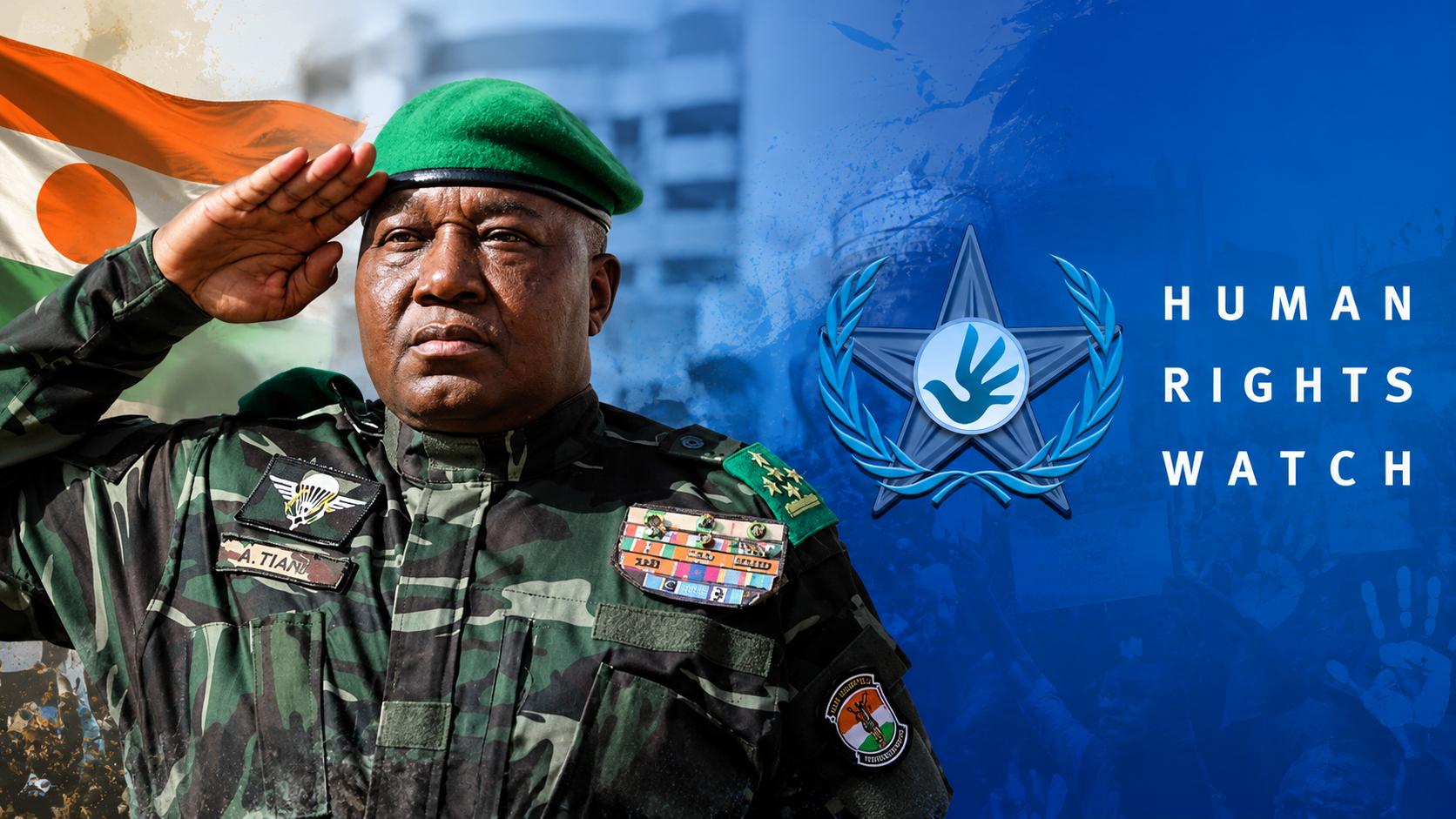
The Nigerien military junta, led by General Abdourahamane Tiani, continues to face sharp criticism three years after seizing power in a July 26, 2023 coup that ousted President Mohamed Bazoum. A scathing assessment released by international observers highlights a rapidly deteriorating human rights landscape, marked by systemic repression, institutional dismantling, and growing diplomatic isolation.
From democratic backsliding to outright authoritarianism
The National Council for the Safeguard of the Homeland (CNSP) has systematically dismantled Niger’s democratic foundations under the pretext of national security and sovereignty. Arbitrary detentions, judicial manipulation, and the neutralization of opposition voices have become hallmarks of a regime consolidating power through coercion rather than consent.
The fate of Mohamed Bazoum: a symbol of unchecked power
The continued detention of former President Mohamed Bazoum and his wife—now approaching their fourth year in captivity—stands as the most glaring example of the junta’s defiance of both national and international law. Despite repeated calls from global institutions, including the UN Working Group on Arbitrary Detention, for their immediate release, the military leadership has remained unyielding, reinforcing the perception of an administration operating beyond legal constraints.
The crackdown extends deeply into civil society. In December 2024, Moussa Tiangari, a respected human rights advocate, was arrested in Niamey. His lawyers argued for his provisional release within the 12-month legal limit for terrorism-related cases, but authorities abruptly amended the Penal Procedure Code to extend this period to four years—an adjustment widely condemned as a retroactive judicial overreach.
Censorship, repression, and the silencing of dissent
The space for free expression has shrunk dramatically under revised cybercrime legislation, which now serves as a tool to suppress criticism. In October 2024, six journalists were detained in Niamey for merely circulating an invitation to a press conference. Political parties have been dissolved, independent unions shuttered, and numerous NGOs suspended, erasing much of the country’s civic fabric.
The regime has also targeted opposition figures in exile, stripping citizenship from critics such as Mariama Djibrine—a move seen as an escalation in the suppression of dissent beyond national borders.
A society under siege: new laws and international withdrawal
In March 2025, the regime enacted sweeping amendments to the Penal Code, introducing sentences of five to twenty years for same-sex relations and support for LGBT individuals. This legislation has already triggered multiple arrests and disrupted vital public health initiatives, particularly HIV/AIDS treatment programs.
On the diplomatic front, Niger’s withdrawal from the Economic Community of West African States (ECOWAS) and the International Criminal Court (ICC) in mid-2025 has deepened its isolation. Analysts warn that these decisions further weaken legal protections for citizens, especially in volatile regions like Tillabéri, where civilian casualties persist amid ongoing counterterrorism operations.
The way forward: calls for accountability and restoration
Human rights organizations are urging international partners to move beyond passive engagement and demand concrete action: the release of political prisoners, the restoration of civil liberties, and a clear roadmap toward civilian governance. Failure to act, they argue, risks entrenching a cycle of repression with long-term consequences for Niger’s stability and its people’s dignity.