
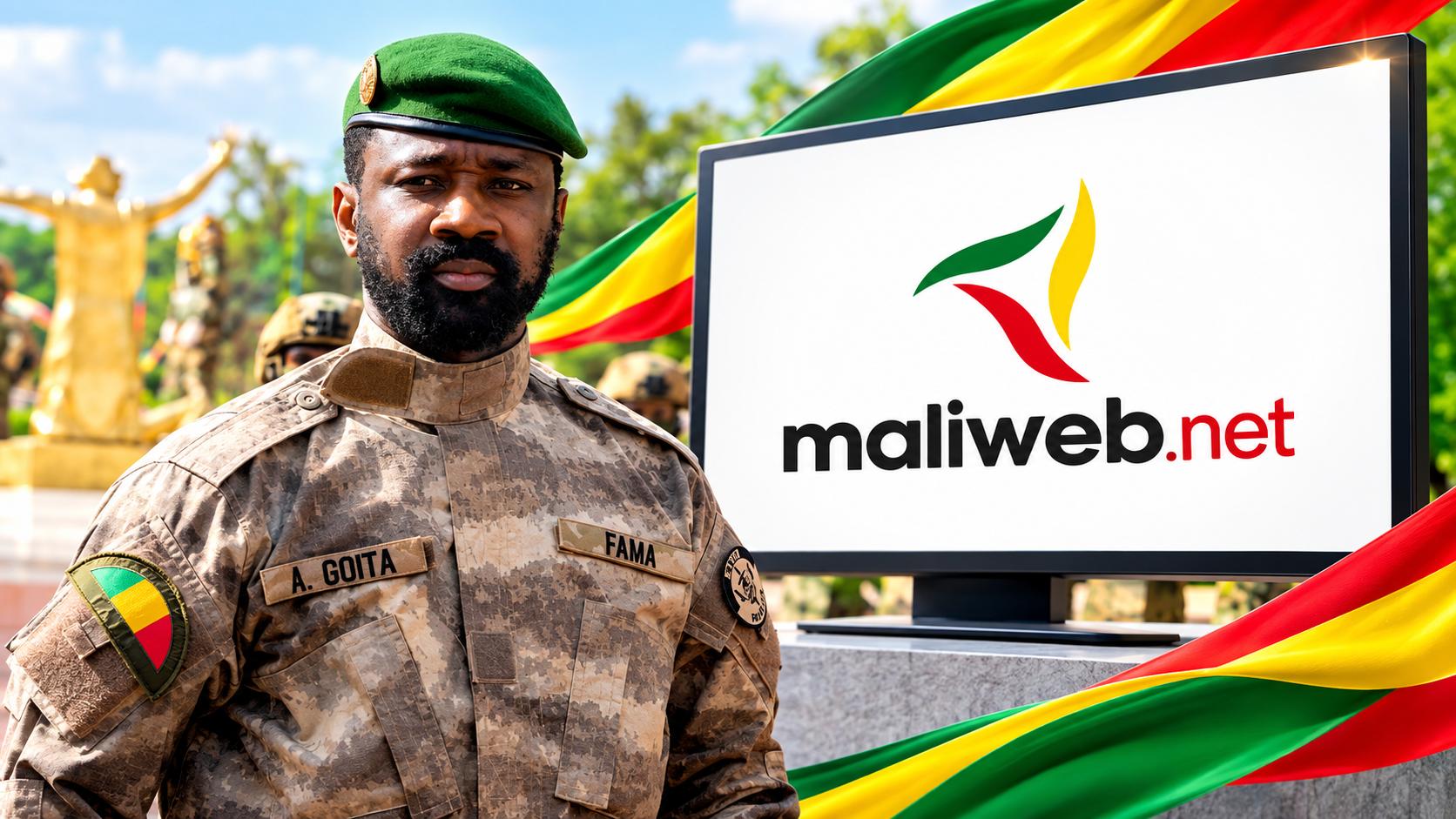
From neutral observer to state megaphone: the critical shift in Mali’s digital news landscape
Mali’s media environment has reached a turning point—one where the line between credible journalism and military-led propaganda no longer blurs, but vanishes entirely. Once a platform heralded for amplifying diverse voices across the Sahel, Maliweb.net has pivoted sharply, morphing into a primary conduit for the government’s official narrative, even at the expense of factual accuracy and human truth.
The September 2026 turning point that exposed the shift
On September 15, 2026, clashes in Dioura and Mondoro left more than 150 Malian soldiers dead and scores captured. While independent observers and field reports described a devastating defeat, the portal’s coverage spun a different story—one of heroic counterattacks and precision strikes against terrorist strongholds. By uncritically reproducing army communiqués without verification, it presented a sanitized version of events, concealing the human cost and operational failures of the Malian Armed Forces.
How systemic manipulation shapes the news cycle
This lopsided approach to reporting is not accidental. It follows a deliberate playbook:
- Unfiltered reliance on official statements: The site now serves primarily as a megaphone for military press releases and state media articles, bypassing independent verification and context.
- Suppression of military losses: Casualties and setbacks suffered by the Malian Armed Forces are routinely downplayed, glossed over, or omitted to project an image of invincibility.
- Marginalization of dissenting perspectives: Any attempt to question the official line or highlight operational challenges is dismissed as disinformation or an attack on national morale.
The erosion of public trust and the cost of misinformation
Once a trusted source of information, Maliweb.net now risks becoming a vehicle for state-controlled messaging. By abandoning its duty to fact-check and balance narratives, it not only misinforms readers but actively undermines the public’s ability to assess the country’s true security situation.
For citizens, journalists, and analysts alike, accessing reliable news has become a challenge. When a once-diverse digital platform transforms into a platform for ideological amplification, it doesn’t just fail to inform—it misleads. The result? A growing mistrust in local media and a society left in the dark about the real state of conflict in Mali.
What’s at stake for Mali’s democratic future
In a country still grappling with insurgency and political instability, an informed citizenry is vital. Yet when a leading digital news outlet prioritizes propaganda over truth, democracy itself is undermined. The loss of journalistic integrity doesn’t just affect headlines—it distorts public perception, fuels misinformation, and weakens civic resilience.
The time has come for a reset. True journalism in Mali must reclaim its role as a watchdog, not a megaphone. Otherwise, the gap between reality and narrative will continue to widen, leaving Malians navigating a fog of half-truths and official fiction.