
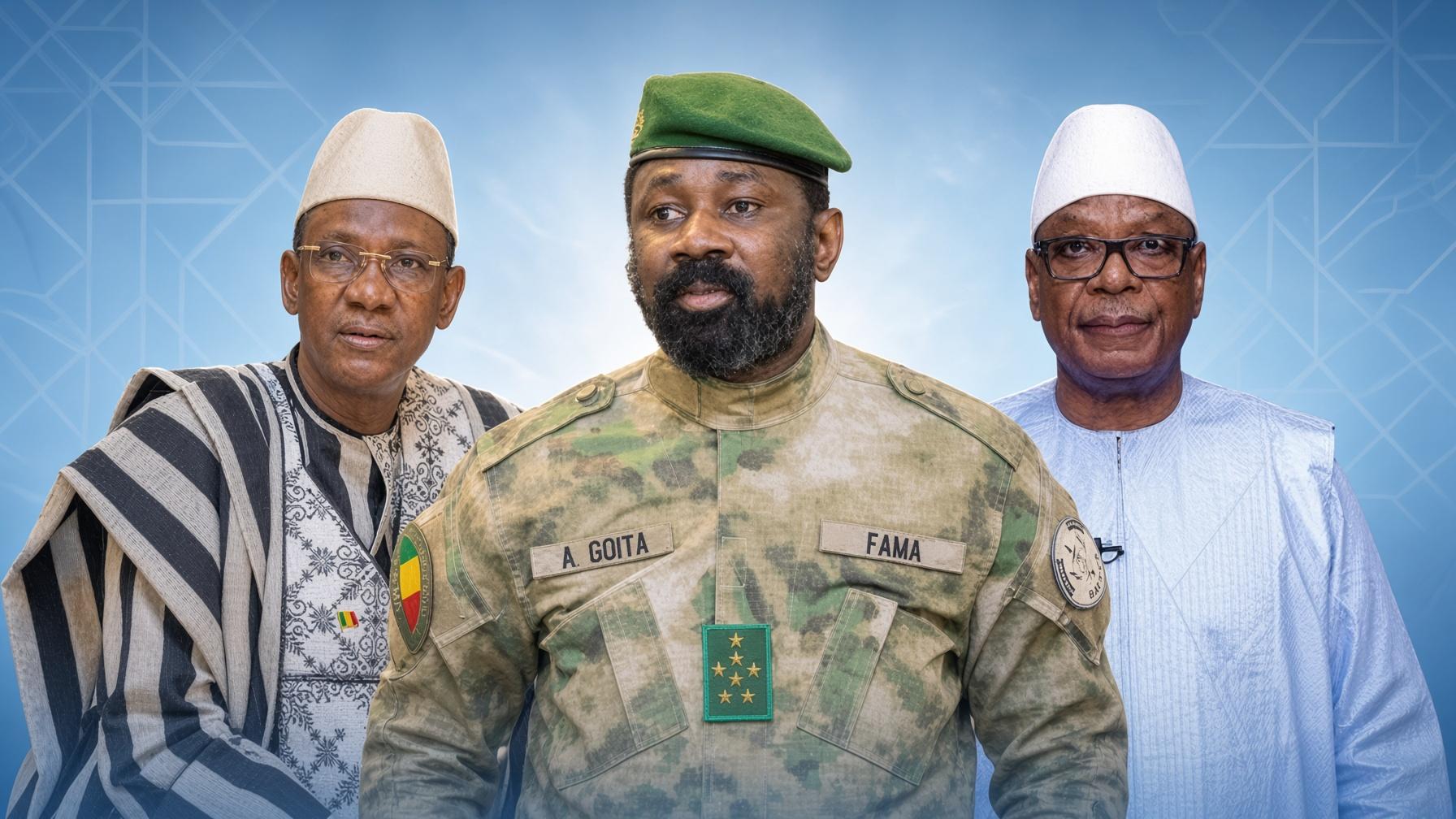
Mali’s longstanding political class, once the formidable force behind the nation’s democratic experiment, has vanished from the national stage. For thirty years, they dictated policy, dominated public discourse, and controlled political institutions. Since General Assimi Goïta’s military takeover, however, this entrenched elite has not merely retreated—they have been methodically dismantled, silenced, and erased from Malian politics.
Can Mali’s displaced political figures regain influence under military leadership?
The corridors of power once teeming with high-profile leaders are now eerily silent. Major parties like ADEMA and RPM, along with their coalitions, have lost control, making way for a carefully orchestrated campaign to neutralize the old guard. Three key tactics have redefined Mali’s political terrain since the junta’s rise:
How the junta is erasing its political rivals
- Weaponized legal attacks: Former political figures now face relentless legal pressure—arrests, detentions, and protracted court battles under vague charges including ‘threats to national security’ and ‘financial impropriety.’ Even Choguel Maïga, a former Prime Minister who once aligned with the junta’s ideology, remains in provisional detention, demonstrating that no political background guarantees safety in today’s Mali.
- Exile as the only exit: Scores of former government officials, party heads, and civil society activists have fled to neighboring cities such as Abidjan, Dakar, and distant capitals like Paris. Despite efforts to maintain political networks from abroad, their voices are effectively muted by a state-controlled media landscape in Bamako.
- Self-censorship enforced by fear: Those who stay behind operate under extreme pressure, avoiding any form of dissent. With parties suspended, associations dissolved, and regime-backed surveillance networks, even mild criticism is swiftly branded as ‘treason’ or ‘collaboration with enemies of the state.’
From public frustration to political takeover
The junta’s rise wasn’t solely a product of force—it capitalized on widespread discontent. After decades marked by allegations of corruption, political deadlock, and ineffective security measures, many Malians held the traditional political class accountable for the country’s decline. By portraying former leaders as the root cause of national failure, Goïta positioned himself as the nation’s savior, offering a scapegoat to a population exhausted by instability.
However, what began as populist rhetoric quickly evolved into institutional paralysis. Postponed elections, bypassed democratic institutions, and specially crafted transitional bodies have permanently sidelined political parties. These entities, once the architects of governance, now watch as a new order takes shape—one that operates without their participation, leaving Mali without structured opposition or mediating bodies.
A political future without traditional leaders?
The junta’s strategy has fragmented once-dominant parties and isolated their leaders. While this approach eliminates immediate dissent, it comes at a steep cost. By silencing opposition, the regime also removes avenues for dialogue, negotiation, and democratic renewal.
In confining prominent figures to prisons, exile, or enforced silence, Bamako may have stifled resistance in the short term. Yet, by erasing all credible democratic alternatives, the military leadership risks creating a leadership vacuum—governing in isolation while reacting to constant security and economic crises without external oversight or balance.
Mali at a turning point
Mali now stands at a critical juncture: the old political elite has been removed, but the void they leave behind is not one of stability—it is one of uncertainty. Without effective opposition, functioning institutions, or public trust, the future of Malian democracy remains precarious. As the junta tightens its control, a pressing question emerges: who will champion the nation’s interests when its politicians have been silenced or removed?