
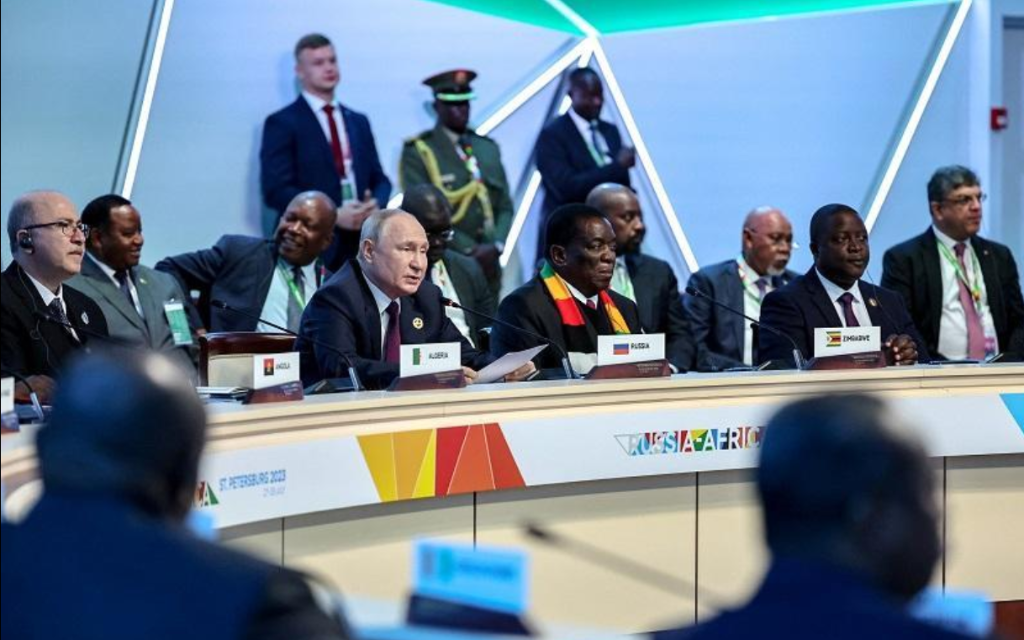
As the Russia-Africa summit unfolds in Moscow on October 28-29, 2026, all eyes are on the Sahel. The Alliance of Sahel States (AES) faces a defining moment: can its unity hold when its leaders show up differently? While Assimi Goïta of Mali stands on the ground with a full presidential delegation, Burkina Faso and Niger send lower-level officials, leaving the alliance’s cohesion under scrutiny. The contrasting levels of representation raise a critical question: is the Sahel’s diplomatic presence in Moscow weaker than it appears, or is this a strategic choice?
Goïta’s solo stand: Mali’s unfiltered presence at the Kremlin
General Assimi Goïta has arrived in Moscow with full presidential credentials. According to official reports, he was received at the airport and is scheduled to meet with Vladimir Putin. His delegation includes high-ranking officials, signaling Mali’s commitment to the summit. Unlike other Sahel partners, Mali’s leader is not just present—he is visible, engaged, and positioned as a key interlocutor for the Russian government.
The contrast is stark. While Goïta commands center stage, the status of Niger’s Abdourahamane Tiani remains uncertain. Russian authorities had announced his participation, yet no confirmation of his arrival has been made as of the summit’s opening. For now, Niamey’s seat at the table hangs in the balance, leaving analysts to wonder: is Tiani’s absence a deliberate delay, or a sign of shifting priorities?
Burkina Faso’s compromise: a prime minister in place of a president
The Burkina Faso delegation is led by Prime Minister Rimtalba Jean Emmanuel Ouédraogo, dispatched despite earlier announcements of Ibrahim Traoré’s attendance. While Ouagadougou maintains an official presence, the absence of its transitional president diminishes the country’s diplomatic weight. A prime minister’s participation is valid—but it lacks the symbolic and political punch of a head of state.
This move may reflect internal calculations rather than a rejection of the summit. Yet, in the court of international perception, Burkina Faso’s representation is now one step removed from the highest level.
What does this mean for the AES at the Russia-Africa summit?
The AES was formed to strengthen Sahel solidarity, but its current representation in Moscow tells a more nuanced story. With Goïta standing alone among the three leaders, the alliance’s diplomatic footprint risks fragmentation. While Mali showcases full engagement, Burkina Faso and Niger appear hesitant—whether due to domestic constraints, logistical hurdles, or strategic reticence.
Yet, the absence of high-level representation does not equate to absence of interest. Russia’s summit has drawn leaders from across Africa, including Emmerson Mnangagwa of Zimbabwe, Teodoro Obiang Nguema Mbasogo of Equatorial Guinea, and Salva Kiir of South Sudan. The event’s scale—48 African nations confirmed, 22 represented by heads of state—underscores its importance. But for the Sahel, the optics matter: a divided delegation at a high-profile forum can signal more than intended.
Beyond symbolism: what’s next for Sahel-Russia cooperation?
The real test of the AES’s cohesion will come in the form of concrete outcomes. Moscow is expected to unveil a new cooperation framework for 2027-2029, covering trade, energy, agriculture, and security. Goïta’s presence ensures Mali’s voice is heard in these discussions. But without parallel engagement from Burkina Faso and Niger, the alliance risks losing negotiating power.
For the Sahel, the summit is more than a photo opportunity. It’s a platform to secure investments, forge military ties, and redefine partnerships in a rapidly shifting geopolitical landscape. If Mali stands firm while others hesitate, the question remains: will the AES’s unity survive the glare of Moscow’s spotlight?
Key takeaways for the Sahel at the 2026 Russia-Africa summit:
- Mali leads visibly: Goïta’s full participation sets the benchmark for Sahel engagement.
- Burkina Faso and Niger tread cautiously: Representation by prime ministers reflects compromised but active involvement.
- Uncertainty clouds Niger’s role: Tiani’s absence remains unexplained, leaving his country’s position ambiguous.
- Unity tested: The AES’s ability to speak with one voice in Moscow will determine its diplomatic influence moving forward.