
The security landscape in Mali has worsened significantly since late April 2026, marked by coordinated attacks that targeted multiple cities, resulting in the deaths of the Defense Minister, Sadio Camara, and several Malian soldiers.
These incidents are part of a growing wave of violence against military forces and state institutions across Mali, exacerbated by decades of unresolved tensions.
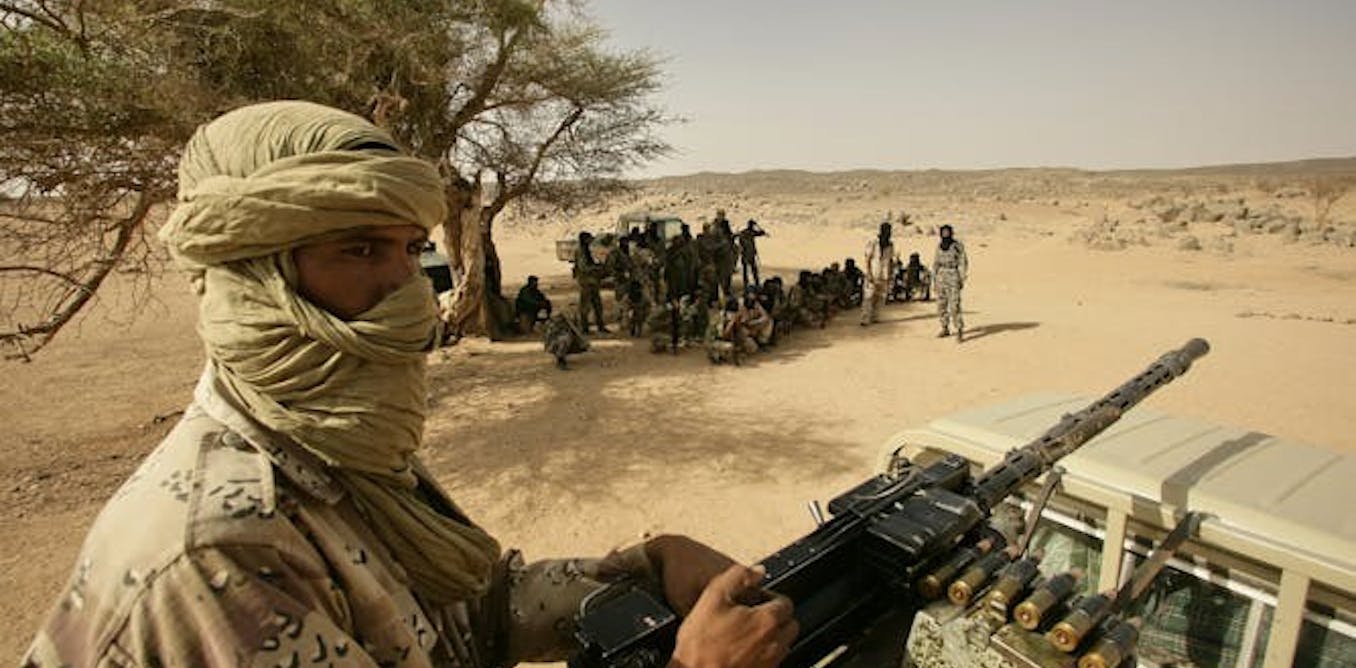
With over a decade of research on security and politics in West Africa and the Sahel, we’ve identified that the latest surge in attacks stems from long-standing grievances among the Tuareg community—grievances that the current military regime has failed to address. The Tuareg are a nomadic Berber people inhabiting northern Mali.
Root causes of the crisis
Three primary factors are driving the conflict:
Unaddressed Tuareg demands: Their grievances center on political autonomy, cultural recognition, resource control, and perceived neglect by the state. The military government’s reluctance to engage with these issues has fueled frustration.
Militarization policies: The Malian army’s heavy-handed approach in northern regions has exacerbated civilian suffering. Tuareg groups have long opposed successive governments’ militarization strategies, which often disregard collateral damage.
Unequal resource distribution: Northern Mali, rich in gold deposits, salt mines, grazing lands, and trade routes, remains economically marginalized. Revenue from these resources is largely controlled by the southern-central government, deepening regional disparities.
Addressing these structural inequities could ease Tuareg grievances, rebuild trust in the state, and shift the conflict’s focus toward inclusive governance and long-term stability in northern Mali.
Escalation and historical context
In April 2026, the Group for the Support of Islam and Muslims (JNIM) joined forces with Tuareg rebels from the Azawad Liberation Front (FLA) to launch attacks across multiple cities. This mirrors a similar 2012 offensive, when Tuareg separatists—backed by affiliates of Al-Qaeda—targeted state institutions.
The National Movement for the Liberation of Azawad (MNLA), a predominantly Tuareg separatist group founded in 2011, sought secession and triggered a rebellion. At its peak in 2012, the MNLA had approximately 10,000 fighters, though insufficient military strength to maintain territorial control. An alliance with Islamist factions—such as Ansar Dine, Al-Qaeda in the Islamic Maghreb (AQIM), and the Movement for Oneness and Jihad in West Africa (MUJAO)—briefly pushed back Malian forces by late 2012. However, the alliance collapsed when Islamist groups, better armed and funded, seized control of major cities like Gao, Timbuktu, and Kidal.
The 2013 French intervention under Operation Barkhane helped the Malian government reclaim most lost territories. AQIM and its allies retreated to mountainous and desert regions, adopting guerrilla tactics like suicide bombings and landmine use. The 2022 withdrawal of French forces created a security vacuum, reducing counterterrorism pressure, disrupting intelligence networks, and weakening state capacity. This emboldened Islamist groups, enabling them to expand operations, recruit locally, and regain territorial influence.
Missed opportunities for peace
The military regime under Assimi Goïta has failed to address Tuareg separatist demands. Tuareg leaders argue that since Mali’s independence in 1960, the state’s governance structure has excluded their communities, particularly in the north. Political autonomy or self-rule has been consistently suppressed, often through force.
Climate-related challenges—such as drought, desertification, and erratic weather—have further devastated Tuareg livelihoods, compounding their grievances. These issues predate the Islamist insurgency and remain central to understanding Tuareg motivations.
Another unaddressed issue is the heavy-handed approach of counterterrorism operations, which has led to significant civilian harm. Reports indicate that military campaigns in northern and central Mali have caused mass displacement, arbitrary arrests, and collective punishment. These actions have inadvertently fueled recruitment for Islamist groups, legitimizing their presence and expanding their territorial control.
The Malian government’s failure to address these structural issues—coupled with past French interventions seen as ineffective—has contributed to the current crisis. Since independence, public investments, infrastructure, and social services have overwhelmingly favored the southern regions, exacerbating northern marginalization.
Previous peace agreements promised decentralization, funding, and integration for northern elites and ex-combatants, but implementation has been slow or nonexistent.
Pathways to resolution
Resolving the Tuareg question is critical to reducing national tensions. While Tuareg actors have twice miscalculated by allying with jihadist groups, this doesn’t negate the need to address long-standing structural inequalities and grievances.
Mali could draw lessons from Niger, where former President Mahamadou Issoufou implemented policies to integrate Tuareg elites and former rebels into state institutions. His approach included:
Political inclusion: Integrating Tuareg leaders and ex-combatants into government structures.
Devolution of power: Granting regional administrative and budgetary control to northern authorities.
Disarmament and reintegration: Implementing DDR programs to demilitarize former fighters.
Issoufou also prioritized infrastructure development tailored to Tuareg needs, including pastoralist support, education, and livelihood programs. Initiatives like improving water access in arid grazing zones and enhancing road connectivity and security were key to stabilizing the region.
By addressing Tuareg grievances and structural inequities, Mali could pave the way for lasting peace and reduce the appeal of violent extremism in the north.