

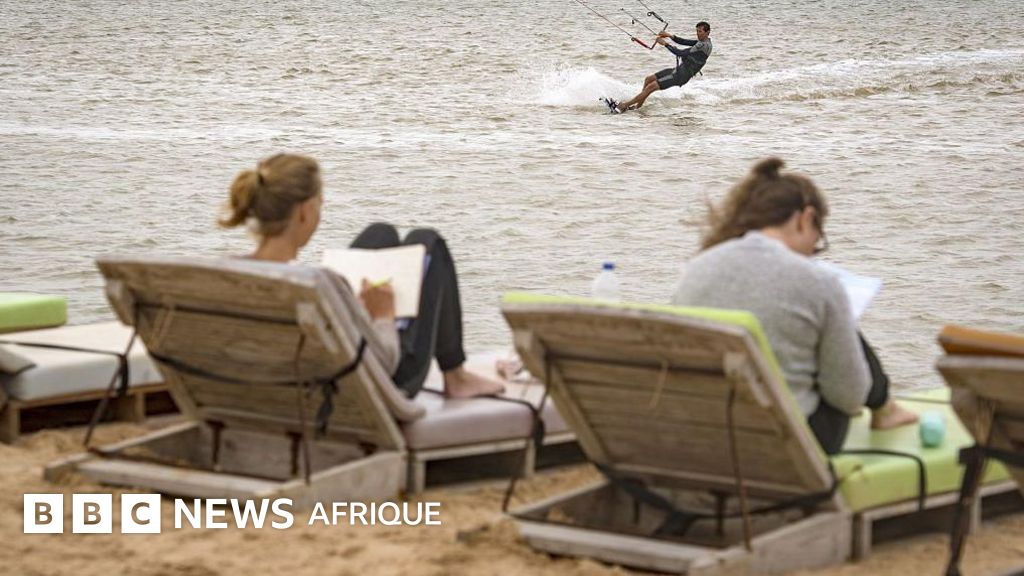
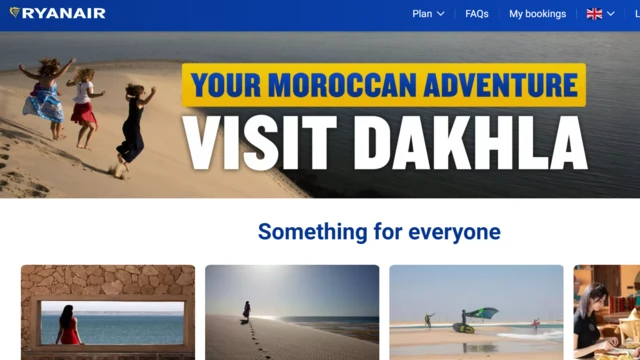
The Moroccan government is aggressively promoting the Western Sahara as a prime tourist destination, drawing visitors with promises of golden dunes, pristine beaches, and windsurfing adventures in Dakhla. Recent marketing campaigns, including those from Ryanair, have positioned the region as a seamless extension of Morocco, offering budget flights from European hubs like Madrid at prices starting from €30 for round trips.
Yet beneath the glossy brochures lies a decades-old territorial dispute that remains unresolved. The United Nations continues to classify Western Sahara as a non-self-governing territory, a status that denies its indigenous population the right to self-determination. Morocco, which controls around 80% of the region, insists it is part of its sovereign territory, referring to it as its southern provinces.

Tourism surge fuels Morocco’s territorial narrative
Since 2019, tourist arrivals in Morocco-controlled Western Sahara have surged by over 50%, climbing from 490,297 to 743,133 in 2025, according to official figures. This boom is fueled by direct flights operated not only by national carrier Royal Air Maroc but also by European budget airlines like Ryanair, Transavia France, and Binter Canarias, connecting destinations such as Madrid, Paris, and the Canary Islands to Dakhla and Laâyoune.
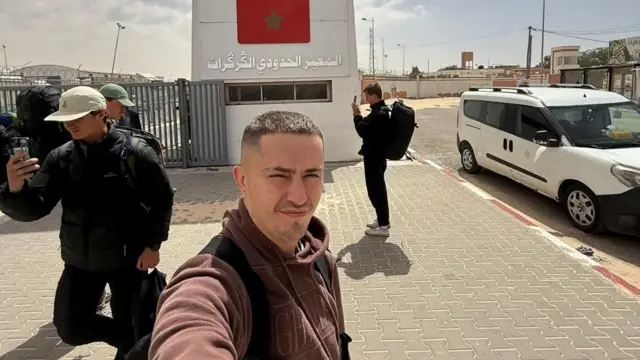
British traveler Tom Ruck, who recently visited Dakhla via Ryanair, described the experience as ‘still in its infancy’, noting sparse crowds despite ongoing resort construction. His passport bore a Moroccan stamp, and he observed the Moroccan flag flying prominently across the city.
International platforms under scrutiny
Human rights advocates and legal experts warn that marketing Western Sahara as part of Morocco risks normalizing its occupation under international law. Platforms like Expedia, Booking.com, and Trivago continue to list accommodations in Western Sahara under Moroccan territory, though Booking.com claims to add conflict-related disclaimers when regions are disputed.
Erik Hagen of Western Sahara Resource Watch condemned the practice, stating, ‘Labeling these destinations as Moroccan distorts international law and misleads the public. Companies operating in illegally occupied territories must exercise due diligence or face legal repercussions.’
Dr. Andrea Maria Pelliconi, a human rights law expert at the University of Southampton, added that businesses failing to distinguish Western Sahara’s unique status could face litigation under international law, consumer protection regulations, and EU competition rules.
The historical and political backdrop
Western Sahara was a Spanish colony until 1976, when Morocco laid claim to the territory following Spain’s withdrawal. This sparked a conflict with the Polisario Front, a Sahrawi independence movement that waged war until a 1991 UN-brokered ceasefire. The ceasefire included a pledge for a referendum on self-determination, which has never materialized. Today, the Polisario controls a narrow eastern strip of the territory.
Sidi Breika, Polisario’s representative in the UK and Ireland, argues that tourism initiatives are part of Morocco’s strategy to create a fait accompli on the ground. ‘Most tourists are unaware of the broader context,’ he noted. ‘Every project in the occupied territory violates the Sahrawi people’s right to self-determination, a principle enshrined by the UN.’
The UN Security Council recently extended the mandate of its peacekeeping mission in Western Sahara for another year, while endorsing Morocco’s autonomy plan as the most viable path forward. The plan, backed by the US since 2020, exchanges recognition of Moroccan sovereignty over Western Sahara for Moroccan normalization with Israel. Yet, the Polisario and much of the international community continue to reject the proposal, insisting on a referendum as the only legitimate solution.
What lies ahead?
As Morocco invests heavily in tourism infrastructure, the debate over Western Sahara’s future intensifies. While the Moroccan government has not responded to requests for comment, the Polisario Front has vowed to challenge tourism initiatives in court, framing them as violations of international law and the Sahrawi people’s right to self-determination.
Breika concluded, ‘Investing in tourism or any economic project cannot replace the will of the Sahrawi people. The right to decide our future is non-negotiable.’