
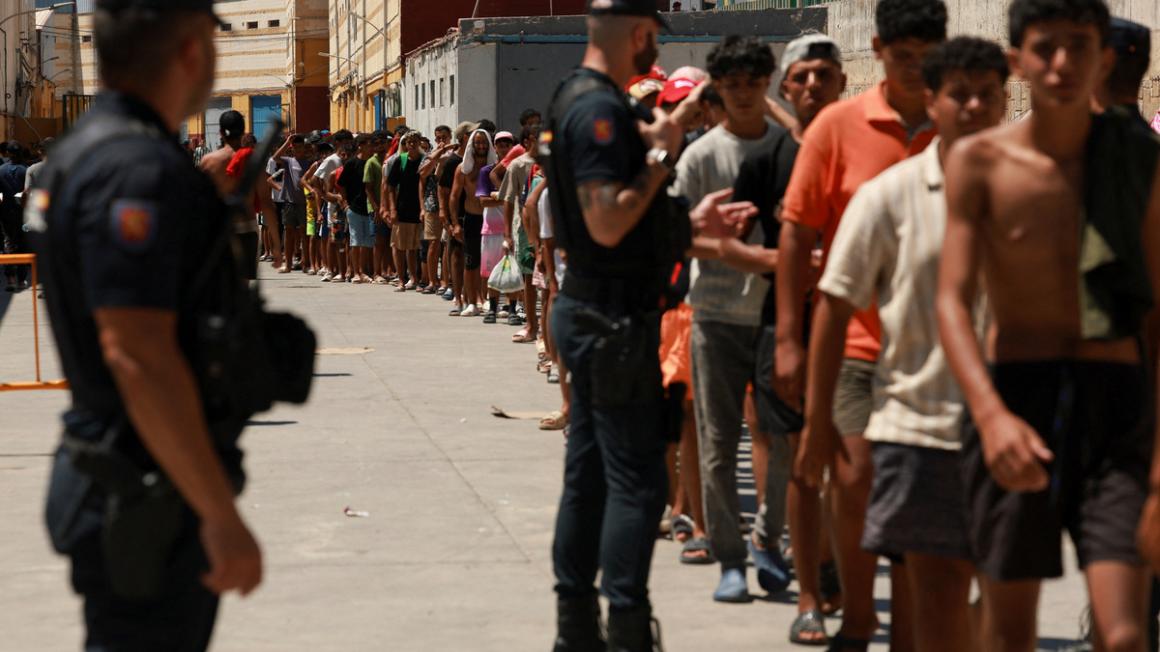
Following a sudden surge of migrants from Morocco into the Spanish enclave of Ceuta, authorities in Rabat have announced their readiness to assist in the repatriation of unaccompanied minors.
In response to the unprecedented influx of thousands of migrants crossing into Ceuta from Morocco in late July, Moroccan officials emphasized their willingness to collaborate on the return of unaccompanied minors. However, they highlighted legal hurdles imposed by Spanish institutions as a key challenge in executing this plan. A diplomatic source, speaking on condition of anonymity, confirmed that Morocco is committed to identifying these minors and facilitating their return through coordinated efforts with Spanish and European partners.
The source stressed that while Morocco is prepared to act, its counterparts must address internal legal and administrative barriers to make the process viable. “Each partner must take steps within their own systems to overcome these obstacles,” the source noted.
Record-breaking migration surge overwhelms Ceuta
In just a few days, over 72,000 migrants illegally entered Ceuta, setting a new record for the enclave. Authorities in Madrid reported that approximately 70,000 individuals have since been returned to Morocco. Due to legal restrictions, unaccompanied minors cannot be deported, leaving them stranded in Ceuta.
According to Ceuta’s administration, more than 1,000 of the roughly 2,000 migrants remaining in the enclave are unaccompanied minors. Their nationalities remain unspecified. Child protection advocates have raised concerns about the heightened risks these minors face, including exploitation, trafficking, and abuse.
Tragically, at least 80 lives have been lost, primarily due to drowning, as reported by a Spanish forensic medicine commission. Meanwhile, Moroccan authorities confirmed 11 fatalities on their side of the border.