
In Mali, the enforced disappearance of prominent lawyer and democracy advocate Mountaga Tall by state security forces—now entering its fifth week—has escalated tensions amid a broader crackdown on dissent. His son and several other pro-democracy activists, military officers, and religious leaders have faced similar abductions. These arrests followed large-scale attacks on April 25 by Islamist militants from the Jama’at Nusrat al-Islam wal Muslimin (JNIM) and the separatist National Liberation Front of Azawad (FNLA).
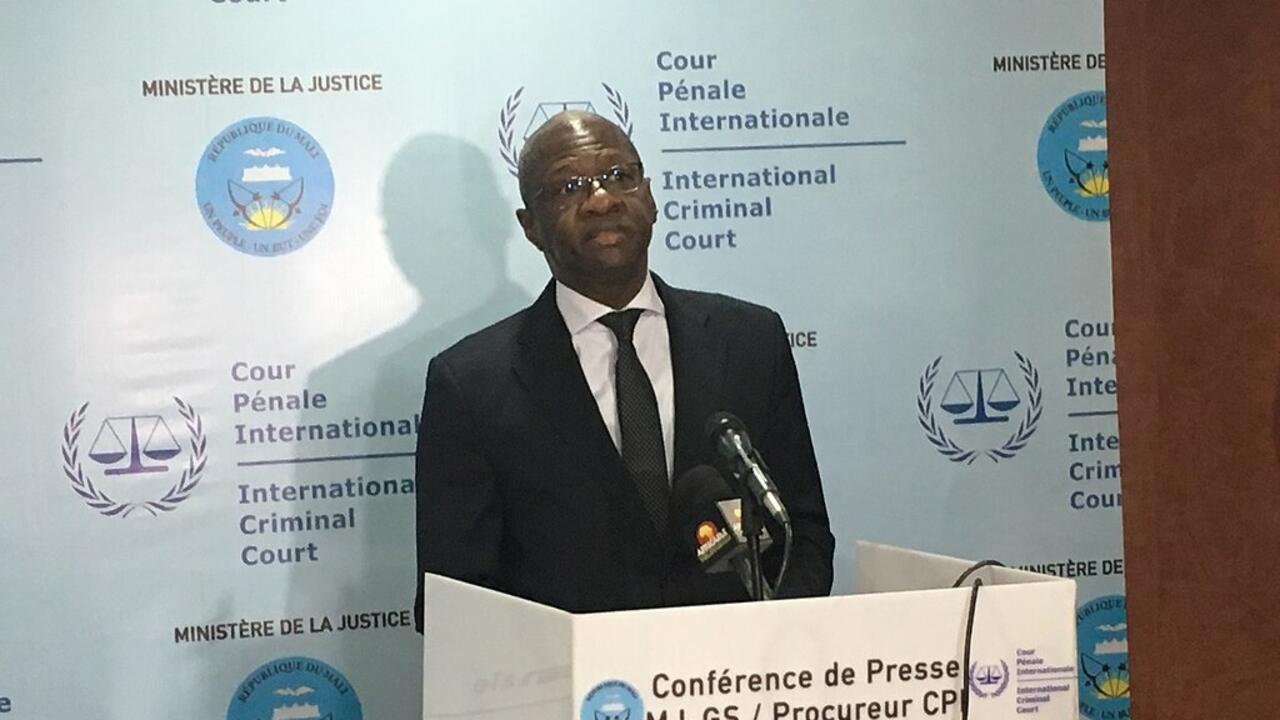
Mamadou Ismaïla Konaté, a former Malian Justice Minister and outspoken critic of the current military-led administration, shared his perspective on Mountaga Tall’s detention, the misuse of counterterrorism rhetoric, and the erosion of judicial independence in Mali. He emphasized the inherent contradiction between fighting terrorism and violating fundamental rights, stressing that the fight against extremism cannot justify arbitrary detention or the suppression of legal protections.
arbitrary detention under the guise of security
Mamadou Ismaïla Konaté: “While I remain skeptical about the possibility of justice prevailing, the authorities must recognize that no individual should be deprived of liberty outside the law. Even in the current climate, where the rule of law is absent, we must remind them that a state’s commitment to lawfulness is measured by how it treats its opponents, critics, and lawyers. It is unacceptable that a citizen—both a political figure and a lawyer—has been denied visits from doctors, legal counsel, or even the president of the bar association. After the bar association’s strong statement, the military authorities responded by abducting Mountaga Tall’s son. This escalation is intolerable.”
The lawyer highlighted the dangerous trend of detaining individuals—including activists, soldiers, and religious leaders—under the pretext of investigating alleged collaboration with armed groups during the April 25 attacks. Although no official link has been established between these arrests and the ongoing military investigation, the implicit strategy of the authorities appears to be using counterterrorism as justification for suppressing dissent. While some Malians may accept this narrative, Konaté warned that such practices undermine legal security and set a dangerous precedent.
“A military camp is not a court of law. Legal detention must be justified; arbitrary detention thrives in secrecy. Today, it is Mountaga Tall. Tomorrow, it could be anyone else. Even in the fight against terrorism, the legal framework must be preserved. Justice must be both the starting point and the endpoint of every action.”
judicial subjugation and political repression
Konaté also criticized the selective application of justice in Mali, pointing to the recent one-year prison sentence handed to former Prime Minister Moussa Mara for a tweet expressing hope for democratic change. Meanwhile, supporters of the transitional government have openly incited violence against pro-democracy activists and foreign-owned businesses without facing consequences. “The judiciary, which should uphold public order and security, now appears to be subservient to the authorities. Judges must remember they serve the state, the nation, and the people—not a regime, no matter how powerful.”
He questioned whether judges have the autonomy to resist pressure, noting, “The law allows judges to recuse themselves. Yet, out of fear or complacency, they are complicit in a system that perverts justice. They must realize that today’s actions will have consequences tomorrow.”
is the transitional government losing its grip?
Despite setbacks such as the death of Defense Minister Sadio Camara and the loss of Kidal to rebel forces, the military-led government in Mali has shown remarkable resilience. Konaté acknowledged that while terrorism poses a grave threat to social cohesion, the transitional authorities’ reliance on force and intimidation to maintain power has only deepened the country’s instability. “Terrorism negates peace and the social contract. Yet it is impossible to ignore the responsibility of a government that seized power by force and clings to it through force and terror. The growing peril facing Mali and its citizens cannot be separated from the decisions made by those in power over the past six years.”
why not join the opposition coalition?
As a vocal critic of the current regime, Konaté has not aligned himself with the Coalition of Republican Forces (CFR), led by imam Mahmoud Dicko. He explained his stance: “We are caught between the military helmet and the imam’s turban. The helmet represents the violent seizure of power and authoritarian rule. The turban? We must not forget 2012—the year of amputations and terror in northern Mali. Those memories are still fresh in people’s minds.”
He stressed that while national unity and dialogue are essential, certain prerequisites must be met. “I reject the idea of sitting at the same table with those who wield weapons and commit acts of terror, just as I reject the military regime that violates rights and freedoms. There must be an absolute prerequisite: addressing the horrors of 2012 and the unholy alliance between the FNLA and JNIM. Only then can we build a foundation based on the principles of the Republic, democracy, and justice.”
opposition to the AES alliance
Konaté firmly rejected the narrative promoted by the governments of Mali, Niger, and Burkina Faso under the Alliance of Sahel States (AES), which equates opposition to their rule with treason, terrorism, or foreign interference. “No one can strip me of my identity as a Malian, a patriot, or an engaged citizen. What these illegal regimes cannot tolerate is being reminded of the law and their own broken promises. The true enemies of the nation are those who starve their people, suppress freedoms, and destroy the rule of law.”