
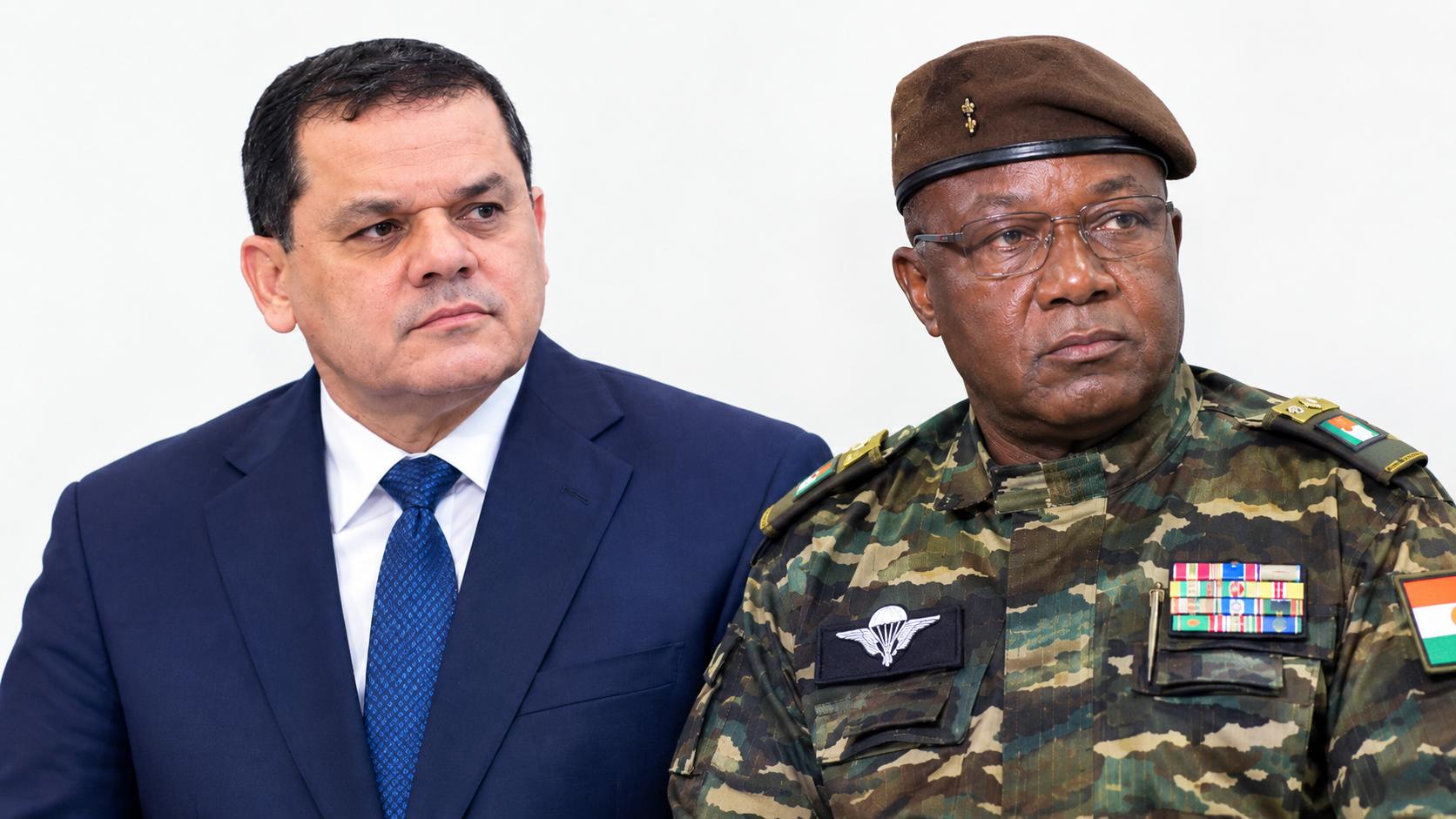
The General Abdourahamane Tiani regime in Niamey is no longer focusing solely on internal stability. A subtle but decisive shift is underway, with Niger positioning itself as a key player in Libya’s fragmented south, where new alliances and rivalries are redefining the balance of power.
The rise of Mohamed Wardougou: a game-changer in Libya’s southern theater
Once a loyal commander within Khalifa Haftar’s military apparatus, Mohamed Wardougou has emerged as a formidable adversary. His breakaway faction, the Chamber of Operations for the Liberation of the South (COLS), has begun targeting Haftar’s positions in the Fezzan—a region that serves as a critical link between Libya, Niger, and the broader Sahel.
Wardougou’s rebellion stems from grievances over resource control and political marginalization under Haftar’s rule. His forces have escalated attacks on Haftar’s supply lines, including smuggling routes for fuel and weapons, further destabilizing an already volatile region.
The Fezzan factor: why Haftar’s grip is slipping
The Fezzan is not just a desert expanse—it is a strategic artery connecting Libya to neighboring countries, including Niger. Its loss would cripple Haftar’s military and economic leverage in the south. Wardougou’s campaign, supported by local factions and external backers, is chipping away at this foundation.
In a significant move, reports suggest Tripoli’s Government of National Accord has negotiated with Niamey to establish a logistics corridor, facilitating the movement of military equipment to COLS. This development follows months of diplomatic engagement between Niger and Libya’s western authorities, signaling a deeper realignment in the region.
Niger’s calculated gamble: balancing risk and opportunity
For Niger, the stakes are high. The Tiani regime has faced multiple internal challenges, including a failed coup attempt in August 2026, which was quelled with the support of Russian forces. In this context, a calculated shift toward Libya’s anti-Haftar camp could serve two purposes: strengthening regional alliances while countering security threats along the porous border.
The June 2026 meeting between Niger’s Prime Minister Ali Lamine Zeine and Libya’s Abdelhamid Dbeibah in Tripoli underscored this rapprochement. Analysts now describe it as the potential opening of a “new front” against Haftar—a move that could reshape the geopolitical landscape of the Sahel.
The risks of overreach: why Tiani treads carefully
Yet, the path is fraught with danger. The transnational nature of Saharan militant networks means that any involvement in Libya’s conflict carries unpredictable consequences. A misstep could drag Niger into a proxy war it cannot control, exposing its fragile stability to external shocks.
For now, there is no public evidence that Tiani has directly sanctioned Wardougou’s operations. However, the convergence of interests—Niger’s border security, Tripoli’s political ambitions, and COLS’s military campaign—creates a powder keg that could ignite at any moment. The question is no longer whether Haftar’s dominance is under threat, but how far Niamey is willing to go in reshaping Libya’s southern power structure.
The Sahara’s shifting sands: where alliances are rewritten daily
The desert does not respect borders, and in the Sahara, rivalries are fought as much through proxies as through direct confrontation. For Haftar, the loss of the Fezzan would be a major setback. For Tiani, the opportunity to leverage Libya’s instability for regional influence may be too tempting to ignore—but the costs could far outweigh the benefits if the gamble fails.