

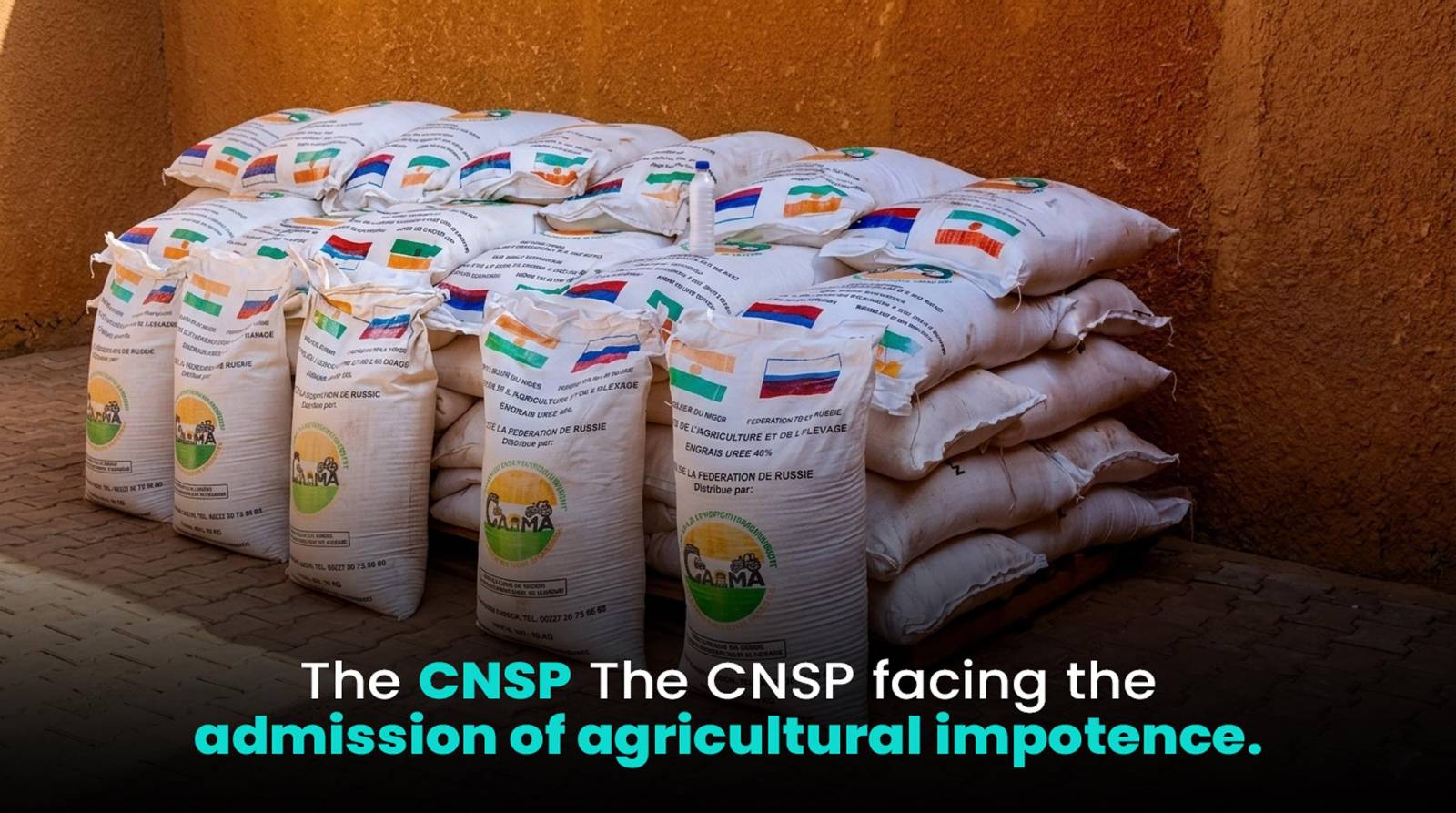
Niger’s agricultural sector receives critical boost from Russian fertilizer donation
The Government of Niger has taken delivery of a substantial shipment of 20,000 metric tons of fertilizer, dispatched from Russia and routed through the Port of Lomé. This consignment represents a concerted effort by Niger’s transitional authorities to revitalize domestic agricultural production and, ultimately, achieve food self-sufficiency within the country.
Strategic support for local farmers
The timing of this fertilizer donation is particularly significant for Niger’s farming communities. With global fertilizer prices fluctuating unpredictably and environmental pressures intensifying, access to affordable inputs remains the primary barrier to improving crop yields. Authorities have confirmed that the distribution of this consignment will prioritize small-scale farmers, who form the backbone of the national economy.
The National Council for the Safeguard of the Homeland (CNSP) has framed this assistance from Moscow as a pragmatic and mutually beneficial partnership, one that avoids the conditional constraints often associated with traditional Western aid models, which Niamey has historically found restrictive.
Sovereignty versus external assistance: a complex balance
The introduction of foreign aid, even when framed as strategic, inevitably raises questions about its compatibility with claims of national sovereignty. Can a nation truly assert independence when its agricultural growth relies on external support?
Pragmatic transition policy
For the current administration, sovereignty is not synonymous with isolation. Instead, it is interpreted as the autonomy to select partners without external pressure. By accepting Russian fertilizer rather than Western alternatives, Niger is signaling a deliberate shift away from historical dependencies and expanding its strategic alliances beyond traditional spheres of influence.
The foundation of food security
Political sovereignty, officials argue, cannot exist without a stable food supply. In this context, the Russian fertilizer is viewed not merely as aid, but as a production tool—one intended to gradually reduce reliance on cereal imports and strengthen local food resilience.
Balancing new dependencies with long-term goals
Critics caution that while the shift from Western to Eastern dependence may address immediate needs, it does not eliminate vulnerability. True food sovereignty, they argue, will require sustained investment in domestic fertilizer production facilities, ensuring that external assistance serves as a bridge—not a crutch—toward self-reliance.
Strengthening ties beyond defense cooperation
This donation underscores the deepening diplomatic and economic alignment between Niamey and Moscow, extending cooperation beyond military collaboration into critical sectors such as rural development and food production.“Real sovereignty begins with the ability of a people to feed themselves. If this fertilizer helps revitalize our farmlands, it is a step toward true freedom,” remarked a policy analyst based in Niamey.
Conclusion: realism over rhetoric in pursuit of self-sufficiency
While the acceptance of foreign aid may seem at odds with the rhetoric of self-reliance, Niger’s approach reflects a clear-eyed assessment of its current capabilities. By leveraging support from new allies, the country is laying the groundwork for economic independence—one harvest at a time.
Is the establishment of domestic fertilizer plants essential to validating Niger’s sovereign ambitions, or does diversifying international partners provide sufficient safeguard for its independence?