
À Yamoussoukro, Oligui Nguema inscrit le Gabon dans la mémoire politique ivoirienne
Libreville, Thursday, August 6, 2026 – In Yamoussoukro, the recent visit by Gabonese President Brice Clotaire Oligui Nguema transcended the typical formalities of an official state trip. By paying respects at the tomb of Félix Houphouët-Boigny and subsequently visiting the Basilica Notre-Dame-de-la-Paix, the head of state deliberately framed his Ivorian stay around themes of historical memory, peace, and the enduring bond between two nations now eager to deepen their close relationship.
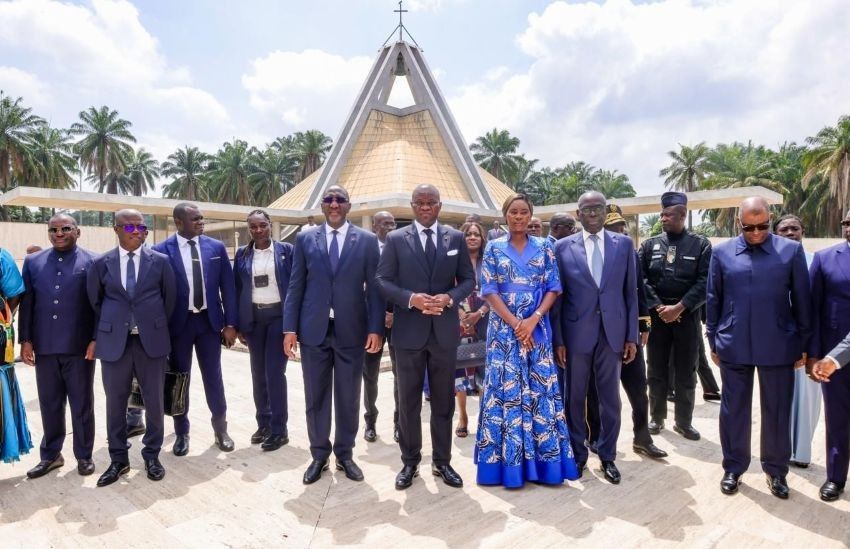
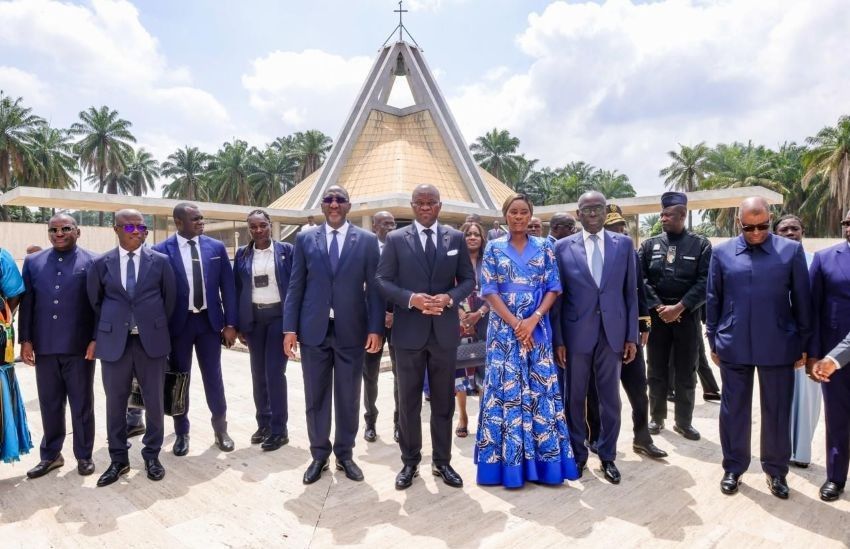
On Wednesday, August 5, President Oligui Nguema, accompanied by First Lady Zita Oligui Nguema and a significant Gabonese delegation, arrived in the Ivorian political capital. They received a warm welcome from local administrative, political, and traditional authorities. This crucial stop precedes the 66th anniversary celebrations of Côte d’Ivoire’s independence, an event Gabon will attend at the invitation of President Alassane Ouattara.
The choice of Yamoussoukro for this visit was highly symbolic. It is here that the legacy of Félix Houphouët-Boigny, Côte d’Ivoire’s first president and a pivotal figure in African political history, is preserved. By laying a wreath at the mausoleum of the former leader, Brice Clotaire Oligui Nguema honored a statesman revered as a nation-builder and an architect of peace. This homage also served as a powerful reminder of the profound connections between Libreville and Abidjan, built upon a diplomatic history characterized by friendship, cooperation, and fraternity.
A tribute resonating across Africa
Addressing the traditional chieftaincy of Yamoussoukro, the Gabonese president underscored the far-reaching impact of this shared heritage. Beyond merely acknowledging an Ivorian leader, he emphasized a particular vision of African political action: one where a state can ensure its longevity, safeguard its historical memory, and leverage peace as a fundamental tool for stability.
This gesture also comes at a time when Gabon actively seeks to strengthen its ties with other key players across the continent. The ongoing diplomatic tour initiated by the head of state clearly reflects a commitment to forging more African partnerships and utilizing regional cooperation as a vital lever for advancing Gabonese interests.
President Oligui Nguema extended his gratitude to Alassane Ouattara for the invitation to the national festivities on August 7. Gabon’s participation will encompass both institutional and cultural dimensions. General officers who received their training in Côte d’Ivoire are set to join the celebrations, alongside a delegation representing Gabon’s indigenous communities. This inclusive approach aims to showcase the nation’s rich diversity within an event that unites various African states and components of the broader African community.
From memory to enduring peace
The second profound segment of this day unfolded at the Basilica Notre-Dame-de-la-Paix. Constructed between 1986 and 1989, and drawing inspiration from Rome’s St. Peter’s Basilica, this edifice stands as one of Yamoussoukro’s most spectacular symbols. The Gabonese delegation undertook a guided tour before pausing for a moment of quiet reflection.
In the guest book, Brice Clotaire Oligui Nguema penned a message advocating for unity, dialogue, and solidarity among African peoples, all in pursuit of a “strong and prosperous” Africa. This carefully chosen phrasing lends a unique coherence to his Ivorian visit. Following the remembrance of a former leader whose actions remain synonymous with peace, the Gabonese head of state positioned himself within a place revered as an emblem of faith, hope, and constructive dialogue.
This sequence thus reveals a diplomatic approach that goes beyond merely accumulating political meetings or economic agreements. It consciously harnesses symbols, historical memory, and shared cultural references to bring peoples closer together.
For both Libreville and Abidjan, this relationship possesses significant historical capital. However, the current imperative is to translate this inherent proximity into tangible outcomes across economic, diplomatic, cultural, security, and human development spheres. The Yamoussoukro visit serves as a clear political signal of this intent.
By honoring Houphouët-Boigny and, from the sacred grounds of the Basilica Notre-Dame-de-la-Paix, calling for an Africa united by fraternity and solidarity, Brice Clotaire Oligui Nguema chose a language that transcends the immediate context of Côte d’Ivoire’s national holiday. The message is unequivocal: for Gabon, its relationship with Côte d’Ivoire, while rooted in a long history, must now actively contribute to building a more ambitious, concrete, and forward-looking African cooperation.