
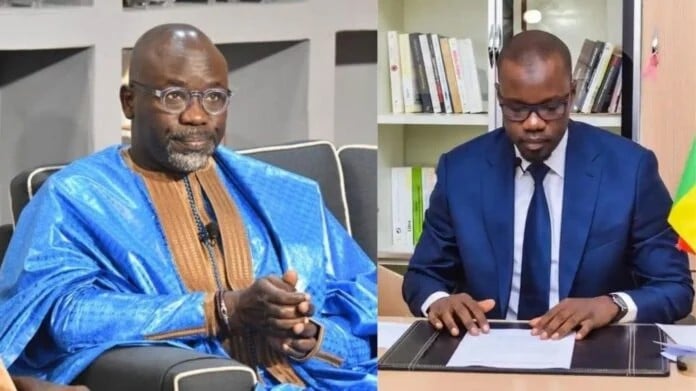
In a sharp political analysis, Cheikh Yérim Seck examines the evolving trajectory of Ousmane Sonko, whose recent departure from government marks a pivotal shift in Senegal’s political landscape. The move presents both opportunities and challenges for the opposition leader, requiring strategic navigation to sustain momentum.
Featured on the TFM program Faram Facce, Cheikh Yérim Seck dissected the implications of Sonko’s exit from the executive branch, emphasizing the need for the Pastef leader to reinforce his connection with grassroots supporters amid this uncharted political terrain.
Sonko’s strategic communication shift
According to the analyst, Sonko’s latest public statements were deliberately directed at his core base rather than broader audiences. « His message resonated with Pastef militants, » Seck noted, highlighting how the former prime minister’s words sought to consolidate internal party unity during a period of institutional upheaval.
Cheikh Yérim Seck underscored that Sonko now operates in uncharted political territory—one where his past role in government no longer shields him. « He transitions from insider to outsider, facing an uncertain future, » the analyst observed, pointing to potential political and legal hurdles ahead.
Internal cohesion and future challenges
The journalist stressed the critical importance of Sonko maintaining strong ties with his political base to navigate these risks. His recent messaging appears designed to re-energize supporters disoriented by institutional shifts, particularly following the president’s evolving political strategy.
Seck also flagged the upcoming Pastef congress as a potential turning point for the party’s internal cohesion. The event could either strengthen unity or expose divisions, depending on how Sonko’s leadership is received by rank-and-file members.
Meanwhile, President Bassirou Diomaye Faye’s consolidation of political autonomy further reshapes Senegal’s power dynamics, signaling a new chapter for the nation’s governance.