
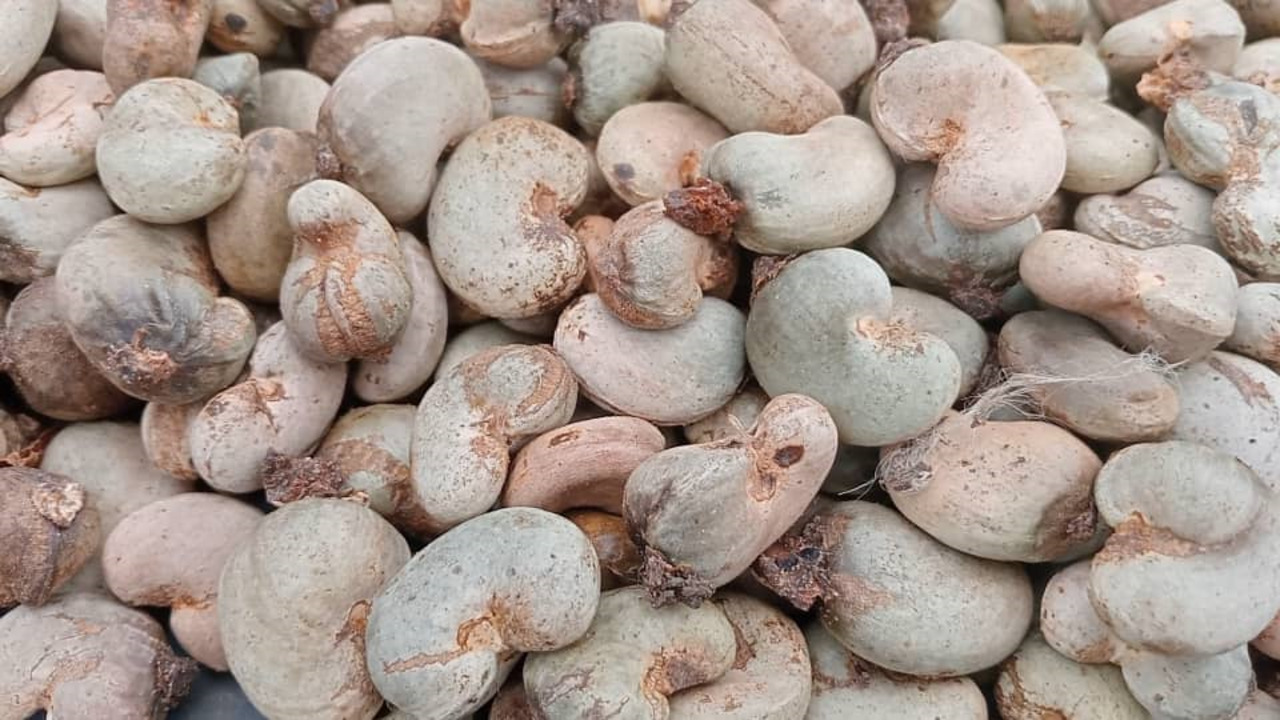
Côte d’Ivoire’s cashew harvest struggles in the Bounkani region
As the cashew marketing season reaches its peak in Côte d’Ivoire, the industry faces a challenging year. The Cotton and Cashew Council projected over 1.3 million tonnes of cashew nuts, a figure consistent with recent years but still marking a decline of 200,000 tonnes compared to 2025. While the overall harvest remains robust, certain areas, particularly in the Bounkani region of the northeast, are experiencing significant setbacks due to irregular rainfall patterns.
From Bouna, Côte d’Ivoire —
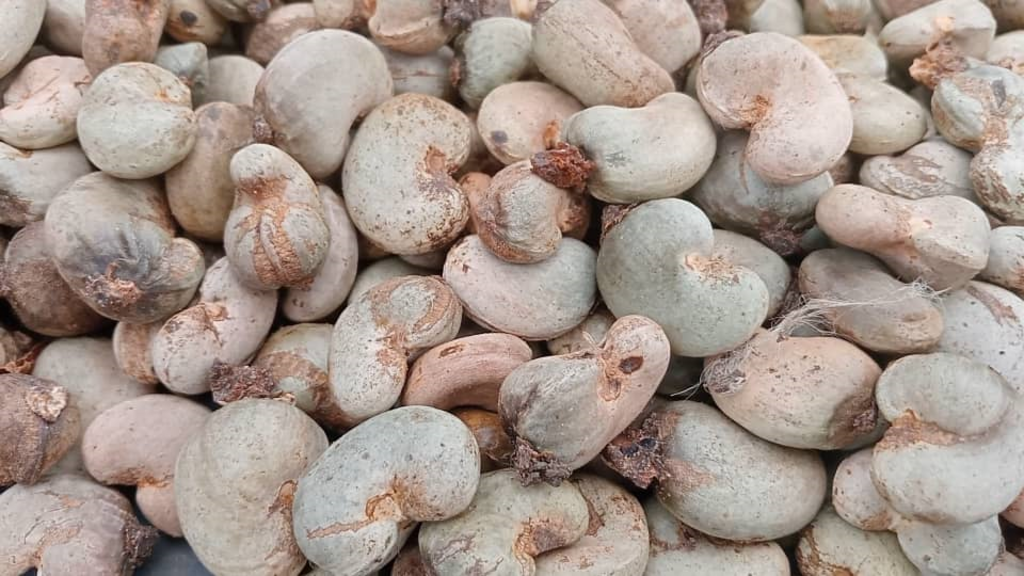
Kouamé Ouattara’s 3-hectare cashew plantation in the Bounkani region has yielded almost nothing this season. Once producing up to 500 kg per hectare, his output has dwindled to barely two bags across his entire farm. « Normally, heavy rains between November and December help the cashew trees bloom. But this year, the rains stopped in October,» he explains. «From October to February, there was no rain at all. Without flowering, there’s no harvest—this season is a complete failure.»
The consequences extend beyond cashew farmers. Beekeepers who maintain hives in cashew orchards are also suffering. Koffi Ouattara, president of the Koflangué beekeepers’ association, reports a drastic drop in honey production. «Last year, we harvested 100 litres. This year, we’ve barely managed 30 litres. It’s a significant loss for our community.»
Addressing farming practices to improve resilience
Dr. Sibirina Soro, a researcher at the University of Daloa and coordinator of the national cashew research project, points to both climate challenges and poor farming practices as key factors. «The main issue is the density of cashew trees in plantations. Many orchards resemble dense forests rather than well-managed farms. The recommended density is 100 trees per hectare, but many plots exceed this, leading to resource competition and reduced yields.»
Soro advocates for the rehabilitation of overcrowded orchards and promotes training programs to combat pests. He emphasizes the need for better support for farmers, particularly since most cashew growers in Côte d’Ivoire avoid chemical inputs, making them more vulnerable to crop losses during poor harvests.