
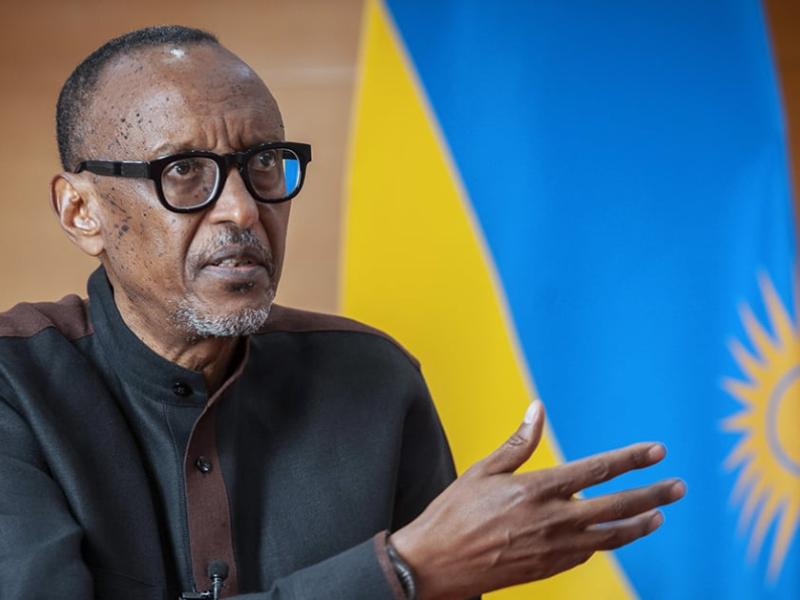
Rwanda warns eliminating M23 rebels would mean eliminating Rwanda itself, Kagame declares
- Politics
The President of Rwanda, Paul Kagame, has issued a strong warning regarding growing tensions in the Great Lakes region, particularly concerning the M23 rebel group operating in eastern Democratic Republic of Congo. Speaking at a meeting of the ruling Rwandan Patriotic Front (RPF) Political Bureau on Friday, July 17, 2026, Kagame firmly rejected international calls to dismantle the M23, emphasizing that such actions would directly threaten Rwanda’s existence.
Under mounting pressure from Western sanctions targeting Rwandan officials and businesses, Kagame made it clear that Rwanda would not be silenced. He warned that attempts to suppress Rwanda’s security concerns would only escalate into direct confrontation.
« Silencing people will be harder than some imagine. Those who tell us to be quiet are effectively endorsing those who want to kill you, just as they have done before. We will handle this on our terms. The only way to silence me is when I am dead. That is the truth. »
Speaking on Rwanda’s vulnerability as a small nation, Kagame condemned any notion that some lives are more valuable than others, stressing that the international community must respect Rwanda’s right to exist. He added:
« Devaluing lives and suggesting that some people matter more than others is not our policy — nor is it the policy of the RPF. We are a small country, insignificant in many ways. You can harm us, but wishing for our disappearance is no small matter. »
The tension has intensified following repeated accusations by the United Nations and Western governments that Rwanda supports the M23 rebels in eastern DRC, a claim Kigali has consistently denied. The rebel group currently controls large parts of North Kivu and South Kivu provinces.
Kagame warned that international efforts to dismantle the M23 were not just targeting the rebel group but were aimed at Rwanda itself. He declared:
« When they said they would make the M23 disappear, they meant Rwanda would disappear as well. I cannot wish for such a thing. I cannot desire it. But if it happens — if I cannot prevent it — I believe they will find us ready. »
This bold statement comes at a time when diplomatic efforts, including the Washington Agreement and ongoing Doha Process under Qatari mediation, have failed to stabilize the region. Despite multiple negotiation rounds, positions between Kinshasa and the M23 remain far apart, and the security and humanitarian situation in eastern DRC continues to deteriorate. The failure of the Montreux talks in Switzerland to produce meaningful results has further delayed progress, compounded by broader geopolitical shifts in the Middle East that have pushed the Congolese crisis to the sidelines.
Calls for compliance with peace agreements have grown louder across national, regional, and international levels. Yet, these appeals have so far yielded little tangible change. The gap between diplomatic commitments and ground realities persists, as each party interprets agreements through its own lens, making implementation increasingly uncertain.