
In Sénégal, the Parti Démocratique Sénégalais (PDS) has officially launched a campaign for a “no” vote regarding the upcoming constitutional revision referendum.
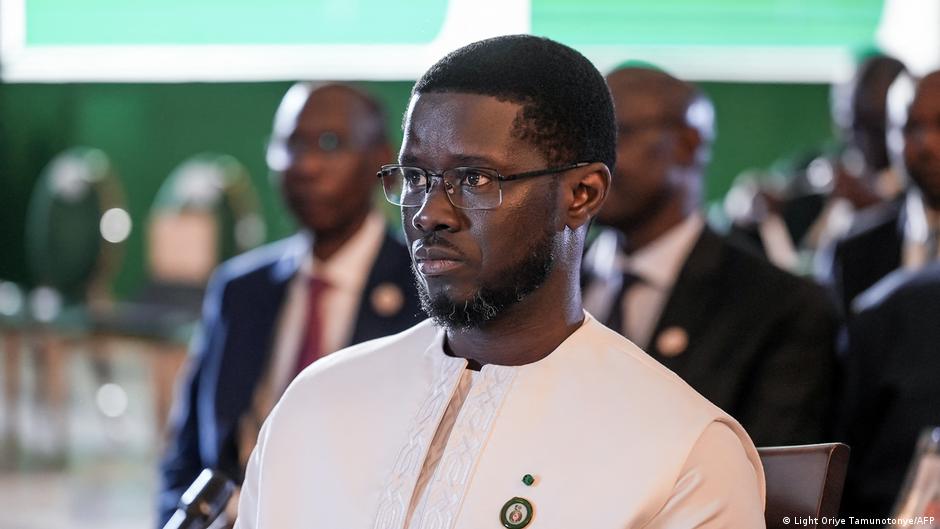
President Bassirou Diomaye Faye recently shared his decision to hold a national consultation, allowing citizens to determine the fate of a controversial piece of legislation. This text, which received approval from a majority in the National Assembly, was championed by Ousmane Sonko’s Pastef party. The proposed changes aim to expand parliamentary authority while significantly curtailing the powers held by the Head of State.
By siding with the President’s decision to go to the people, the PDS is urging its followers to reject the reform. This alignment between the party of Abdoulaye Wade and Bassirou Diomaye Faye, while striking, follows a complex history of political maneuvering.
The evolution of the PDS-Diomaye connection
The roots of this cooperation trace back to the July 2022 legislative elections, when the PDS collaborated with Pastef to challenge the administration of Macky Sall. This partnership deepened just before the March 2024 presidential election. After Karim Wade was disqualified from the race, the PDS leadership directed its base to support the Ousmane Sonko–Bassirou Diomaye Faye ticket.
This endorsement proved vital, helping Bassirou Diomaye Faye capture a broader segment of the electorate. While the public narrative focused on upholding the rule of law and defeating the incumbent’s candidate, Amadou Ba, the PDS had its own motivations. The party blamed the previous administration for Karim Wade’s exclusion and hoped to maintain political relevance through the new leadership.
A proximity born of interest rather than ideology
Despite the electoral success, a formal, long-term alliance never materialized. Once Bassirou Diomaye Faye took office, the PDS remained outside the new government structures, choosing to maintain its independence from both Pastef and the presidential coalition.
This relationship appears to be driven more by political survival than shared vision. After losing power years ago, the PDS has struggled to regain its footing. Aligning with the current seat of power offers a way to remain visible in a rapidly changing political landscape. Interestingly, during the late 2024 snap elections, the PDS even briefly allied with Macky Sall’s APR, demonstrating a highly flexible strategy.
Blocking the path for Ousmane Sonko
The growing friction between Bassirou Diomaye Faye and Ousmane Sonko has provided the PDS with a fresh opportunity to intervene. The party is backing the President’s referendum move specifically to defeat the institutional changes proposed by the Sonko camp.
In a recent statement, the PDS called on its supporters and the wider Sénégalese public to mobilize for a massive “no” vote. The party argues that these constitutional revisions are designed solely to serve Ousmane Sonko’s personal ambitions and represent a threat to the country’s democratic foundations. They describe the move as a betrayal of republican institutions fueled by a thirst for control.
This sentiment is echoed across much of the opposition. While they may not be joining Diomaye Faye’s camp permanently, they are united in their desire to limit Ousmane Sonko’s influence. Many political actors now view the Prime Minister as a polarizing figure whose radical rhetoric hinders national reconciliation.
A temporary convergence of goals
The current situation does not necessarily signal the birth of a lasting coalition around the President. Those opposing the constitutional changes are primarily reacting against a perceived power grab by the legislative branch rather than offering unconditional support to Bassirou Diomaye Faye.
However, this environment could work in the President’s favor. As he faces internal pressure from Pastef, he is looking to solidify his own political standing. Building up his “Diomaye Président” coalition and potentially drawing on the support of established groups like the PDS could be part of a strategy for a future second term.
Within the political circles of Dakar, many believe the split between the President and his former mentor’s party is now irreversible. For many Pastef loyalists, the actions of Bassirou Diomaye Faye are increasingly viewed through the lens of political betrayal, marking a definitive turning point in Sénégalese politics.