
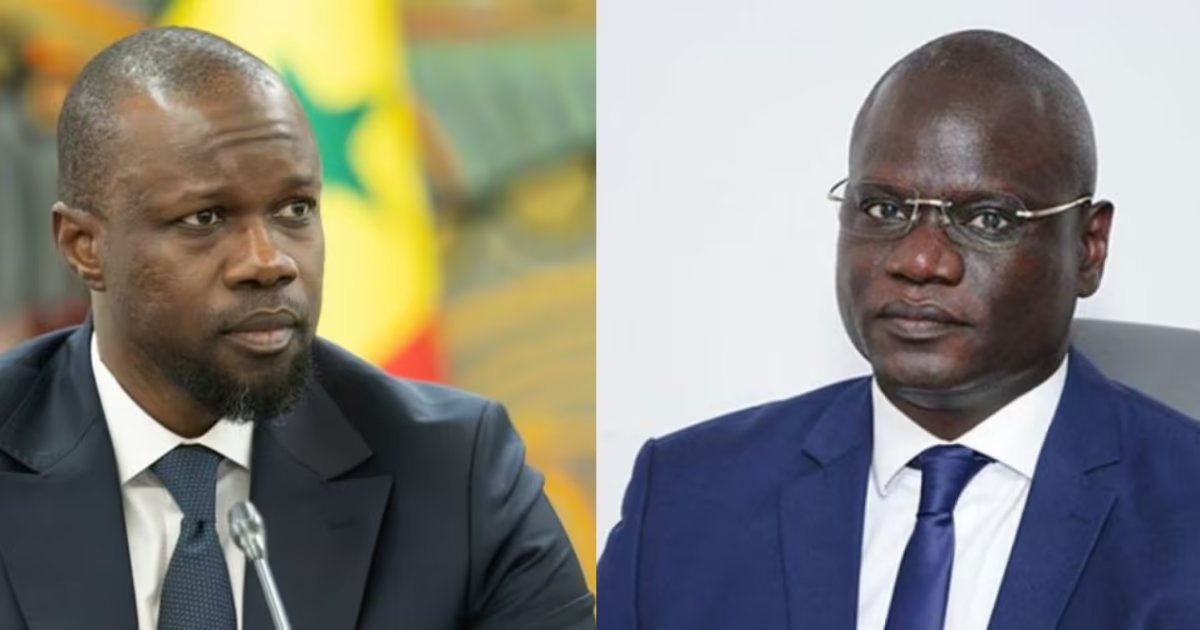
Amid a charged political climate in Sénégal, the announcement of six parliamentary inquiry commissions has thrust one particular dossier into the spotlight: the investigation into alleged irregularities in the management of the ‘One Student, One Laptop’ program, a flagship initiative of the Ministry of Higher Education, Research and Innovation since 2017. With a cumulative financial commitment approaching 48 billion CFA francs, the probe has sparked speculation about its true intentions, particularly regarding former Minister Abdourahmane Diouf.
Unresolved allegations sparking new investigations
The roots of this controversy stretch back to November 8, 2025, when the then-Prime Minister, Ousmane Sonko, publicly flagged irregularities in the management of higher education programs under the purview of the Ministry of Higher Education. At the time, Abdourahmane Diouf headed the ministry and faced direct criticism. In response, Diouf called for the establishment of a parliamentary inquiry commission to shed light on these issues, including the construction of five university lots, while acknowledging shared responsibility with the Prime Minister.
It is worth noting that the Ministry of Higher Education has undergone a rapid succession of leadership changes over the past two years. Abdourahmane Diouf was succeeded by Daouda Ngom, who was in turn replaced by Boubacar Camara, who took office on June 1, 2026. The inquiry commission’s remit covers the period from 2017 to 2026—a decade spanning multiple ministers and technical teams, regardless of which administration was in power.
Political rifts fuel speculation
The timing of this inquiry commission coincides with a growing political divide between Ousmane Sonko and Abdourahmane Diouf. The latter, once a prominent leader of the Awalé party and a key ally in the ruling coalition, has since joined Kiiraay – Les Patriotes républicains, a party aligned with President Bassirou Diomaye Faye. This political realignment has distanced Diouf from Pastef, the party led by Sonko, fueling speculation that the inquiry may be motivated by more than just administrative oversight.
While the official decree convening the extraordinary parliamentary session does not explicitly name Abdourahmane Diouf, the scope of the investigation encompasses a decade of program management, potentially implicating multiple ministers and officials. As matters stand, there is no concrete evidence to confirm whether Ousmane Sonko is specifically targeting Diouf. The findings of the inquiry commission, once established and its conclusions made public, will determine the extent of any mismanagement and assign responsibility accordingly.