
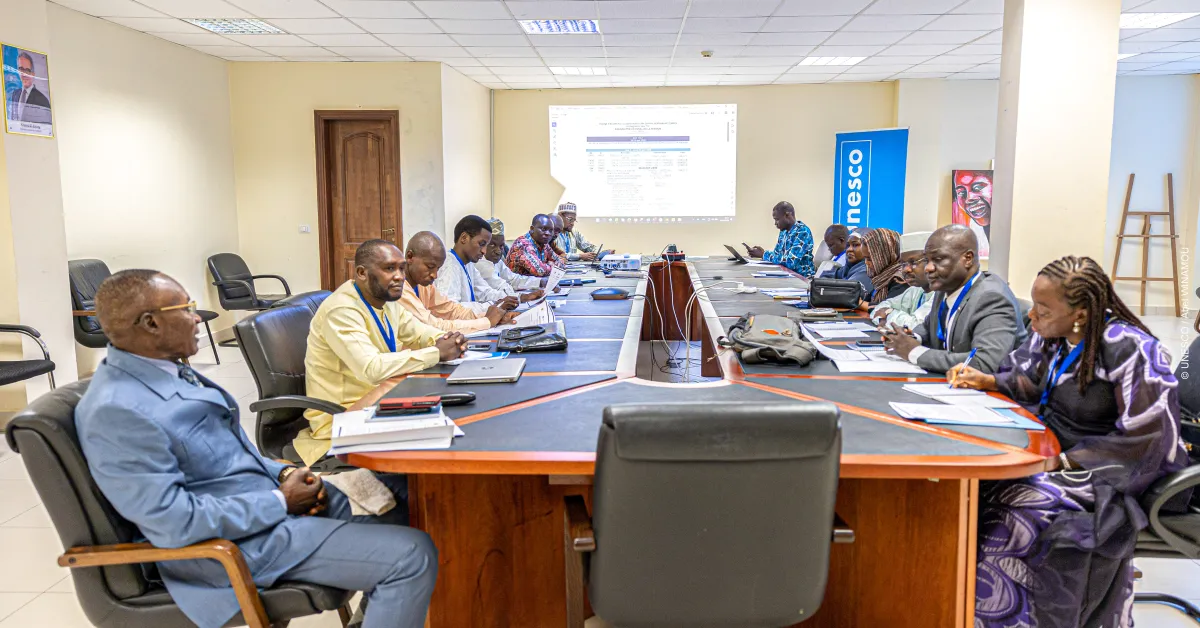
Chad delegation learns from Cameroon’s digital education breakthroughs during UNESCO-hosted study mission
In a strategic move to modernize its education system, a high-level delegation from Chad recently completed a five-day study mission in Yaoundé focused on integrating Information and Communication Technologies (ICT) in schools. The initiative, held from April 20 to 24, 2026, at the UNESCO Regional Office for Central Africa, represents a concrete step toward educational transformation in the Sahel region.
The mission aligns with Chad’s broader efforts to enhance educational quality, accessibility, and inclusivity through its National Development Plan (2022–2026), the Tchad Connexion 2030 vision, the National Teacher Policy (PNET), and the Programme de Refondation de l’École Tchadienne (PRET). This comprehensive education reform initiative receives support from the Global Partnership for Education and is implemented with technical assistance from UNESCO and UNICEF.
UNESCO/Abel Winamou
Why ICT integration matters for Chad’s education system
Despite significant structural challenges, Chad’s education sector stands to gain substantially from digital transformation. The PRET initiative aims to introduce progressive digital solutions that are accessible, low-tech, and adapted to local realities. By leveraging these technologies, Chad hopes to improve teaching quality, expand educational access, and strengthen governance across its school system.
The study mission was carefully designed to facilitate peer learning, with Chad’s delegation drawing on Cameroon’s proven expertise in digital education—particularly in both formal and non-formal education sectors. This collaborative approach reflects a growing trend of knowledge-sharing among Central African nations to build more resilient education systems.
Mission activities: A deep dive into Cameroon’s digital education model
The program included institutional meetings, technical visits, and interactive workshops with key Cameroonian education stakeholders. At the Ministry of Basic Education (MINEDUB), the delegation engaged with specialized departments, academic partners, and institutional leaders to examine Cameroon’s ICT integration model in detail.
Discussions covered critical aspects such as:
- Pedagogical approaches to digital learning
- Curriculum development integrating digital tools
- Organizational frameworks supporting technology adoption
- Infrastructure requirements and implementation strategies
The exchanges also explored teacher training mechanisms, digital tools in use, institutional coordination systems, and partnerships that have driven Cameroon’s successful digital education transformation.
UNESCO/Abel Winamou
A rigorous methodology for sustainable change
Beyond knowledge transfer, the mission followed a structured methodology combining document analysis, stakeholder interviews, field observations, and collaborative working sessions. This comprehensive approach aims to:
- Identify key success factors in Cameroon’s digital education model
- Document best practices that can be adapted to Chad’s context
- Develop actionable recommendations for Chad’s education transformation
The mission will produce a detailed report with operational recommendations and a priority action plan to guide Chad’s ICT integration efforts. These deliverables will provide a roadmap for implementing digital solutions that are both effective and sustainable in Chad’s unique educational landscape.
Strengthening regional cooperation for education resilience
This initiative underscores the UNESCO Regional Office’s role as a catalyst for innovation and cooperation among Central African states. By facilitating knowledge exchange and promoting sustainable mechanisms for sharing best practices, such missions contribute to building more resilient education systems across the subregion.
Through mutual learning and adaptation of proven solutions, this collaboration supports the digital transformation of education systems at a time when technology is reshaping how we teach, learn, and manage educational institutions.