
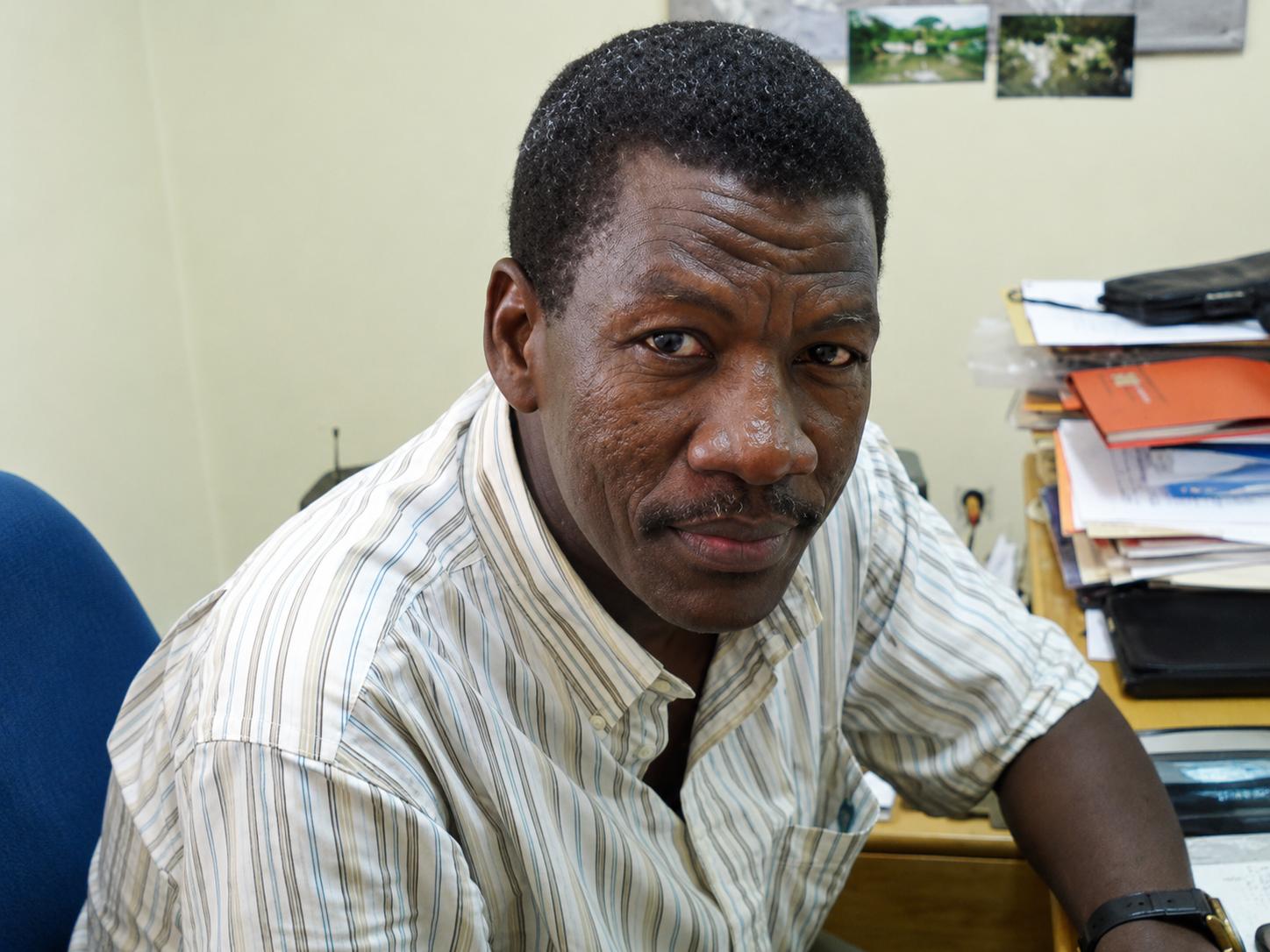
Since his disappearance on August 31 in Niamey, Moussa Kaka, the prominent journalist and director of Radio Télévision Saraounia, has vanished without a trace. While some diplomatic circles cautiously refer to his situation as a ‘disappearance,’ the reality on the ground and the climate of intimidation in the capital leave no room for doubt: this is a targeted abduction.
An abrupt vanishing act in Niamey’s restrictive environment
The events of the evening of August 31, 2026, unfolded with unsettling precision. As Moussa Kaka left his offices at Radio Télévision Saraounia around 7:00 PM to return home, he simply disappeared into thin air. His vehicle remains untraceable, his phones are unreachable, and no hospital in the capital has registered his admission.
Labeling his situation a ‘disappearance’ in such circumstances amounts to either deliberate obfuscation or media complacency. In today’s Niamey, where surveillance is pervasive, a journalist of his stature does not vanish without a trace—he is abducted.
Decoding a well-rehearsed pattern of repression
This brazen kidnapping follows a familiar script used against independent voices in Niger. Moussa Kaka, a stalwart of the national and international media landscape, has long been a thorn in the side of the authorities, including those aligned with President Abdourahamane Tiani. His history as a former correspondent for Radio France Internationale (RFI) cemented his reputation as an uncompromising voice for press freedom.
The complete absence of claims or official statements nearly 72 hours after his abduction underscores the likelihood of a state-sponsored or extrajudicial seizure. The eerie silence from security forces smacks of a calculated strategy to gauge public and international reactions while suppressing dissent.
Abduction amid a climate of political upheaval
The timing of this kidnapping could not be more ominous. It occurs against a backdrop of escalating insecurity in Niamey and an unrelenting crackdown on dissenting voices. For journalists, the message from his captors is unmistakable: silence one of the last bastions of independent journalism in the country once and for all.
Global press freedom organizations, including Reporters Without Borders (RSF), have voiced grave concerns, but mere calls for investigations fall short. The situation demands unequivocal clarity: Moussa Kaka is the victim of an arbitrary abduction.
The clock is ticking for authorities in Niamey
With each passing hour without news of his whereabouts or well-being, the burden of responsibility grows heavier on those in power in Niamey. The international community and the global press corps demand his immediate, unconditional release. The stakes could not be higher—this is not just a case of a missing journalist; it is an attack on the very fabric of free expression and democracy in Niger.