
Drones over the Kremlin: how Kyiv forced a new phase in the conflict
The September 19-20 strikes on Moscow represent more than a tactical shift—they mark a definitive turning point in the Ukraine war. By targeting critical oil infrastructure and logistics hubs far behind Russian lines, Ukraine has demonstrated that the battlefield is no longer confined to the front. This bold maneuver underscores a harsh reality: after two years of relentless warfare, Russia’s strategy has failed to end the conflict and has instead brought war to its own doorstep.
Inside the September 19 attack: targets, casualties, and Ukrainian claims
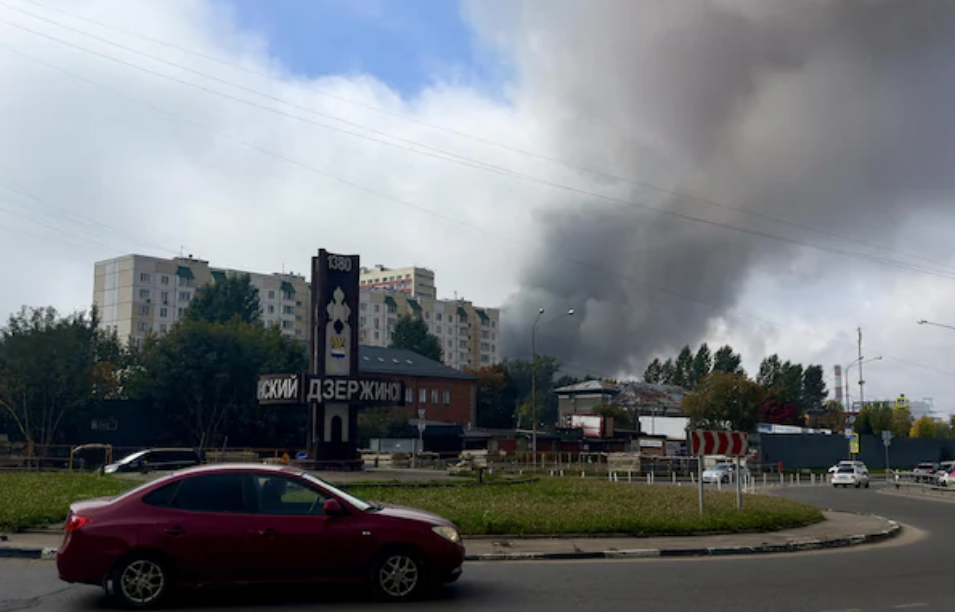
Russian authorities reported intercepting over 1,600 drones nationwide during the overnight assault, with nearly 450 aimed at the Moscow region. While air defenses claimed significant success, key installations were damaged—most notably the Kapotnia oil refinery, a critical node in Russia’s energy network. Official statements confirmed multiple fatalities and dozens injured as fires raged across the facility.
Ukrainian President Volodymyr Zelensky swiftly claimed responsibility, asserting the strike had crippled “one of Russia’s vital oil installations” and struck a major logistics hub near Sofyino. Among the weapons deployed, according to Kyiv, were advanced systems such as the Flamingo, Pelican, and Liutyi—designations that align with independent assessments, including those from the Institute for the Study of War (ISW), which documented significant damage to both the refinery and the Sofyino complex.
Energy infrastructure: the new battleground of modern warfare
The Kapotnia refinery, capable of processing 12 million tons of crude annually, is not just an economic asset—it’s a lifeline for Russia’s military machine. By striking this facility, Ukraine is sending a clear message: the war isn’t confined to trenches and frontlines. It has expanded into the heart of Russia’s war-sustaining economy. Geolocated footage showed towering flames engulfing storage tanks and processing units, a stark visual testament to the operation’s impact.
Analysts argue this strategy reflects a calculated shift in Ukraine’s approach. Since Russia initiated its full-scale invasion in 2022, Moscow has systematically targeted Ukrainian energy grids and cities with missiles and drones. Now, Kyiv is adopting a proportional but retaliatory stance—hitting Russian infrastructure that funds and fuels the war. The line between “front” and “rear” has dissolved, revealing a conflict that respects no geographic boundaries.
A war that has turned inward: Moscow as a battleground
The timing of the attack added another layer of significance. It occurred on the final day of Russia’s legislative elections—a moment Moscow sought to present as stable and controlled. While Russian officials accused Kyiv of attempting to disrupt the vote, Ukrainian authorities framed the strike as a military necessity. The dual narratives reflect the propaganda war that has intensified alongside the physical conflict.
Yet the civilian toll cannot be ignored. The same day Moscow burned, Ukrainian regions—including areas near Kyiv—were struck by Russian missiles, killing civilians. This reciprocal destruction underscores a grim truth: when a state wages an aggressive war, the consequences inevitably circle back. The fire in Kapotnia is more than smoke and steel; it is the reflection of choices made over two years ago.
Technological leap: Ukraine’s growing reach into Russian territory
The weapons used in the Moscow strikes illustrate Ukraine’s rapid advancement in long-range strike capabilities. Systems like the Flamingo and Pelican—whose exact specifications remain debated—represent a quantum leap from the early days of the war. While Moscow once relied on distance to shield its critical assets, that buffer is eroding.
Analysts note that the development of these weapons was accelerated by necessity. With Russia launching waves of missiles and drones at Ukrainian cities, Kyiv had little choice but to extend its defensive—and now offensive—arsenal. The result is a new dynamic: Russia can no longer assume its heartland is safe from retaliation.
The spiral of escalation: what comes next?
Moscow has already vowed to intensify its own strikes on Ukraine in response. Each attack begets a counter-attack, feeding a cycle that risks spiraling beyond control. The September strikes may not topple the Kremlin’s war strategy, but they expose a critical vulnerability: Russia’s promise of security for its citizens remains unfulfilled.
More than a tactical victory, the fire at Kapotnia is a symbol. It signals that the war, now in its third year, has entered a dangerous new phase—one where no territory is immune, and no strategy is foolproof. For a nation that invaded another under the banner of strength, the return of war to its own soil is a paradox it may never resolve.