
UN financial constraints undermine eastern DRC inquiry commission’s field capabilities
The United Nations’ Independent Commission of Inquiry on human rights violations in the Democratic Republic of Congo’s eastern provinces is facing severe operational limitations due to funding shortfalls from the international body itself. This financial strain has directly impacted the commission’s ability to conduct thorough investigations, particularly in conflict-affected areas of North-Kivu and South-Kivu.
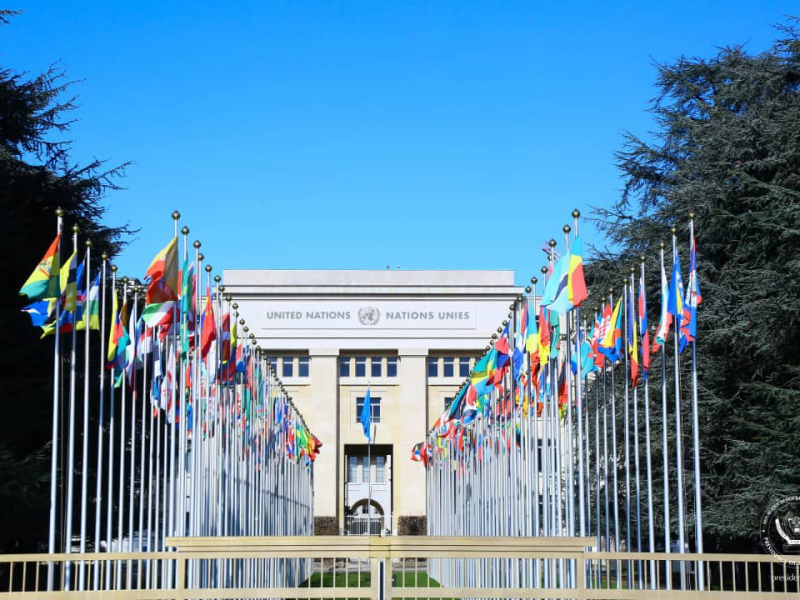
During a high-level briefing at the Human Rights Council in Geneva, commission chair Arnauld Akodjenou highlighted how financial constraints have crippled critical operational functions. The lack of resources has restricted the commission’s investigative capacity, hindered interpretation services, and limited its ability to maintain a consistent field presence. These challenges have emerged despite the commission’s relentless commitment to fulfilling its mandate with independence and rigor.
Mission obstacles compounded by financial shortfalls
The commission had planned extensive consultations in Kinshasa following its establishment in February 2025. While meetings were successfully held with government officials, civil society representatives, UN entities, diplomats, and human rights defenders, the mission’s expansion into eastern DRC has been repeatedly delayed. Security concerns in Goma and surrounding areas have prevented access, but financial constraints have further complicated efforts to deploy teams and gather evidence on the ground.
“The financial constraints facing the United Nations have had a direct and severe impact on our operational capacity. These limitations affect our investigative deployments, analytical support, mission funding, and sustained field presence,” Akodjenou stated. “Yet despite these challenges, the commission remains fully committed to its mandate, ensuring rigorous investigations and robust international engagement to address the documented suffering.”
Humanitarian access remains a critical concern
The commission reiterated the urgent need for all parties involved in the conflict to guarantee safe, unimpeded humanitarian access to vulnerable populations. This includes women, children, the elderly, persons with disabilities, and internally displaced persons—groups particularly affected by the ongoing violence and health crises in the region.
Akodjenou stressed that humanitarian workers, medical personnel, and protection actors must be able to reach victims and affected communities without fear of intimidation or reprisal. He emphasized that no individual—whether a witness, defender, journalist, or community representative—should face retaliation for cooperating with UN mechanisms, including the commission itself.
“The Council tasked us with establishing facts, preserving evidence, identifying those responsible, and addressing the root causes of violence,” he explained. “This work has begun, and it is imperative that we protect the safety, dignity, and trust of victims and witnesses.”
Mandate and scope of the commission
Established by the UN Human Rights Council in February 2025 through resolution S-37/1, the commission was created to investigate alleged human rights violations and international humanitarian law breaches in North-Kivu and South-Kivu. Its mandate includes examining crimes linked to recent hostilities that escalated in January 2025, with a particular focus on violations affecting women, children, and other vulnerable groups.
The commission is also tasked with identifying perpetrators and examining the underlying causes of recurring violence, including gender-based and sexual violence, and violations against displaced and refugee populations. These efforts are seen as essential to supporting accountability and sustainable peace in the region.
As the commission continues its work amid mounting challenges, the international community’s sustained financial and political support remains critical to ensuring justice for victims and preventing further atrocities in eastern DRC.