

US military strategy shifts focus to Sahel’s jihadist threat
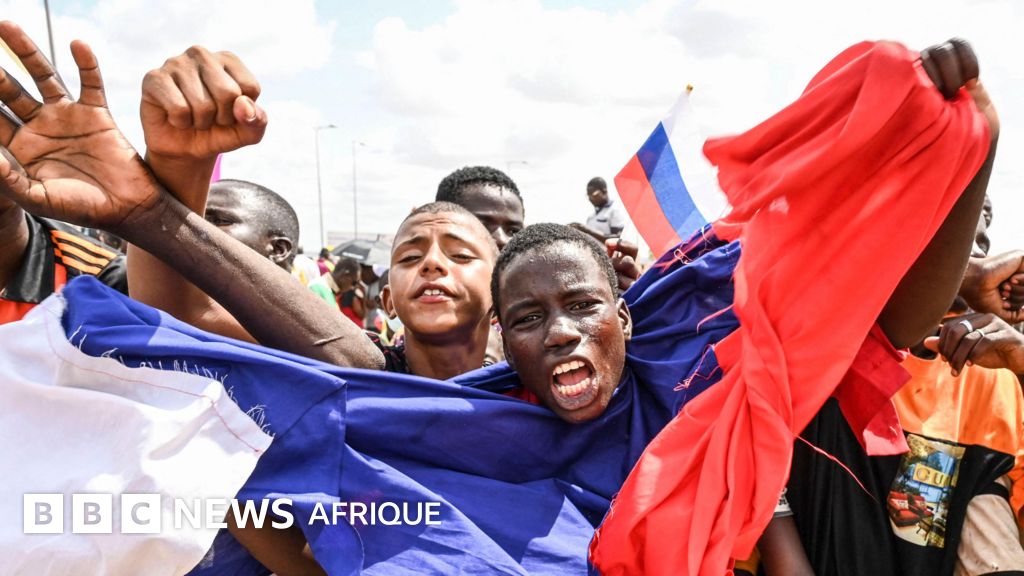
Washington is dramatically recalibrating its approach to three West African nations where military juntas have severed ties with former colonial power France and pivoted toward Moscow. The shift comes as jihadist violence escalates across the Sahel, creating what security experts now describe as a global terrorism epicenter.
The US State Department announced that Nick Checker, head of its Africa Bureau, will travel to Bamako, capital of Mali, to convey Washington’s “respect for Mali’s sovereignty” and outline a “new path” in bilateral relations—one that deliberately moves beyond “past policy missteps.” The visit will also emphasize cooperation with neighboring Burkina Faso and Niger on shared security and economic interests.
Notably absent from the agenda is any mention of longstanding US concerns about democracy and human rights. The Biden administration had suspended military cooperation after coups ousted elected presidents in all three countries between 2020 and 2023, with Niger’s President Mohamed Bazoum still confined to his residence.
This policy reversal reflects a fundamental shift that has become increasingly apparent over the past year since Donald Trump’s return to the White House. The administration has made clear it has little patience for these regimes’ rejection of European-style constitutional governance.
Mali’s military leader Captain Ibrahim Traoré has positioned himself as a champion against “imperialism” and “neocolonialism,” leveraging social media to build massive support among young Africans and beyond. Massad Boulos, a senior State Department Africa advisor close to Trump, stated last year in Le Monde: “Democracy is always valued, but our policy is not to interfere in other countries’ internal affairs. Peoples must choose the system that suits them.”
From development to security focus
The administration’s pivot began with the closure of USAID—long a key development actor in the region—just days after Trump’s inauguration. This was followed by repeated signals of a narrower emphasis on security and mineral resources, with development and governance pushed to the back burner.
During the Biden era, General Michael Langley, head of US Africa Command (AFRICOM) from 2022 to 2025, had stressed the importance of good governance and environmental issues alongside military support. However, last year Langley declared that counterterrorism support had become the top priority.
General John Brennan, AFRICOM’s deputy commander, confirmed last month that the US continues to actively support Mali, Burkina Faso, and Niger in their fight against jihadist groups, particularly the Islamic State. The administration’s new approach appears driven by three primary factors:
- Escalating security threat: The Sahel—this semi-arid band south of the Sahara—now accounts for half of global terrorism-related deaths according to some definitions. While most victims are local, Washington fears ungoverned spaces could become havens for terrorist expansion.
- Strategic resource concerns: The region produces significant gold reserves, while Mali holds substantial lithium deposits (critical for batteries and pharmaceuticals) and Niger possesses major uranium reserves. Jihadist activity threatens these resources.
- Countering Russian influence: Moscow has deployed approximately 1,000 private security contractors to Mali, with smaller contingents in Burkina Faso and Niger. The Trump administration appears unconcerned about potential human rights abuses or regional instability from this Russian presence.
Limited engagement, targeted support
The US seeks to counterbalance Russian influence without deploying ground troops or reopening its drone base in Niger‘s Agadez, from which around 800 American soldiers were expelled after the junta took power. The administration prefers intelligence sharing and potentially arms supplies over direct military involvement.
The juntas in Mali, Burkina Faso, and Niger withdrew from the regional bloc ECOWAS last year, establishing their own Sahel States Alliance (AES). This withdrawal removes governance oversight from ECOWAS while allowing remaining member states to pursue practical cooperation against Islamist militants.
The US intelligence support and potential weapons supplies could help achieve quick victories against jihadist fighters, who increasingly cross borders to launch attacks on countries like Benin, Nigeria, Togo, Ghana, and Côte d’Ivoire. However, military solutions alone rarely bring lasting peace to this impoverished region without addressing underlying social and economic tensions.