

US shifts strategic priorities in the Sahel
The visit this week by Nick Checker, head of the US State Department’s African Affairs Bureau, to Mali signals a renewed engagement by Washington in the Sahel region. However, this is not a return to the status quo. The United States is adopting a strategic realignment in West Africa, structured around three key pillars: a pivot toward trade-focused diplomacy—particularly in minerals, a recalibration of security priorities involving a reduction in permanent military presence, and a shift away from broad humanitarian aid in favor of targeted economic and security partnerships.
This evolving approach reflects a nuanced adaptation to the region’s shifting geopolitical landscape, where traditional alliances are being reassessed in light of new global power dynamics.
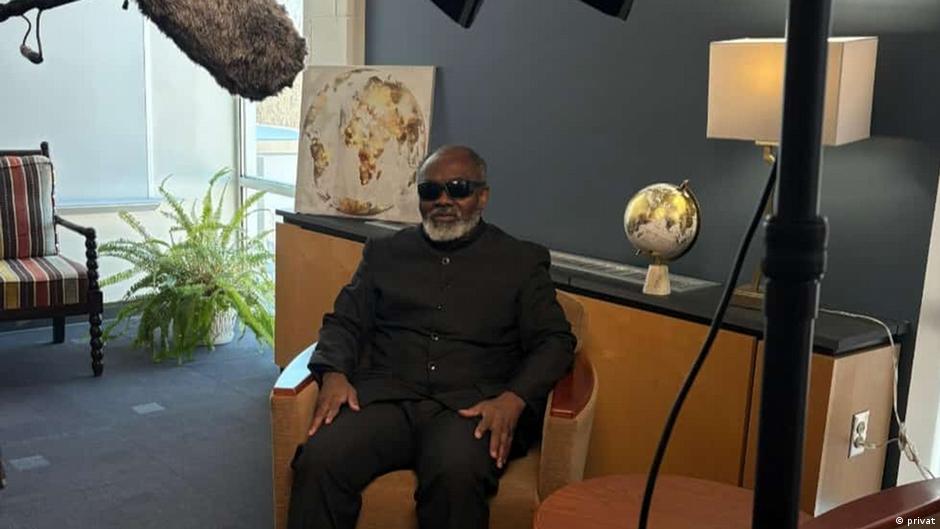
Expert analysis: Dr. Gnaka Lagoke on US-Sahel relations under Trump
DW: Dr. Gnaka Lagoke, Nick Checker met with Mali’s Foreign Minister and transitional leader Assimi Goïta during his visit to Bamako. What changes has the Trump administration introduced in US foreign policy toward the Sahel, and what are its primary objectives in West Africa?
Following the ousting of Niger’s President Bazoum, it became evident that while France mobilized efforts to restore him through military means, the United States pursued a different path. The new Nigerien authorities requested the withdrawal of US forces—a decision Washington did not counter with aggressive retaliation, even under the Biden administration.
In today’s context of heightened tensions between global powers like Russia and China, the US ‘deep state’ has reportedly advised the administration to prioritize both security and economic interests in the Sahel, a region rich in vital resources. The US requires access to critical minerals, and this need is shaping its foreign policy objectives—not only in the Sahel but also in regions like Venezuela, Iran, and the Democratic Republic of the Congo.
DW: Why has the United States now designated Nigeria as its preferred partner in West Africa, following the closure of permanent US military bases in Niger?
During Donald Trump’s presidency, the US justified military actions in northern Nigeria under the pretext of protecting Christian communities allegedly targeted by Islamist militants. With Nigeria’s approval, the US conducted airstrikes in the region. However, experts agree that such limited actions cannot dismantle the root causes of Islamist militancy. The underlying motivation appears tied to Nigeria’s vast oil and mineral resources, reinforcing the dual objectives of security and economic access that define US strategy in the Sahel.
This approach is likely to result in the establishment of new military bases in neighboring countries, possibly including Benin and Côte d’Ivoire, where US forces previously stationed in Niger have reportedly relocated.
DW: What potential benefits could the Alliance of Sahel States (AES) countries gain from cooperating with a Trump-led United States?
One clear advantage is that the US offers an alternative diplomatic channel to the AES nations, which France and the European Union have often treated as pariahs. This presents an opportunity for dialogue and negotiation. Additionally, in the broader context of competition between Western powers and the BRICS bloc, the US provides African countries with greater strategic autonomy. The Biden administration has emphasized respect for sovereignty in its discourse, a message likely to resonate in the Sahel.
However, concerns remain regarding potential covert networks involving France, the US, and other actors that may aim to destabilize governments in Mali, Burkina Faso, and Niger. Whether this reflects a duplicitous strategy remains an open question, but history will clarify these intentions over time.